


Microbiome Testing for Parkinson’s: Cases of Parkinson’s have doubled in the past 25 years, with more than 8.5 million people globally now living with the condition. With this in mind, microbiome testing for Parkinson’s represents a groundbreaking approach to identifying disease risk before symptoms appear. Researchers at UCL analyzed clinical and fecal data from 271 Parkinson’s patients, 43 people with a risk gene, and 150 healthy individuals. The abundance of more than a quarter of gut microbes, or 176 species in particular, differed in those with microbiome Parkinson’s disease compared with the healthy group. Also, there was a similar trend seen in those genetically susceptible to microbiome Parkinson’s without any symptoms.
This discovery opens new possibilities for early intervention and prevention strategies.
Scientists Discover Microbiome Signature Predicting Parkinson’s Risk Years Early
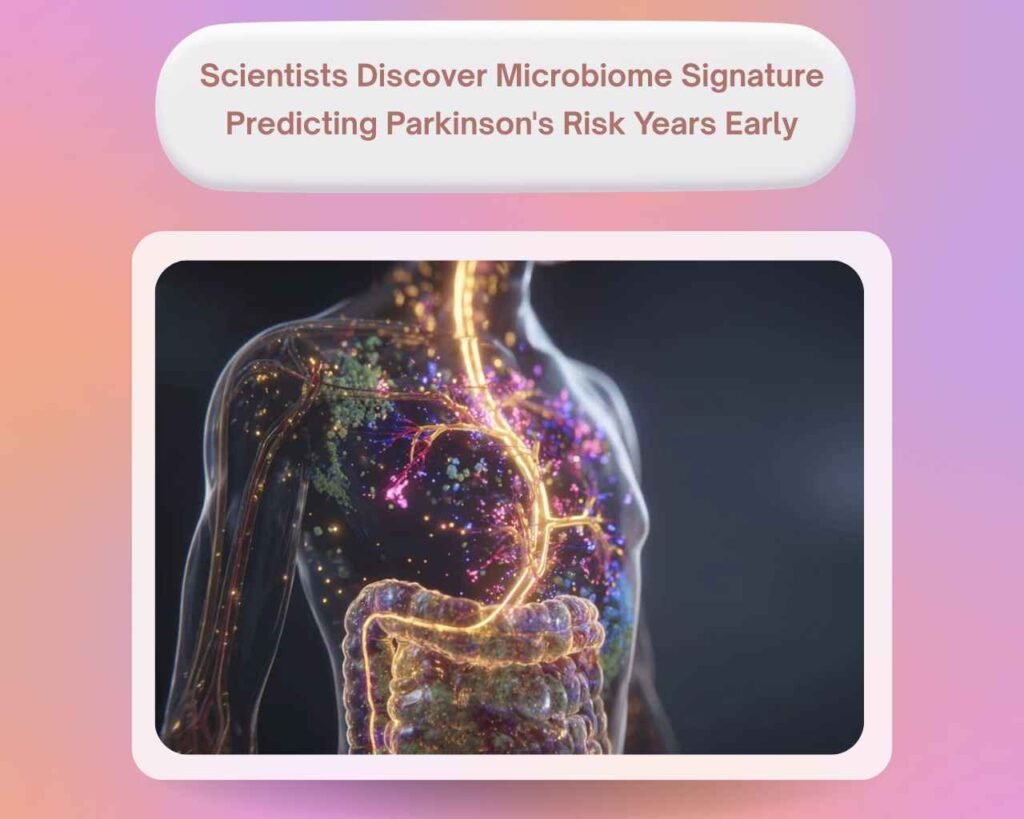
Prof Anthony Schapira from University College London reported this as the first observation of a microbial signature in individuals with genetic susceptibility who had yet to develop symptoms. The signature strengthens as the disease progresses, providing a potential timeline for microbiome parkinson’s disease development.
Over 25% of gut microorganism, about 176 species, showed considerable changes between the health status of healthy individuals and those suffering from the disease. The composition is a continuum; genetically predisposed people showed intermediate changes compared to diagnosed patients and healthy controls. This trend persisted among three independent cohorts of people from the USA, Korea, and Turkey, consisting of 638 patients and 319 healthy people.
A large-scale validation study involved the participation of 490 patients with Parkinson’s disease and 234 control individuals. Deep shotgun sequencing of their fecal DNA showed that more than 30% of the number of species, genes, and pathways tested for showed an altered abundance, demonstrating the presence of dysbiosis. Also, 84 of 257 species studied obtained statistical significance in a strict two-step test for validation, among which 55 were abundant and 29 depleted in patients.
Meta-analysis of five independent studies from the Netherlands, Finland, China, Japan, and Germany including 550 patients and 456 healthy subjects. Tests conducted with the help of statistical analysis based on levels of 35 different bacterial groups helped to distinguish people with or without the disease with the efficiency of 84%.
How Gut Microbes Cause Brain Injury through the Vagus Nerve
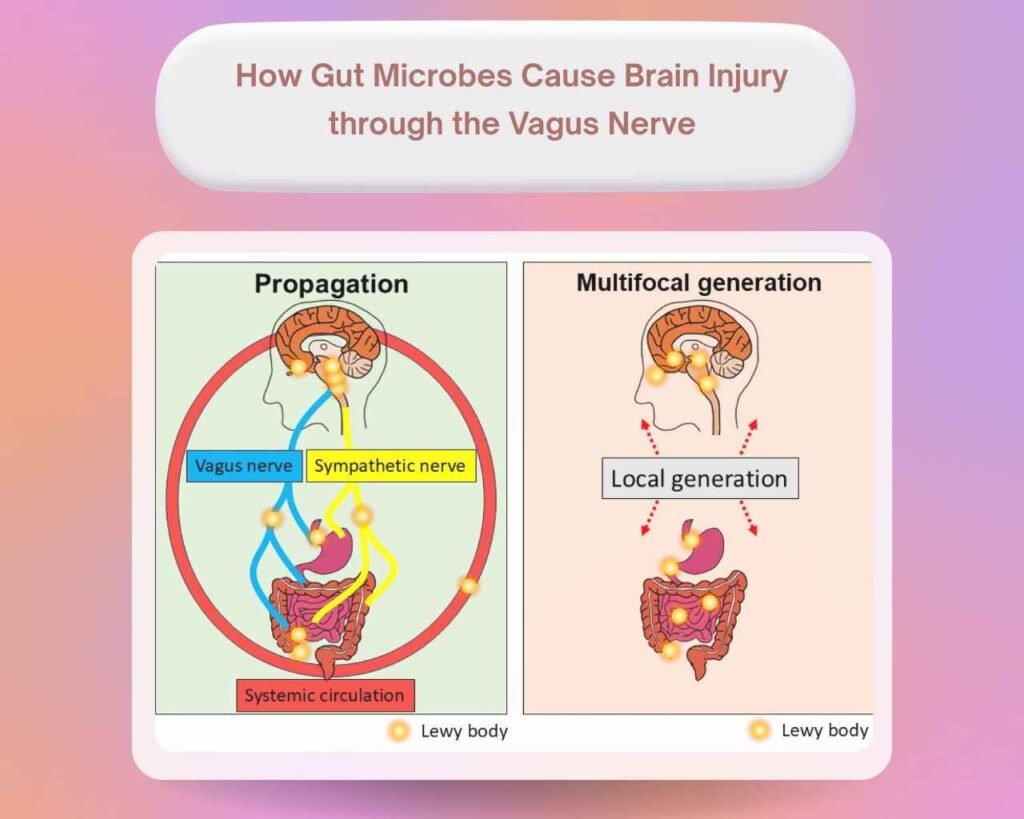
Parkinson’s disease triggered by misfolded alpha-synuclein in the dopaminergic neurons develops because of the involvement of the gut microbiome during several decades. Scientists studying samples from patient’s gut identified alpha-synuclein in there at least two decades before its appearance in the brain, which changed our perception of the origins of the disease.
The vagus nerve is the primary pathway connecting brain and gut microbiome. Patients with peptic ulcers, subjected to vagotomy, meaning a surgical separation of the vagus nerve, have 76% lower incidence of developing Parkinson’s disease. In additional experiments on mice, vagotomy resulted in reducing bacteria in the brain by about 20 times. Genome studies confirmed that bacterial isolates from the brain, fecal material, and ileum had average nucleotide identities of 99.99%, proving gut origin of bacteria.
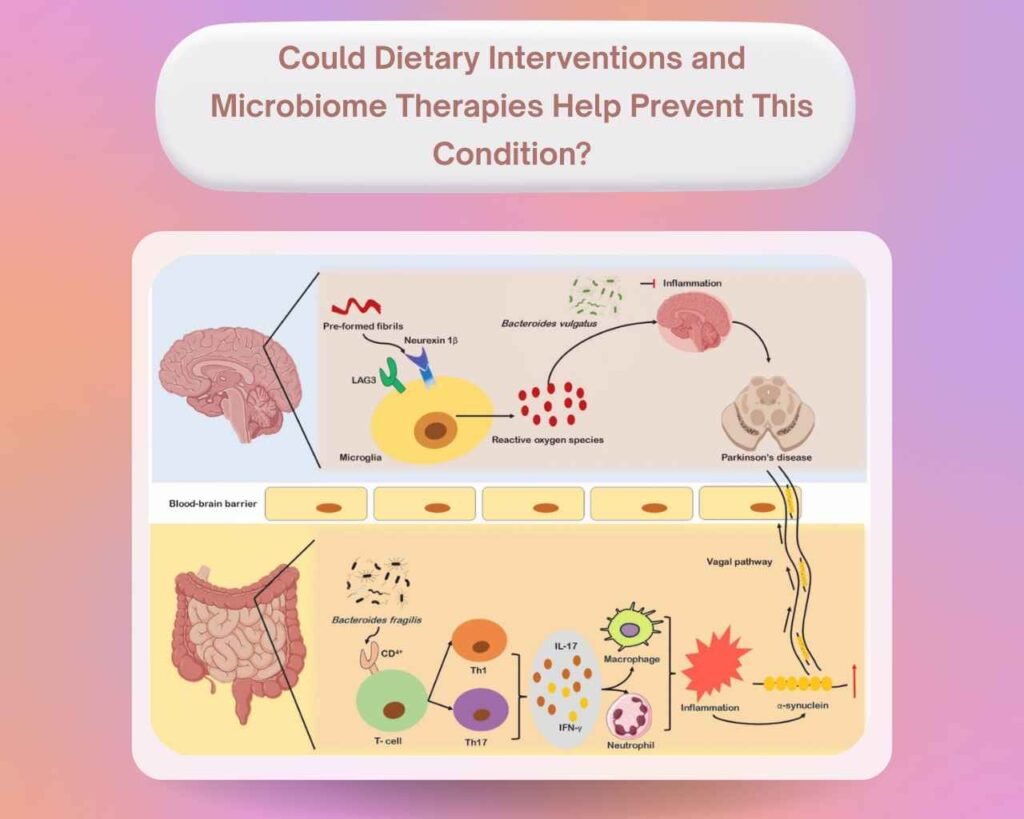
Microbial metabolites induce brain injury through three paths of action: nervous system (vagus nerve), direct path (blood-brain barrier), and immune-mediated path (cytokines). Curli proteins of Enterobacteria provoke folding and aggregation of alpha-synuclein and subsequent transfer through the nervous system jumping from neuron to neuron until brain.
Also, dysbiosis leads to inflammation, contributing to neurological injuries in Parkinson’s disease.
Could Dietary Interventions and Microbiome Therapies Help Prevent This Condition?
The impact of dietary changes on gut microbiota composition and slowing microbiome parkinson’s development has been shown. People who follow the Mediterranean diet have 25% decreased risk of developing the condition compared to people with the lowest adherence to this diet. Moreover, those consuming 11 or more portions of ultra-processed foods per day were at 2.5 times increased risk of developing three or more signs of early disease development compared to those consuming less than three portions.
This diet leads to increasing the number of beneficial bacteria producing SCFAs, such as Butyricicoccus, Coprococcus, and Ruminococcaceae. In turn, these bacteria improve intestinal barrier function and prevent the development of systemic inflammation through butyrate production. Physical activity helps achieve better results since physically active patients have much higher levels of acetate, propionate, and butyrate in their stool and plasma.
Clinical trials aimed to test the effect of dietary fiber have led to an increase in the number of beneficial SCFA produced by bacteria in microbiome parkinson’s patients. However, these levels are still low compared to healthy participants. Fecal microbiome transplantation from healthy donors can reverse the course of neurodegeneration and motor dysfunction in mouse models of neurotoxin-induced disease. Some human clinical trials with fecal microbiome transplantation in early-stage patients have already started in Europe.
In the nearest future, scientists are planning to start conducting large-scale studies with individualized microbiome-based dietary therapy. Researchers will use this approach targeting the gut-brain axis revealed during microbiome testing for parkinson’s.
Conclusion
It is undeniable that microbiome testing for Parkinson’s is a revolution in early disease detection. It was found that scientists could detect 176 bacterial species with 84% accuracy distinguishing between people at risk and healthy ones, sometimes years before symptoms appear. The link between the gut and brain via vagus nerve explains the mechanism by which bacterial metabolites activate the process of neurodegeneration several decades before the disease is diagnosed. What is even more promising is that the development of dietary therapy and other interventions has the potential to stop this condition.
FAQs
Q1. Can gut microbiome analysis predict the development of Parkinson’s disease before symptom onset?
Yes, it was discovered that there is a microbiome signature including 176 types of bacteria that can diagnose patients at risk of developing the disorder with a 84% accuracy several years before any symptoms manifest themselves. Patients genetically predisposed to PD have intermediate changes in this regard.
Q2. Which bacteria are linked to Parkinson’s disease?
The gut microbiome analysis revealed over 176 different microbial species that showed alterations in patients diagnosed with PD. One of these types includes Enterobacteria producing curli that leads to the misfolding of the alpha-synuclein protein, thus causing aggregates. In addition, there is an observed reduction in SCFA-producing bacterial species (Butyricicoccus, Coprococcus, Ruminococcaceae).
Q3. What mechanisms lead to brain damage due to gut microbiome changes in Parkinson’s disease?
There are three main pathways that harmful metabolites produced by the gut bacteria use to reach the brain and cause damage: via the vagus nerve, through the bloodstream by overcoming the blood-brain barrier, or via activated immune cells migrating to the brain tissue. It causes inflammation and misfolding of alpha-synuclein protein.
Q4. Are there some dietary measures that can reduce the risk of developing Parkinson’s disease?
Yes, according to research, following a Mediterranean diet lowers one’s chances to develop Parkinson’s by 25%. The diet promotes SCFA production and decreases inflammation. At the same time, consumption of more than 11 portions of ultra-processed foods per day increases the probability of developing the disorder by 2.5 times.
Q5. What innovative microbiome-related treatments are being developed for Parkinson’s disease?
Clinical trials related to the use of healthy microbiomes obtained from fecal transplant in animal subjects demonstrated promising results regarding reversal of neurodegeneration and amelioration of motor symptoms. Clinical human trials have already begun in Europe. Also, a large dietary intervention study will be conducted starting early 2026.
References:
- UCL News: Results from primary studies on the role of microbiome signatures and genetic predisposition in early diagnosis of Parkinson’s disease.
- The Guardian/Medical & Science Desk: Report on current studies about the use of gut microbiome analysis for the early detection of Parkinson’s disease before the manifestation of clinical symptoms.
- Nature Communications: Published scientific data and detailed shotgun sequencing of fecal DNA from patients with Parkinson’s disease.
- Harvard T.H. Chan School of Public Health: Research study that proves the connection between following the Mediterranean diet and lowering the chance of Parkinson’s disease.
Disclaimer: The content of this article is purely for educational purposes and should not be taken as professional medical advice. Though every effort has been made to verify the scientific studies on Parkinson’s disease and microbiome testing, the reader is always advised to seek the assistance of a medical expert or neurologist before taking any decisions regarding their health or food intake.
Read My Website Recent News Article: Astronaut Return
