


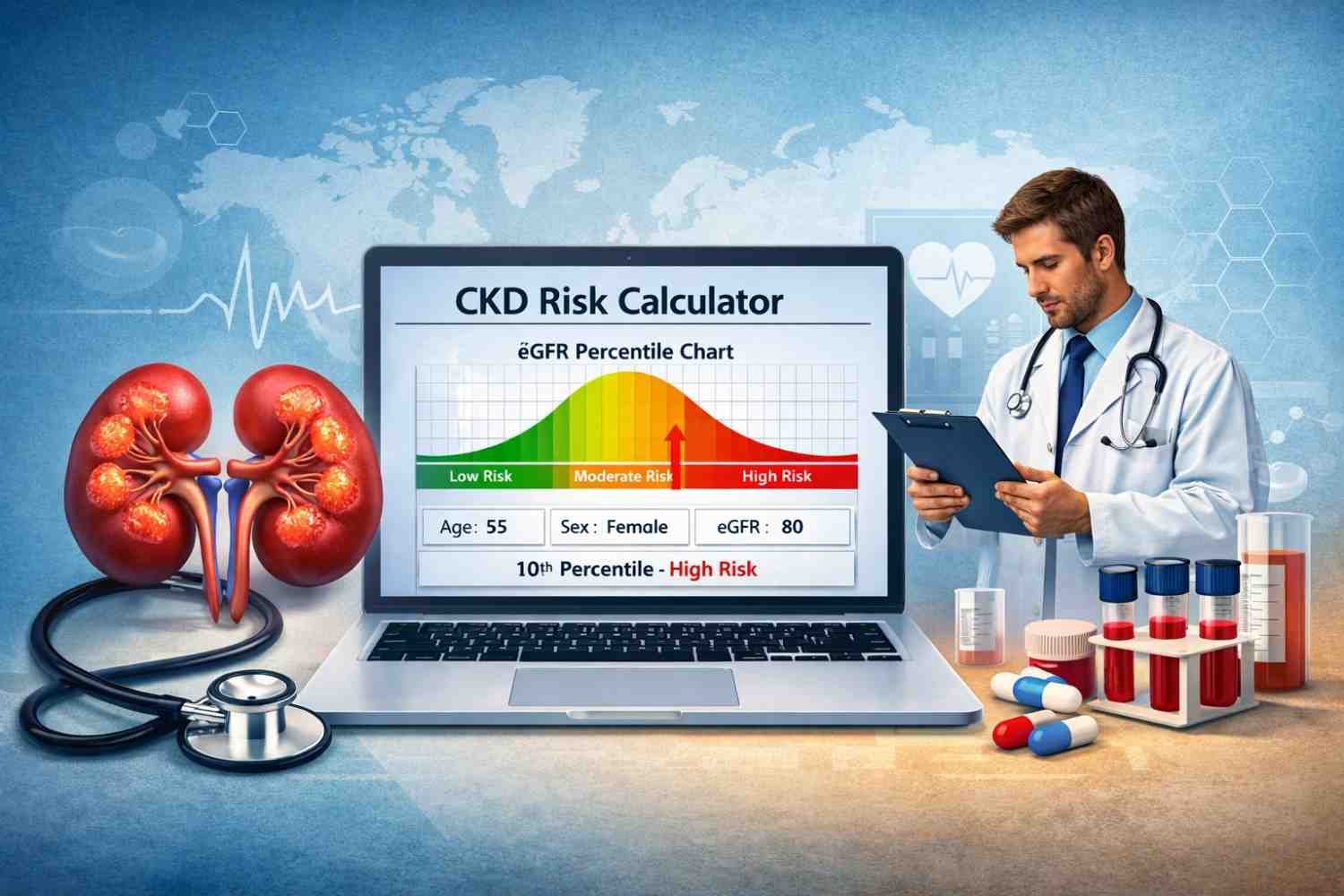
Web-Based Tool for Early Detection of Chronic Kidney Disease: Chronic Kidney Disease (CKD) is rising as a global health challenge, with 10-15% of the population affected, and is on track to become a major cause of years of life lost by 2040.
The majority of healthcare systems are still using conventional thresholds for diagnosing CKD, usually identifying the condition after a considerable amount of kidney damage has occurred. However, a recent study conducted by Karolinska Institutet proposes a different approach that could have a dramatic effect on early detection and prevention.
Why Early CKD Detection Matters: Framing the Challenge
The Global Burden of CKD
CKD slowly erodes kidney function over the years, often with very few symptoms in the early stages. Most people are not aware that they have CKD until their kidneys are already badly impaired.
Conventionally, CKD is diagnosed when the estimated glomerular filtration rate (eGFR) falls below 60 ml/min/1.73 m². By this time, it is likely that more than half of the kidney function has been lost.
Limitations of Current Screening Practices
The current screening practice relies on a single measurement of eGFR, without accounting for the individual’s age or sex. This has resulted in a higher risk of progression to kidney failure or cardiovascular death due to the lack of early intervention.
A Fresh Approach: Population-Based eGFR Percentiles
What Researchers Did
The researchers
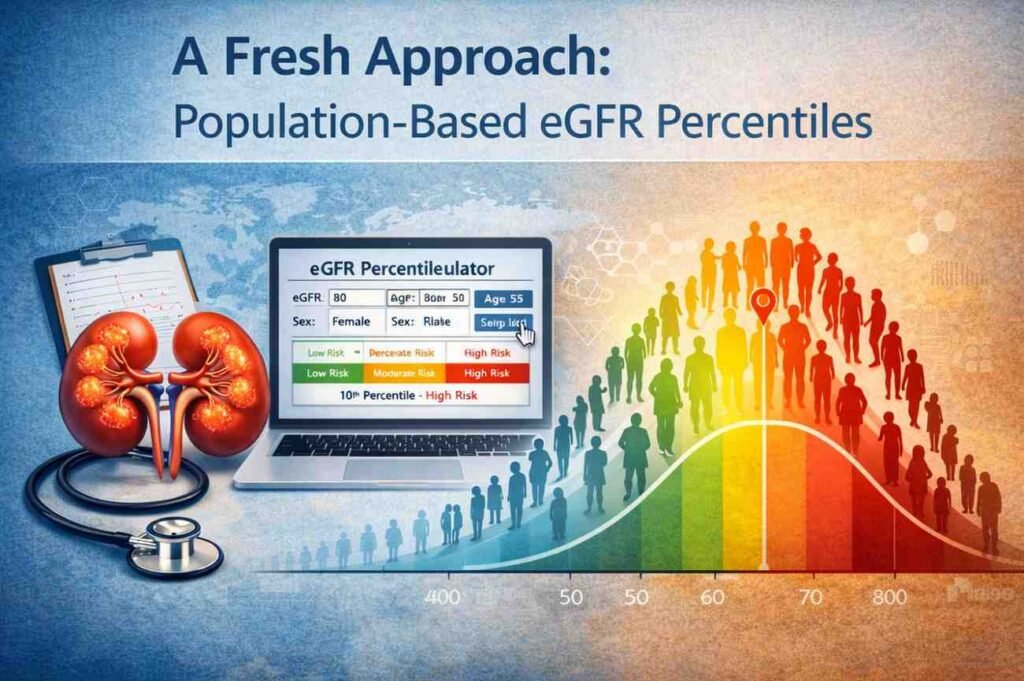
To address this, researchers from Karolinska Institutet studied almost 7 million eGFR results from more than 1.1 million individuals aged 40 to 100 years old in Stockholm, Sweden.
They developed age- and sex-specific distributions of population eGFR, in a fashion analogous to growth charts used to monitor children’s development.
The Key Insight: Percentiles Outperform Fixed Cuts
The key
Rather than a specific eGFR value, the researchers determined that how much an individual’s eGFR deviates from the median value for their age group and sex is a stronger predictor.
Individuals whose eGFR values were below the 25th percentile for their age category had a significantly increased risk of disease progression to an advanced stage, dialysis, or death. For example: A 55-year-old woman with an eGFR of 80 ml/min/1.73 m², which has been considered “normal” in the past, would actually be in the 10th percentile for her age and sex. Using the traditional approach, her risk could be missed, but when looking at it from a percentile perspective, she is three times more likely to progress to dialysis-requiring kidney failure.
Introducing the Web-Based Calculator
How the Tool Works
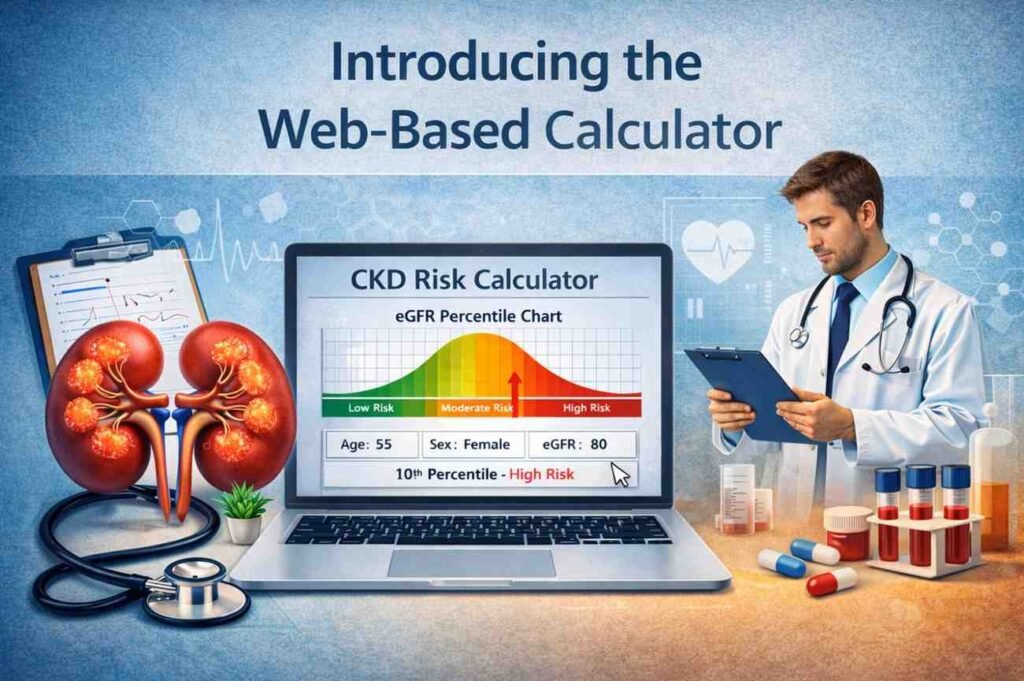
To make these results useful for practitioners, the Karolinska research team developed a web-based calculator that compares a patient’s eGFR to age- and sex-adjusted population norms.
Using this calculator, healthcare professionals can:
- Enter the patient’s age, sex, and eGFR
- See where that eGFR is on the population percentile chart
- Understand the associated risk of progression or complications
This technology enables doctors to identify people at risk before the critical threshold is reached, thereby paving the way for preventive measures.
Why It’s Important
Moving away from the “one size fits all” approach to a more personalized risk assessment enables clinicians to:
- Suggest additional testing, including urinary albumin studies
- Begin changes in diet and lifestyle earlier
- Closely observe the progress
- Start treatment before there is significant kidney damage
It is important to note that many individuals with an eGFR that appears to be within normal limits on the standard scale receive no further testing despite being identified as being at higher risk by percentile analysis.
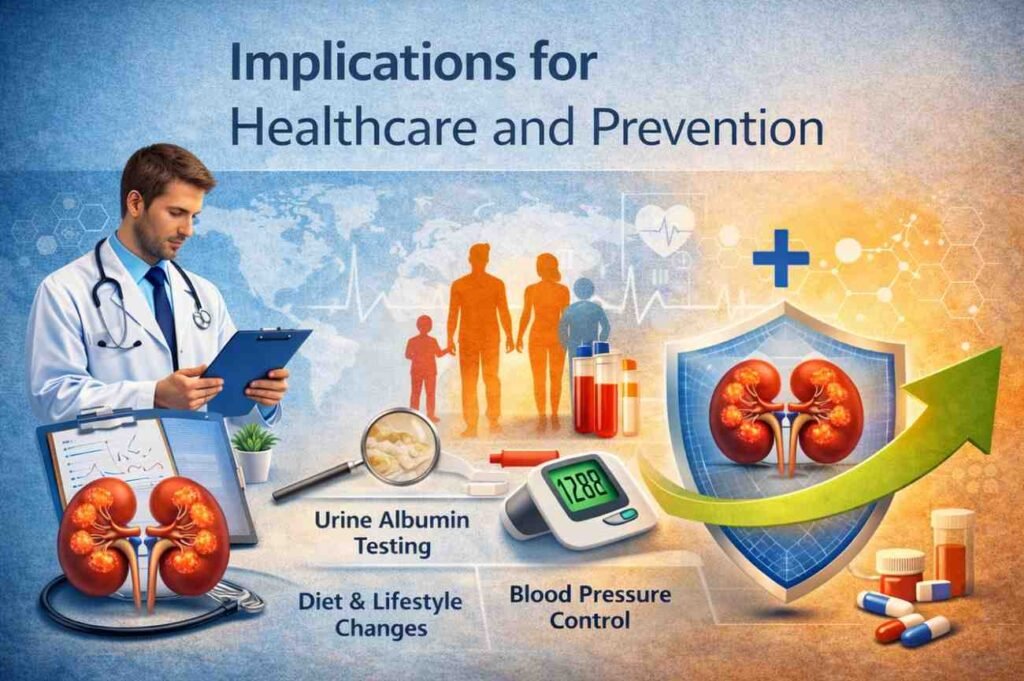
Implications for Healthcare and Prevention
A Paradigm Shift in CKD Management
The shift to using eGFR percentiles in population-based screening represents a paradigm shift in CKD screening from a reactive to a proactive approach. Rather than waiting for kidney damage to progress, healthcare providers can now proactively act on the basis of more refined risk assessments.
This strategy aligns with the general public health initiatives that promote early detection and intervention in chronic illnesses, which could help reduce complications and costs in the long run.
Supporting Global CKD Guidelines
Key organizations, such as the International Society of Nephrology (ISN), emphasize the importance of early detection and treatment of CKD. They recommend the use of more diagnostic tools and approaches that make early detection possible.
Frequently Asked Questions (FAQs)
What is Chronic Kidney Disease (CKD)?
CKD is a chronic condition where the kidneys progressively lose their function to filter waste and fluid from the blood. If left untreated, CKD can lead to kidney failure, which requires dialysis or a transplant.
What is eGFR, and why is it important?
Estimated Glomerular Filtration Rate (eGFR) is the measure of kidney filtering ability. Lower eGFR values indicate lower kidney function. Conventional criteria for diagnosis involve a fixed cut-off value, whereas the new criteria involve age-adjusted percentiles.
Who can use this web-based tool?
The utility is mainly intended for healthcare professionals to assist in the evaluation of a patient’s renal function compared to age and sex-related norms, but the underlying graphs have been made available by researchers for general use.
Is this a replacement for clinical judgment?
No. This tool is intended to supplement clinical judgment, not replace it. Clinical judgments should always take into account the total clinical picture, including symptoms, lab results, and patient history.
Conclusion
The creation of an age- and sex-specific, web-based tool for CKD risk assessment is a major step forward in the way in which chronic kidney disease can be identified and prevented. By looking at population-based eGFR percentiles rather than strict thresholds, physicians are able to identify patients at risk earlier and take proactive measures to improve outcomes, perhaps halting the growing burden of CKD worldwide.
Handpicked for You: ISS Medical Evacuation First Ever
