


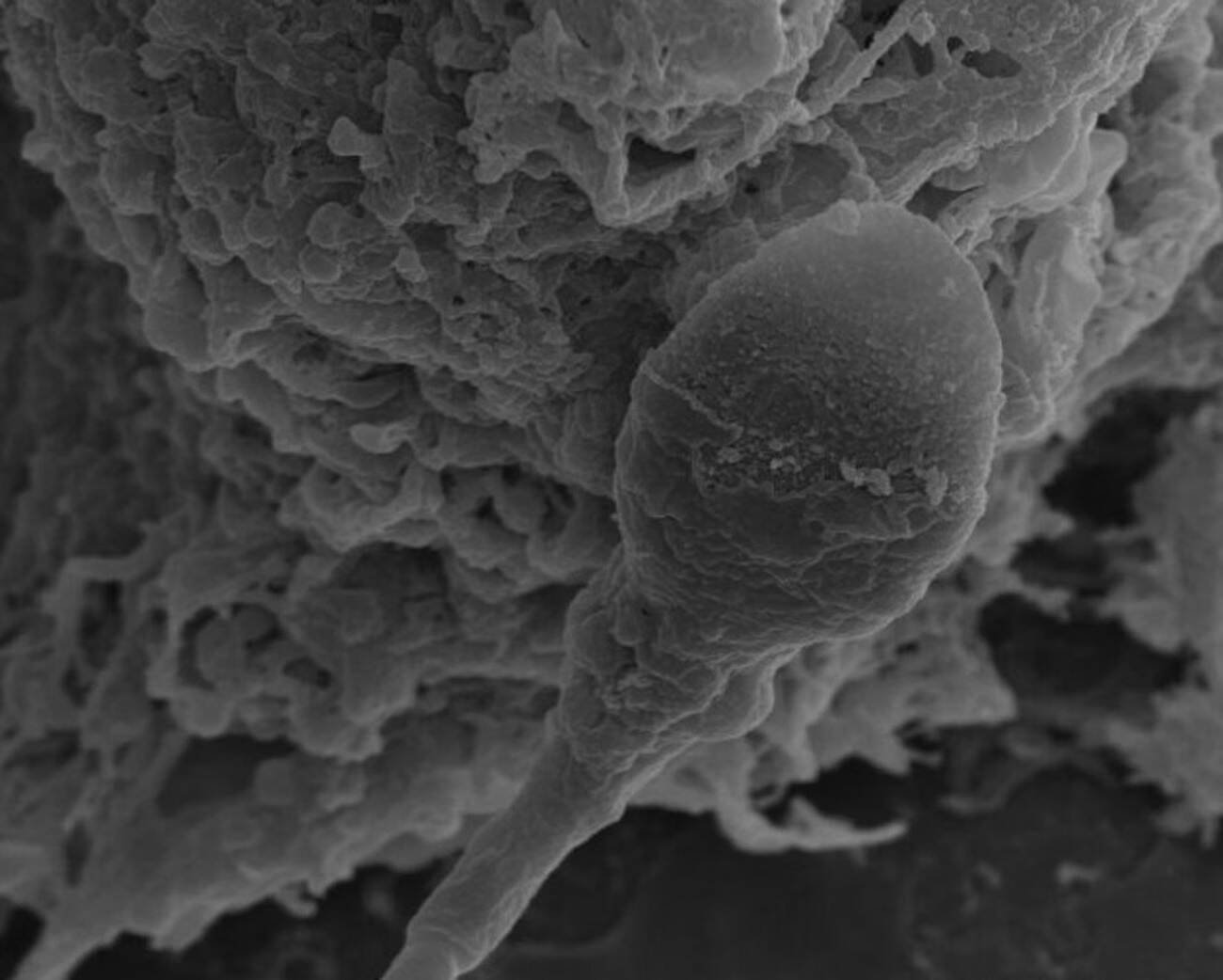
Sperm in Space: In a study by researchers at the Robinson Research Institute in Australia, scientists have found that sperm in space lose their ability to navigate and find their way to the egg, which could have serious implications for human reproduction outside the Earth’s atmosphere. In the study, the researchers analyzed human, mice, and pig sperm and found that there is a 40 percent reduction in the number of microgravity-exposed human sperm that have completed their journey in comparison to the control group. This study assumes great importance in the context of the human colonization of other planets, as the sperm of astronauts in space are also facing challenges in reproduction.
What Happens to Sperm in Space: Microgravity Disorients Sperm
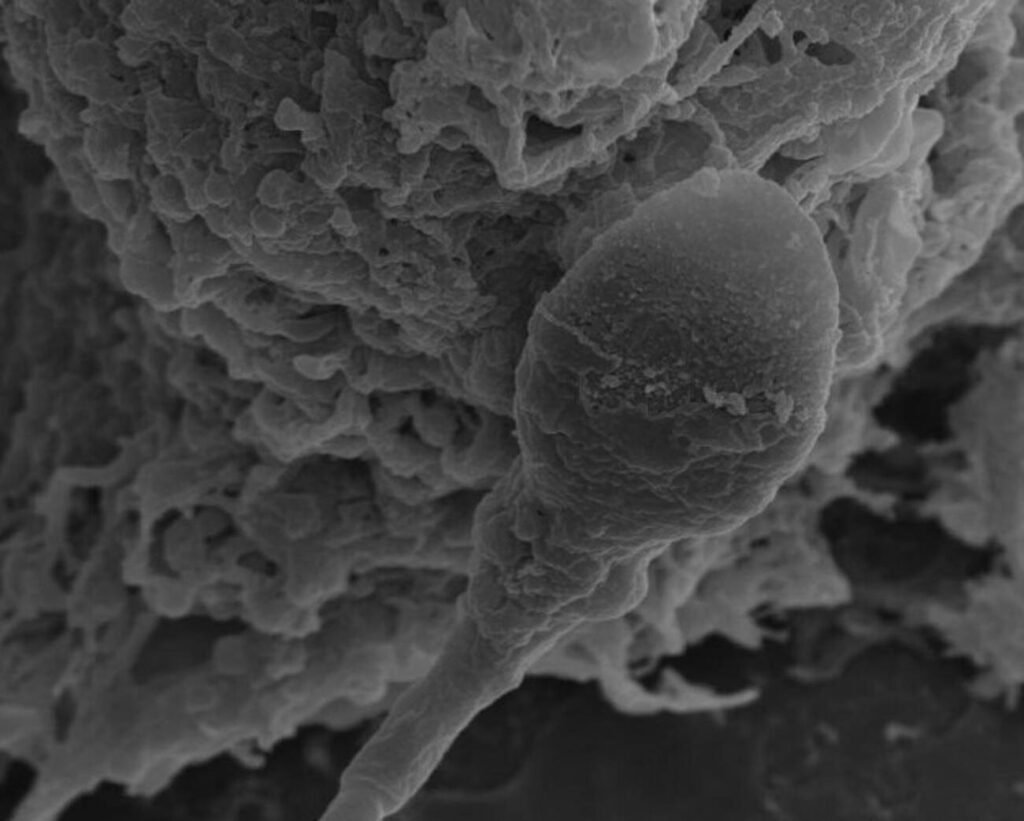
Image Source: The Guardian
In the study, the researchers found that microgravity causes sperm to lose their way without any reduction in their swimming ability. According to Dr. Nicole McPherson of the Robinson Research Institute of Adelaide University, sperm lose their way rather than their ability to swim, which indicates that sperm use gravity as a guide for reproduction.
In the parabolic flight test, human sperm cells demonstrated a decline in movement and vitality in a microgravity environment. The curvilinear velocity of the sperm cells, which refers to the rate at which the sperm cells move towards the target, experienced a notable decline in the experiment. The movement speed of the sperm cells of rodents, which were tested for six hours in a microgravity environment, demonstrated a 32% decline in the experiment. The sperm cells of mice, which were tested using random positioning machines, also demonstrated a 29% decline in movement speed.
The structural integrity of the sperm cells also faces a challenge in a microgravity environment, which affects the movement of the cells towards the target. The DNA of the sperm cells, which is essential for fertilization, becomes more fragmented in a microgravity environment, while the integrity of the acrosome, which is essential for fertilization, is also compromised in a microgravity environment. Oxidative stress has emerged as a major reason for the dysfunction of the sperm cells in a space environment, which results from the increased level of reactive oxygen species in the cells. The percentage of static sperm increased from 51.19 to 70.90 in the experiment, while the percentage of moving sperm cells demonstrated a notable decline in the experiment.
How Australian Researchers Simulated Space Conditions on Earth
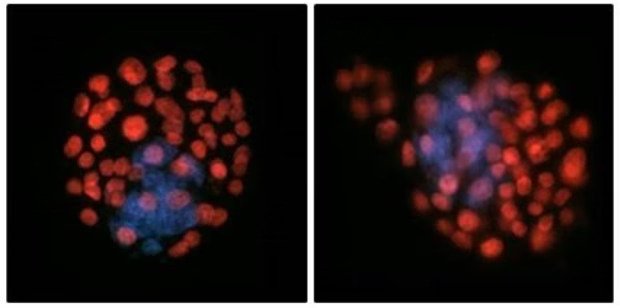
Image Source: The Guardian
Researchers from the University of Adelaide’s Robinson Research Institute used a 3D clinostat machine developed by Dr. Giles Kirby of Firefly Biotech to study astronaut sperm in space without going into space. The machine simulates zero gravity conditions by constantly rotating the samples to prevent them from developing a sense of up and down. This technique converts gravity from vector to scalar form. In this environment, sperm cells become disoriented.
The machine spun at different speeds to correctly simulate microgravity conditions. It spun slowly at 5 rpm and fast at 50 rpm. The machine was kept in an incubator set to 37°C, 5% CO2, and 100% relative humidity. The advanced version of the 3D clinostat machine spun in two directions. The inner frame spun at 0.683 rpm, and the outer frame spun at 0.913 rpm. This technique produced time-averaged simulated microgravity of less than 10^-3G. The researchers then put the sperm samples from humans, mice, and pigs in an artificial maze. This maze simulated the female reproductive system in mammals. This was the first time that scientists observed how sperm behave in space and how this affects their ability to reach the egg cell.
Why NASA and SpaceX Care About Astronaut Sperm in Space
Image Source: Space
The ability to colonize Mars and space depends on the ability to reproduce outside of the Earth. In April 2018, NASA launched its Micro-11 mission to the ISS to measure how effectively human sperm can reproduce in space. This was the first time that scientists have studied the ability of human sperm to reproduce in space. This was the first investigation of its kind. This mission was essential to fill in the knowledge gaps in the biology of reproduction for establishing animal and plant colonies on the moon and Mars.
Space radiation poses severe reproductive health risks. A three-year Mars mission will expose astronauts to a cumulative radiation dose of 0.4 Gy. In this exposure, the level of radiation will be 500 times higher than on Earth. Galactic cosmic rays and high charge and high energy particles induce spatially clustered DNA double-strand breaks in germ cells, which are difficult to repair. This mutation is heritable and can be transmitted to future generations, leading to severe reproductive health problems in the species.
For the survival of the species, the population size of the colonizers must be quite large. Estimates indicate that a minimum of 5,000 to 5,800 individuals are necessary for the establishment of a self-sustaining human colony on Mars. In the case of female astronauts, the mean age at first flight is 38 years. Therefore, fertility preservation through egg, sperm, or embryo freezing has become a recommended countermeasure for astronauts planning to conceive.
Conclusion
The researchers in Australia have undoubtedly identified the major challenge facing the survival of the species in the future. Microgravity has adverse effects on the reproduction of the human species. The innovative clinostat simulations have identified the effects of microgravity on sperm movement and navigation. The study has provided essential information for SpaceX and NASA on what happens to sperm in space. The colonization of Mars in the future requires the solution of this biological puzzle. In the future, the exposure of astronauts to radiation in deep space will compound the fertility concerns.
FAQs
Q1. How does microgravity affect sperm movement and navigation?
Microgravity has severe effects on the movement and navigation of sperm. Microgravity impairs sperm navigation by 40%. Sperm are able to swim but are not able to navigate in microgravity. Sperm lose their directional orientation in weightlessness and are not able to swim in the correct direction. Sperm movement speed also decreases by up to 32%. The percentage of static sperm increases from 51% to over 70%.
Q2. Can human reproduction be successfully done in space?
Current scientific research shows that there are many challenges facing human reproduction in space. This includes the effects of microgravity on sperm navigation and DNA fragmentation. All these factors can hinder the successful fertilization of human eggs in outer space. This issue, therefore, becomes a crucial problem to be addressed when conducting any space missions.
Q3. How do scientists study sperm behavior under space conditions on Earth?
Scientists have developed special machines called clinostat machines. This device helps simulate the effects of microgravity by rotating the biological samples at high speeds. This prevents the sperm from developing any orientation. This device helps simulate the effects of microgravity on sperm navigation. After this, scientists use artificial mazes to study the navigation capabilities of the sperm.
Q4. Why is the study of sperm functions in space crucial for Mars colony missions?
For any colony to be set up on Mars or the moon, human reproduction must be successfully done. This will ensure that after some time, the colony population will be enough to sustain themselves. This population will be composed of over 5,000 people. This issue, therefore, becomes crucial for any Mars missions. In order to solve this problem, NASA has launched missions to study the functions of sperm in space.
Q5. What other reproductive challenges are faced by people going to Mars due to space radiation?
Space radiation exposes the reproductive system to DNA damage. This DNA damage can occur when people travel to Mars. This DNA damage can be equivalent to about 500 times the amount experienced on Earth. This DNA damage can cause double-strand breaks, which are very hard to repair. This can cause mutations to be passed to future generations.
Read My Website Recent News Article: Australian Football
