


Side Effects of Cholesterol Medication: For decades, millions of patients worldwide have been apprehensive about taking statins because of widespread information about side effects. However, a groundbreaking meta-analysis has finally put the controversy to rest. A massive clinical review conducted by the University of Oxford and the University of Sydney has finally debunked the most prevalent myths about cholesterol-lowering medications, proving that these drugs are much safer than previously thought.
Global Clinical Review
This research has been hailed as one of the largest clinical reviews in the history of medicine. The team of researchers has carefully assessed data from 23 major clinical trials, involving more than 120,000 patients. The goal was to determine whether symptoms frequently blamed on statins—such as memory loss, depression, and sleep disturbances—were actually caused by the medication or were merely coincidental.
The findings, published in the prestigious medical journal The Lancet, reveal that out of 66 previously reported adverse events, only four were found to have a genuine biological link to the drug. Even then, these effects were classified as minor and manageable.
Which “Side Effects” Were Debunked?
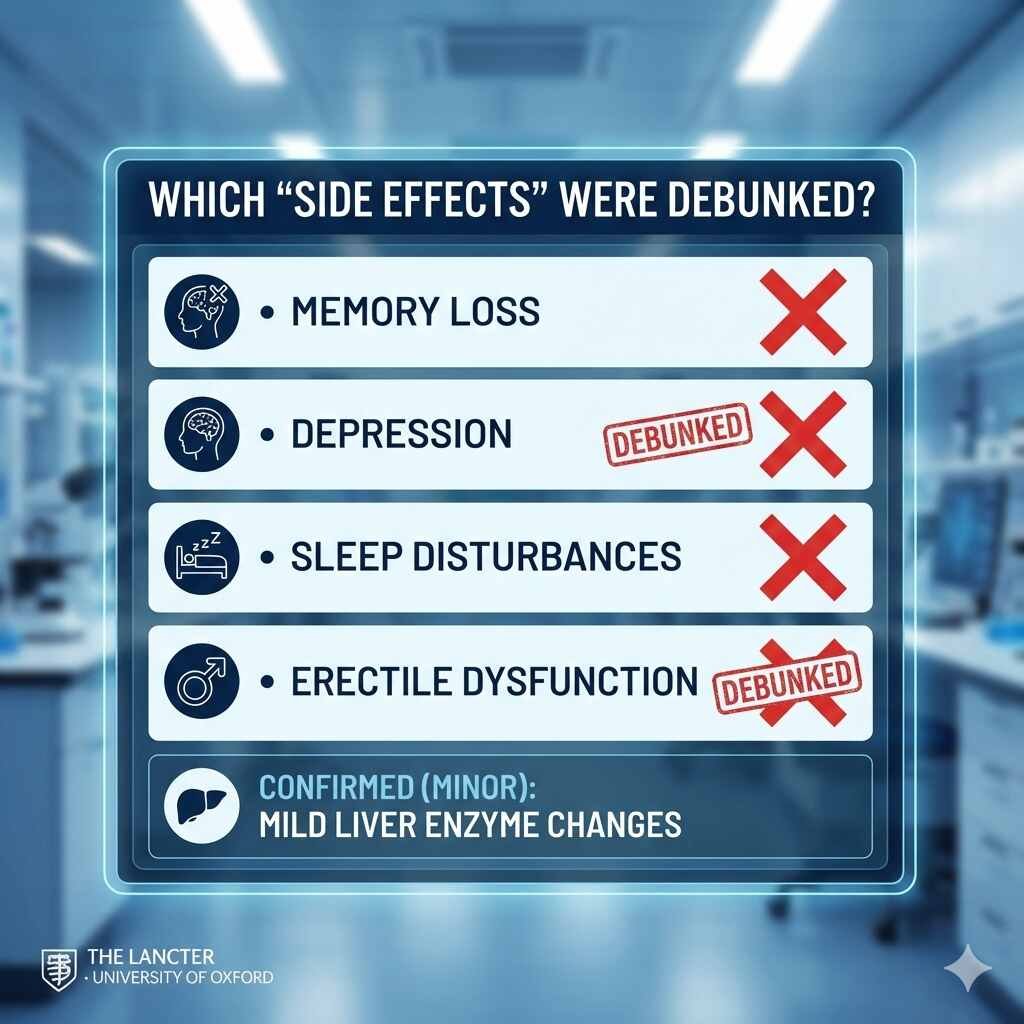
Many patients stop taking their medication because they fear cognitive or physical decline. This new research provides a reassuring counter-narrative to those concerns.
Addressing Memory Loss and Mental Health
One of the biggest concerns among elderly patients has been the fear of dementia or sudden memory loss. The study found no evidence that statins contribute to cognitive decline. Similarly, fears regarding clinical depression and erectile dysfunction were also proven to be statistically insignificant when compared to groups taking a placebo.
Muscle Pain and the ‘Nocebo’ Effect
While muscle aches are the most common complaint, researchers noted that a large portion of these symptoms is attributed to the “nocebo effect.” This happens when a patient expects a negative outcome and, therefore, perceives pain that isn’t biologically caused by the drug itself.
The Role of Clinical Trials in Verification

The researchers at the University of Oxford emphasized that when people take statins in the “real world,” they often attribute any new ache or mood swing to the pill. However, in double-blind clinical trials—where neither the patient nor the doctor knows who is taking the real drug—the reported side effects were nearly identical between the statin group and the sugar-pill group.
Why This Matters for Public Health

Heart disease remains the leading cause of death globally. Statins are a primary defense in preventing heart attacks and strokes by lowering LDL (bad) cholesterol. By debunking these myths, health experts hope that more high-risk individuals will feel confident in continuing their treatment.
“The benefits of statins in preventing major cardiovascular events far outweigh the very small risk of minor side effects,” the lead researchers concluded. This study serves as a vital reminder to rely on scientific data rather than anecdotal evidence found on social media.
Conclusion: Science vs. Speculation
The takeaway from this massive Oxford-led research is clear: for the vast majority of people, the fear of statins is far more dangerous than the medication itself. While it is natural to worry about what we put into our bodies, the “nocebo effect”—where our expectations of feeling bad actually create physical symptoms—has played a major role in how these drugs are perceived.
By looking at the hard data from over 120,000 patients, science has shown that the life-saving benefits of preventing a heart attack or stroke far outweigh the very slim chance of minor side effects. If you have been hesitant about your cholesterol treatment, this study offers the peace of mind that you are making a safe choice for your long-term health. However, as with any medical journey, the best path forward is always a transparent conversation with your GP or cardiologist.
Frequently Asked Questions (FAQs)
Does this study mean all statin side effects are “in the head”?
Not exactly. The study acknowledges that a very small number of patients (around 4 out of 66 monitored symptoms) do experience genuine biological changes. However, the point is that common issues like memory loss, depression, and insomnia—which many people blame on the drug—showed no real link to the medication in controlled trials.
What is the “Nocebo Effect” mentioned by researchers?
Think of it as the opposite of the “Placebo Effect.” If you read a long list of side effects and expect to feel muscle pain, your brain can actually trigger that sensation of pain, even if the pill itself isn’t causing it. This study suggests that much of the “statin intolerance” reported globally is actually driven by this psychological response.
Can I stop taking my cholesterol medication if I feel fine?
You should never stop or change your dosage without consulting your doctor first. Cholesterol is often a “silent” issue; you might feel perfectly fine while your arteries are narrowing. The study emphasizes that staying on the medication is a key factor in long-term heart health.
Are there any genuine side effects I should look out for?
While the study debunked most fears, researchers did note very rare instances of minor changes in liver enzymes or specific urine markers. These are usually picked up in routine blood tests by your doctor and are rarely something a patient feels physically.
Is this study reliable?
Yes, it is very reliable. It is a meta-analysis that was published in The Lancet, which is one of the oldest and most reputable medical journals in the world. It is also one of the most reliable sources of information that we have access to today because it pooled data from 23 clinical trials.
My Website Recent Article: Sophie Adenot Space Mission
