


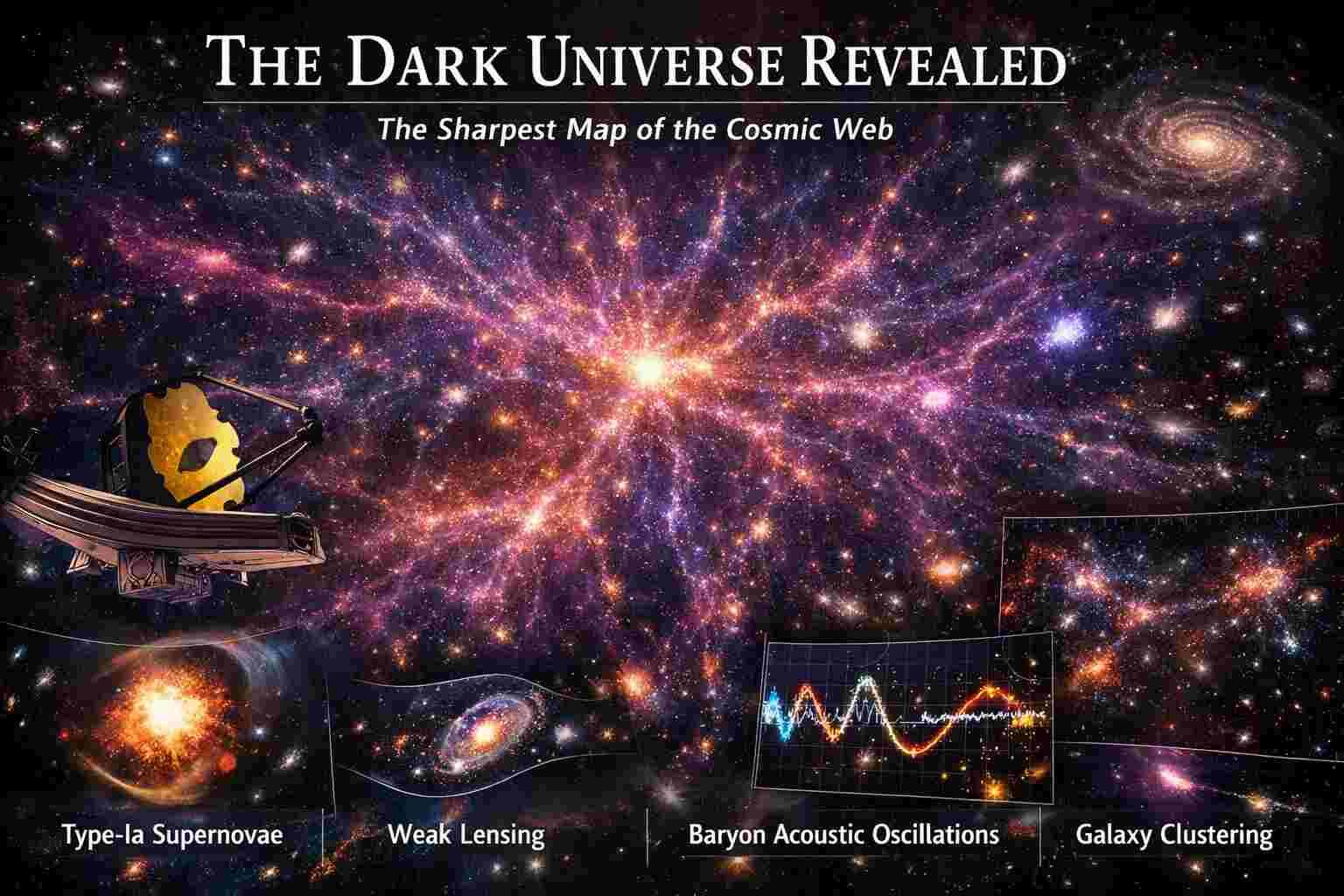
Sharpest Dark Universe Image: The dark universe has finally been captured in a never-before-seen image. Scientists have taken the sharpest image ever of the dark universe, thanks to six years of careful observation. Between 2013 and 2019, scientists gathered data over 758 nights, observing one-eighth of the sky and recording an astonishing 669 million galaxies that are billions of light-years away from our planet.
For the first time in the history of cosmology, four different approaches to studying dark energy have been combined into a single approach. This revolutionary study has reaffirmed that the dark universe comprises about 68% of the total energy and matter density of our universe. We have also found that the dark universe has not always been the dominant force in our 13.8 billion-year-old universe, as its influence only began to overcome the attractive force of gravity between 3 and 7 billion years ago. Based on the data gathered by the Dark Energy Camera, scientists have been able to successfully recreate the distribution of matter in the universe over the last 6 billion years of cosmic evolution, giving us our best look yet at how the physics of the dark universe actually works.
Scientists Capture Clearest Image of the Dark Universe
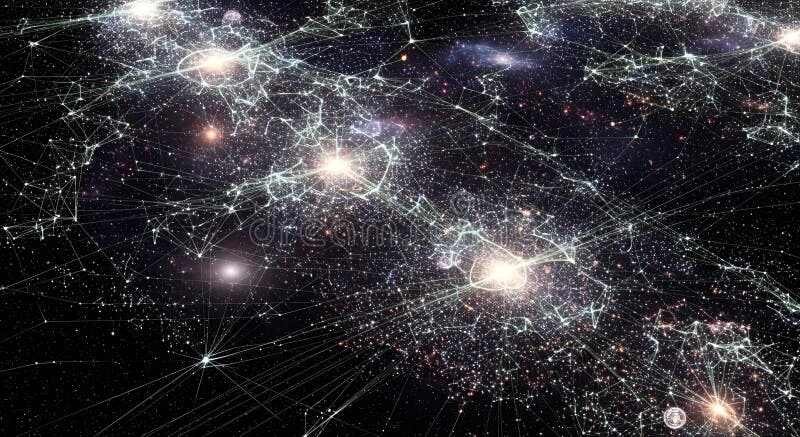
With the James Webb Space Telescope (JWST), scientists have created the most detailed map of dark matter ever made, giving us a glimpse into the hidden structure of our universe like never before. The new image shows the eerie shape of dark matter with unprecedented detail, tracing what scientists refer to as “the backbone of the universe”.
What the new image reveals about cosmic structure
The revolutionary new map reveals the macrostructure of the universe referred to as the cosmic web—a complex pattern in which dense areas of dark matter are bound together by filaments of lower density. The web-like pattern is visible in the new Webb data in a way that has never been seen before.
Over the course of cosmic evolution, the gravity of dark matter has been pulling regular matter towards it, which is what is necessary for the creation of stars and galaxies. The map verifies that this very close relationship between dark matter and regular matter cannot be an accident. Durham University’s Richard Massey says, “Wherever we look and see a large cluster of thousands of galaxies, we also see a large amount of dark matter in the same place. And when we see a thin string of regular matter between two clusters, we see a string of dark matter too”.
Moreover, the image verifies the theory that dark matter started accumulating in clumps first, forming a kind of gravitational skeleton that attracted regular matter afterwards. This is how the distribution of galaxies in the universe came to be as it is today. Dark matter’s presence is what may have prevented the elements for life from being formed in our galaxy.
How this image is different from previous observations
This image is different from previous observations in that it has twice the resolution of previous images. Although it only maps an area of the sky twice as large as the full moon, it provides a much more detailed image, identifying regions of dark matter that are too small to be detected by Hubble.
The Webb telescope map has 10 times as many galaxies as maps created by ground-based telescopes and twice as many as Hubble’s. It provides a new look at regions of dark matter, identifying new regions of dark matter while also providing a more detailed image of regions that have already been mapped by other telescopes.
In addition, the JWST has the capability to detect light from farther away in the universe, meaning that it can see further back in time. The JWST has the capability to detect the weak lensing effect of dark matter regions from 10 billion years ago or 11 billion years ago, which is during “cosmic noon” when the universe was actively making stars and galaxies. This is a critical point in the evolution of the universe that has not been observable in this detail before. This is not a coincidence, but rather the result of Webb’s unprecedented capabilities. As NASA’s Jet Propulsion Laboratory’s Diana Scognamiglio explains, “The James Webb Space Telescope is like having a new pair of glasses for the universe”.
Scientists Use Four Methods to Map Dark Energy
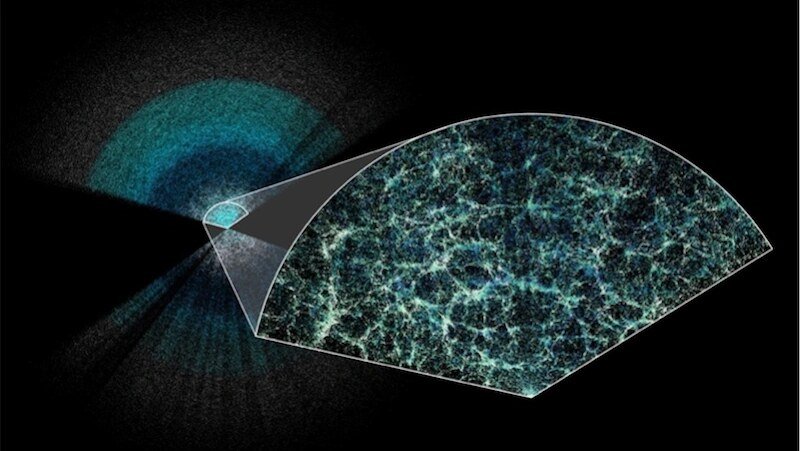
For the first time in history, scientists from the Dark Energy Survey (DES) have used four of the most effective methods of observation to produce the most complete map of dark energy to date. This historic study combines data from six years of observations of 5,000 square degrees of the sky.
Type-Ia supernovae and their role in cosmic measurement
Type-Ia supernovae are essential “standard candles” in cosmic measurements because of their similar intrinsic brightness. These rare occurrences of stellar explosions, which happen about once every 500 years in the Milky Way galaxy, enable scientists to calculate distances based on the comparison of their apparent brightness and actual brightness. By observing how fast these supernovae seem to be moving away from us at different distances, However, scientists are able to track the expansion of the universe through time. Notably, it was Type-Ia supernovae that originally discovered the acceleration of the expansion of the universe and, consequently, the existence of dark energy.
Weak Gravitational Lensing and Galaxy Clustering
The DES team of scientists made major breakthroughs in weak lensing techniques to map the distribution of matter in the universe. Weak lensing is the technique that tracks the tiny distortion of light from distant galaxies caused by the gravitational pull of matter in front of them, especially galaxy clusters. Scientists estimated the probability of the existence of two galaxies at certain distances and the probability of being similarly distorted by weak lensing. Scientists were able to map the distribution of matter in the universe for six billion years, estimating the amount of dark energy and dark matter at any given time.
Baryon acoustic oscillations and signals from the early universe
Baryon acoustic oscillations (BAO) are a kind of “standard ruler” for astronomers. BAOs are a kind of ancient sound wave that began in the hot, dense plasma of the early universe, freezing into place about 380,000 years after the Big Bang when the first atoms formed. This BAO signature is a subtle signature of a preference for galaxies to be a certain distance apart, roughly 147 million megaparsecs (480 million light-years). By measuring this characteristic distance at different points in time, researchers can reconstruct the history of the universe’s expansion. The new analysis offered 2.3 times more precise constraints than the previous measurements using other methods.
New Discoveries Cast Doubt on Existing Cosmological Models
Recent measurements with unprecedented precision have started to reveal flaws in our current understanding of the dark universe. Researchers have found that both major models of the universe—Lambda Cold Dark Matter (ΛCDM) and the dynamic dark energy model (wCDM)—are unexpectedly challenged.
Comparison of the results with the LCDM and wCDM models
The Dark Energy Survey (DES) recently compared observational evidence with the standard ΛCDM model, assuming a constant dark energy density, and the wCDM model, assuming an evolving dark energy density. While the results were consistent with both models, the DES observations are consistent with the evolving dark energy model without necessarily providing a better explanation for the data than the standard model. Observations of dark matter distribution by the James Webb Space Telescope are, at first glance, consistent with the predictions of the ΛCDM model, confirming that dark matter is the scaffolding upon which galaxies and galaxy clusters are built.
Unexpected anomalies in matter clustering
However, an anomaly has been present. Both cosmological models predict the same matter clustering in the modern universe based on early universe observations. However, the observations show that galaxies cluster in a different manner than predicted. This anomaly has grown with the recent DES observations. The universe is “less clumpy” than expected, and this has been termed the “S8 tension.” This anomaly has grown but is still below the threshold to be considered a rejection of the standard model of cosmology.
Expert comments on the implications of the results
“What we are finding is that both the standard model and evolving dark energy model fit the early and late universe observations well, but not perfectly,” says Judit Prat, co-lead of the DES weak lensing working group. Diana Scognamiglio of NASA’s Jet Propulsion Laboratory adds, “With this sharper view, we can test those predictions more precisely and search for small differences that could suggest new physics.” Interestingly, research at the University of Sheffield proposes that “interactions between dark matter and neutrinos could provide a solution to these discrepancies—and represent ‘a fundamental breakthrough in cosmology and particle physics’.”
Next Steps: Vera Rubin Observatory to Expand the View
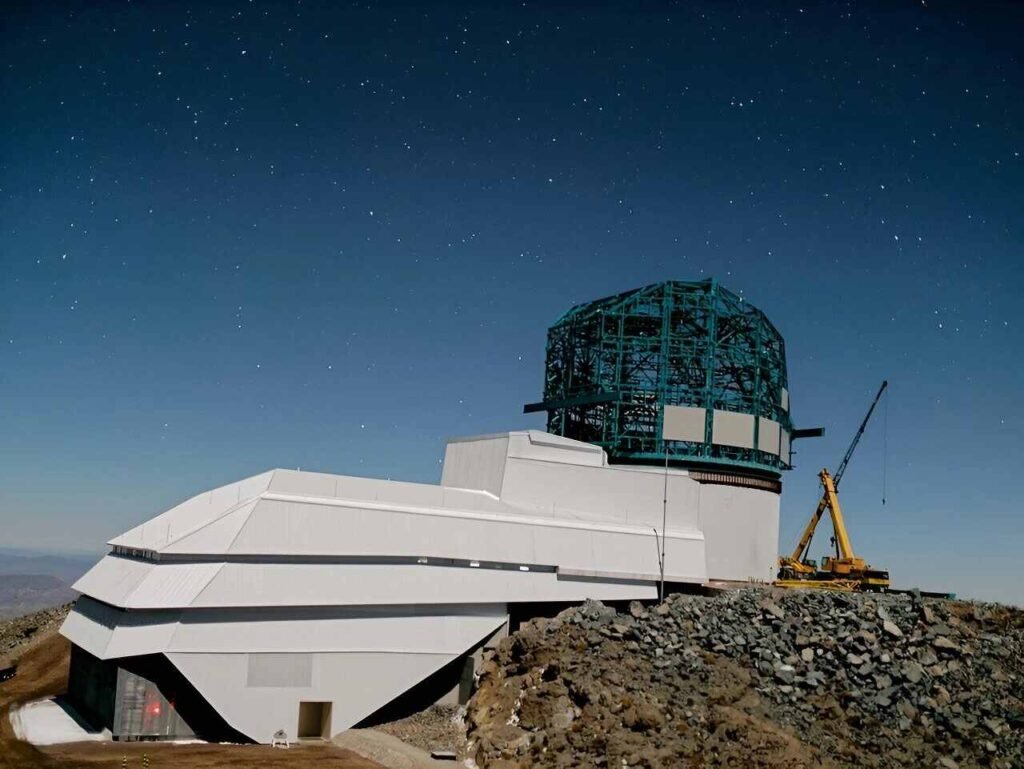
The forthcoming Vera C. Rubin Observatory is poised to transform our knowledge of the dark universe. Situated deep in the Chilean Andes, this cutting-edge observatory is soon to embark on its massive undertaking.
What the Legacy Survey of Space and Time (LSST) will do
When it opens, the Rubin Observatory will begin the Legacy Survey of Space and Time, or LSST—a project to scan the entire southern sky every few nights for a decade. It will employ the world’s largest digital camera, a 3,200-megapixel camera on an 8.4-meter telescope, to capture wide-field images. The images will capture a field of sky as wide as 45 full moons in 40 seconds. Over a decade, the Rubin Observatory will create an enormous catalog: 20 billion galaxies, 17 billion stars, and many more events in the universe. The Rubin Observatory will produce 20 terabytes of data nightly, reaching a total of 60 petabytes in the final stages of the survey.
How future data could refine or redefine dark energy theories
Based on recent results from the Dark Energy Survey, the LSST will extend the precision of measurements of cosmic structure to new levels. Scientists claim that the observatory will be able to provide conclusive evidence on whether or not the evolving dark energy models are correct and whether dark energy is constant or not. The first images from the Rubin Observatory were released in June 2025, and this marked the start of its full operational life. In the long term, the data from the LSST will provide complementary observations of other advanced telescopes, such as the Euclid Space Telescope, and will improve the methods we use to track the expansion history of the universe.
Potential for new physics beyond current models
Rubin may also uncover new phenomena that are not described by our current models of the universe. It was built with the aim of being able to test the hypothesis of possible directional variations in the fundamental properties of space and time. Its unparalleled sky coverage provides the opportunity for us to make discoveries that we have not yet thought of. According to one scientist, “I look forward to seeing what others discover by looking at the data with fresh eyes… someone may notice something that doesn’t fit into any known category—perhaps a new type of cosmic object—and this could be the key to a major breakthrough in our understanding of the Universe.”
Conclusion
Our comprehension of the dark universe has made a quantum leap with these revolutionary findings. Scientists have finally recorded the unprecedented picture of the cosmic forces at work in our universe, thereby verifying that dark energy makes up about 68% of the universe’s energy-matter budget. Moreover, we have come to realize that dark energy has not always been the dominant force in the universe, as it only started to overwhelm the power of gravity about 3 to 7 billion years ago.
The James Webb Space Telescope has certainly transformed our perspective of the cosmic web’s structure. Prior to this achievement, scientists had difficulty mapping the detailed design of dark matter with this level of clarity. As such, we are now able to follow what scientists refer to as “the backbone of the universe” with an unprecedented level of accuracy, thereby illustrating how the gravitational pull of dark matter provided the necessary conditions for the formation of stars and galaxies.
More importantly, the joint analysis of the four different observational methods has given us a complete framework for understanding dark energy. Type-Ia supernovae, weak gravitational lensing, galaxy clustering, and baryon acoustic oscillations combined give us 2.3 times more precise constraints than the previous measurements.
However, unexpected inconsistencies have arisen. The “S8 tension” – in which the universe is less lumpy than expected – contradicts the Lambda Cold Dark Matter model and the model of evolving dark energy. Although these results largely confirm current theories, they also suggest the possibility of new physics that lie beyond our current understanding.
The future is incredibly bright as the Vera Rubin Observatory readies itself to begin its Legacy Survey of Space and Time. This incredible tool will sweep the southern sky of the hemisphere repeatedly for a decade, finally able to catalog some 20 billion galaxies. Thus, we find ourselves poised on the edge of possibly redefining our very understanding of the universe itself.
As we consider these achievements in the realm of astronomy, one thing is certain: the dark universe remains a source of surprise for us. Although scientists have made tremendous progress in understanding these dark forces, the biggest discoveries are likely still to come. After all, the universe has always rewarded our curiosity with ever-deeper mysteries to explore.
FAQs
Q1. What is the importance of the new image of the dark universe taken by scientists? The new image is the most detailed and sharpest map of dark matter ever made. The new image shows the cosmic web with unprecedented detail, highlighting how dark matter is the backbone of the universe.
Q2. How does the James Webb Space Telescope help in understanding dark matter? The James Webb Space Telescope has greater resolution and sensitivity than any other telescope before it, enabling scientists to detect the weak effects of gravitational lensing up to 11 billion years ago. This enables scientists to map dark matter more accurately and further back in time.
Q3. What are the four methods that have been combined to study dark energy? Scientists have combined observations of Type-Ia supernovae, weak gravitational lensing, galaxy clustering, and baryon acoustic oscillations to make the most detailed map of dark energy yet.
Q4. What kind of challenges do the new results pose to the current models of cosmology? New observations show that the universe looks “less clumpy” than expected in current models, introducing a problem known as the “S8 tension.” This problem is a challenge to both the Lambda Cold Dark Matter model (ΛCDM) and the dark energy model (wCDM).
Q5. How will the Vera Rubin Observatory help us better understand the dark universe? The Vera Rubin Observatory will undertake the Legacy Survey of Space and Time (LSST), which will map the entire sky in the southern hemisphere every few nights for a decade. This will result in the cataloging of approximately 20 billion galaxies, which could lead to the redefinition of theories about dark energy or even the discovery of new phenomena in the universe.
Read My Website Recent News: RBA Rate Hike Alert
