


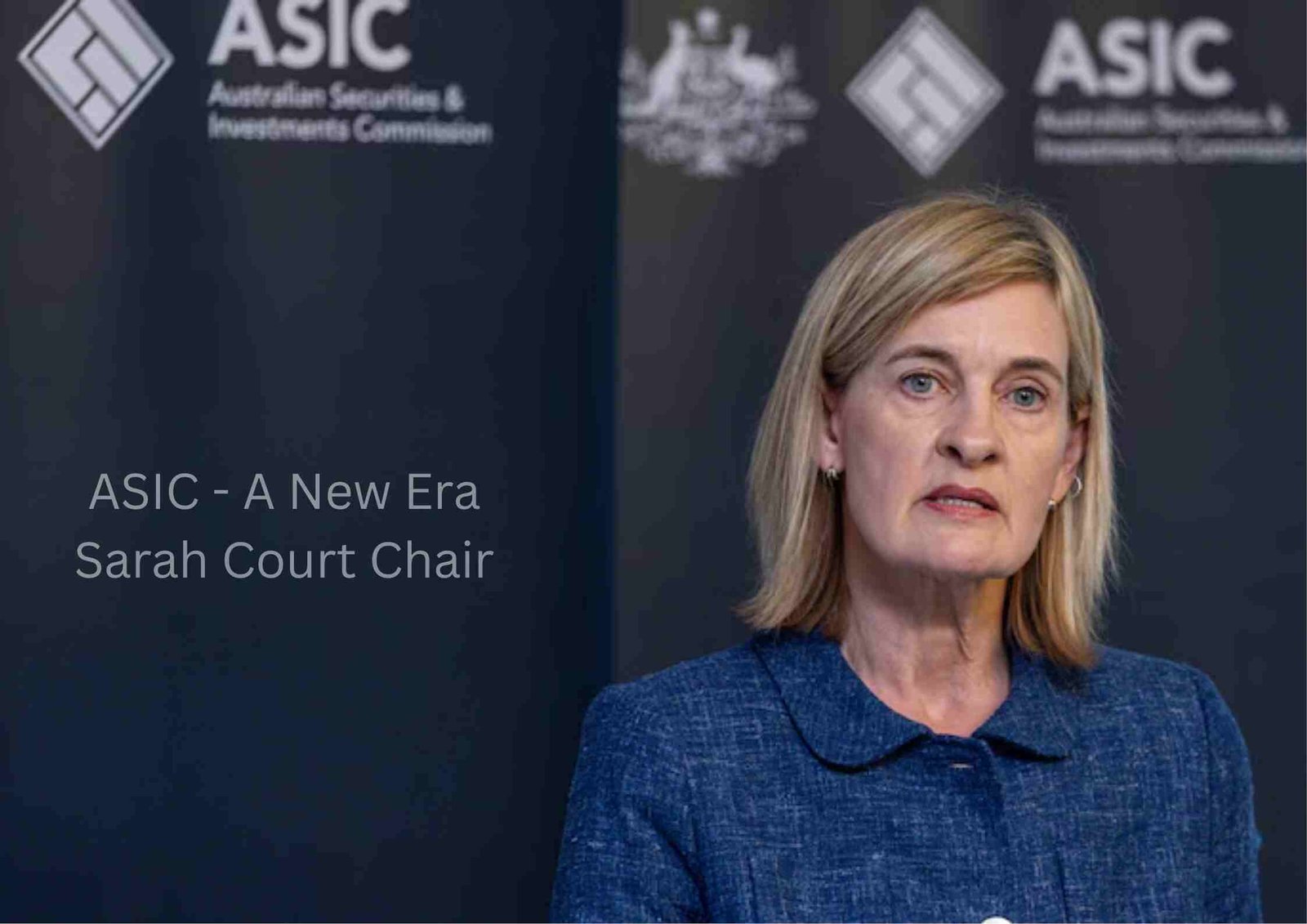
Sarah Court Appointed as ASIC Chair: In a historic move that is expected to redefine the corporate sector in Australia, the Federal Government has finally appointed Sarah Court as the new Chair of the Australian Securities and Investments Commission (ASIC).
This move brings an end to the speculation that had been rife for several months over who would succeed Joe Longo. With the appointment of Court, who is the Deputy Chair and has been the enforcement powerhouse for a long time, the Federal Government has made one thing abundantly clear to the corporate sector in Australia: the era of negotiation is over, and the era of litigation has begun.
From Deputy to The Top Job: A Strategic Promotion
Sarah Court is not a new face to regulation, but her elevation to the Chair signifies a hardening of ASIC’s stance. Since joining ASIC as Deputy Chair in 2021, and throughout her previous decade-long tenure at the ACCC (Australian Competition and Consumer Commission), Court has built a formidable reputation.
She is widely credited with shifting ASIC’s culture away from “enforceable undertakings” (settlements outside of court) toward high-profile court cases. Her philosophy has always been straightforward: public court rulings serve as a stronger deterrent than quiet backroom deals.
The End of the “Why Not Litigate?” Debate
Under previous administrations, ASIC was often criticized for being “toothless” or too slow to act. The Royal Commission into Misconduct in the Banking Superannuation and Financial Services Industry famously asked regulators, “Why not litigate?”
With Sarah Court now at the helm, the issue is thus effectively settled. It is expected that under her leadership, ASIC will proceed much more quickly to bring proceedings, seeking maximum penalties rather than quick settlements.
Key Priorities: What Will Sarah Court Target?
With a heavy agenda ahead of her, the new Chair of ASIC comes to her position with a lot on her plate. Based on her recent speeches and enforcement actions, the market can expect a focus on four key areas:
Greenwashing and ESG Misconduct
Sustainability is no longer simply a marketing gimmick but a regulatory landmine. Court has already indicated that firms claiming to be “green” without scientific basis will find the full weight of the law coming down on them. ASIC is expected to target investment funds and superannuation schemes that deceive consumers about their ethical credentials.
The Crypto and Digital Asset Frontier
In the wake of the collapse of a number of high-profile exchanges around the world in the past few years, the protection of Australian consumers in the lawless world of crypto is a key priority. Court is expected to push for a more stringent definition of digital assets as financial products, placing them firmly within ASIC’s regulatory remit.
Director Accountability and Cyber Resilience
In the wake of a number of corporate data breaches, ASIC has made it clear that cyber resilience is a key directorial concern. Court is likely to target firms whose boards of directors have failed to put in place adequate measures to safeguard consumer data, regarding such failures as a breach of directors’ duties.
What This Means for Australian Businesses
The appointment of Sarah Court is likely to increase the “compliance burden” for businesses, but it also levels the playing field for honest operators.
- Higher Legal Risks: Companies found cutting corners can expect to end up in Federal Court rather than a negotiation room.
- Focus on Executive Bonuses: There will likely be renewed scrutiny on how executive remuneration is linked to compliance failures.
- Consumer Fairness: The definition of “unconscionable conduct” will be tested rigorously, particularly regarding how banks and lenders treat vulnerable customers in a high-interest-rate environment.
Industry Insight: “Sarah Court does not bluff. If she says ASIC is looking at a sector, smart directors review their policies immediately. She brings a prosecutor’s mindset to the Chair role, which is exactly what consumer advocates have been asking for.” — Senior Banking Analyst, Sydney.
A Warning to the “Big End of Town”
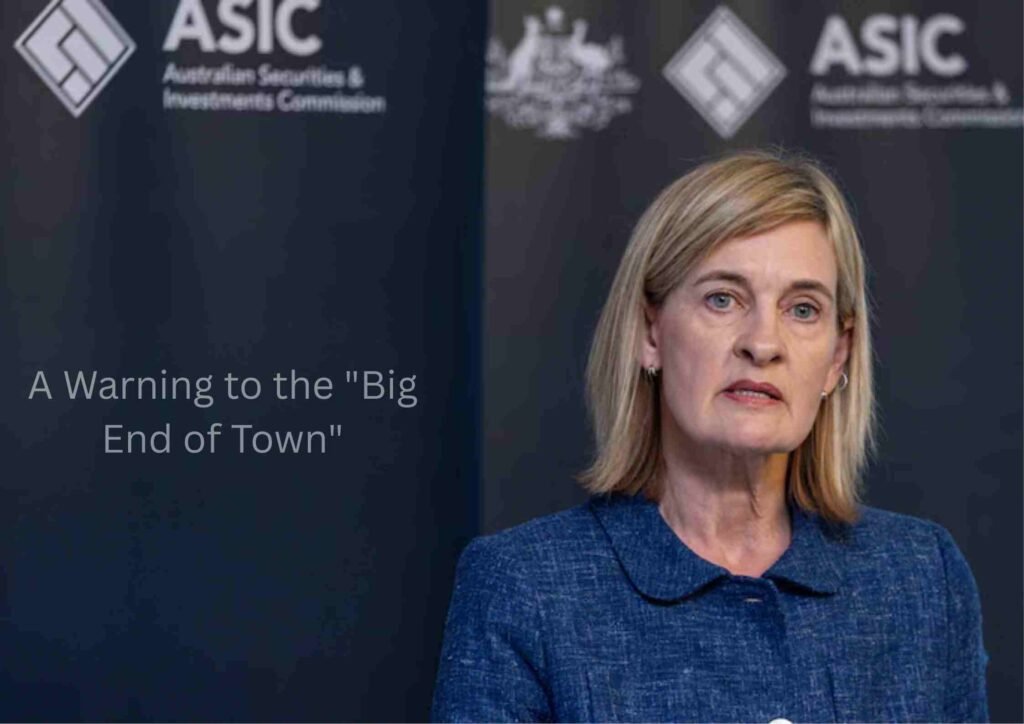
While small businesses are always on the radar, Sarah Court’s track record suggests she is not afraid of the “Big End of Town.” During her time at the ACCC and as ASIC Deputy, she spearheaded cases against major airlines, telecommunication giants, and the Big Four banks.
Her appointment effectively removes any hope that ASIC might soften its approach in 2026. Instead, the regulator is expected to become more proactive, utilizing data analytics to identify misconduct before it becomes a systemic failure.
Conclusion: Prepare for a Tougher Regulator
The promotion of Sarah Court to ASIC Chair is arguably the most significant regulatory appointment of the decade. It signals a shift from “education and guidance” to “enforcement and punishment.”
For business leaders, legal teams, and compliance officers, the takeaway is simple: review your governance frameworks now. Under Sarah Court’s watch, the cost of non-compliance is about to get much higher.
Frequently Asked Questions (FAQs) About Sarah Court’s Appointment
Q1: Who is Sarah Court and why is her appointment important?
Sarah Court is a seasoned Australian legal regulator who has been the Deputy Chair of ASIC since 2021. Before that, she was a Commissioner at the ACCC (Australian Competition and Consumer Commission) for more than a decade.
The appointment is important as she is known to be a “litigator” who likes to take the matter to court rather than trying to reach a settlement. She is also the first female Chair of ASIC, which is a historic moment for the organization.
Q2: When will Sarah Court take over as the ASIC Chair?
The news of her appointment was announced on February 2, 2026, and she will take over as the ASIC Chair on July 1, 2026, for a period of five years. Until then, the current Chair, Joe Longo, will continue to run the organization to ensure a smooth transition.
Q3: How will her style of working be different from Joe Longo’s?
Joe Longo had been working on revamping ASIC and improving its data infrastructure. Sarah Court is likely to give more importance to enforcement output.
To explain: Longo has constructed the engine, and Court will now get behind the wheel and move quickly. Market expectations are that she will take a harder line in pursuing court action against misconduct, continuing the “litigation-first” policy that she advocated as Deputy Chair.
Q4: What are the key areas that ASIC will target under her leadership?
From her recent comments and ASIC’s 2026 plan, the key areas of focus for businesses are:
- Greenwashing: Misleading environmental claims by companies and super funds.
- Private Credit: Unregulated lending practices that put investors at risk.
- Cost of Living Pressures: Misleading pricing or “junk fees” that hurt consumers in a high inflation environment.
- Insurance: Delays and unfair treatment of insurance claims.
Q5: Will this impact small businesses or just large corporations?
While large banks and ASX-listed companies are often the focus of media headlines, Sarah Court has always emphasized the need to protect small businesses from predatory lending and insolvency conduct. For small business owners, the key message is about compliance: get your financial reporting right and avoid misleading customers in marketing.
Q6: What immediate action should company directors take?
Directors need to review their risk and compliance environment. Specifically, they need to ask the following questions:
- Can we support every claim we make in our marketing, with special attention to ESG claims?
- Are we treating vulnerable customers fairly?
If the response to either of these questions is “no” or “maybe,” the company is in the risk zone.
Read My Website Recent Article: 7 Nutrient-Dense Foods
