


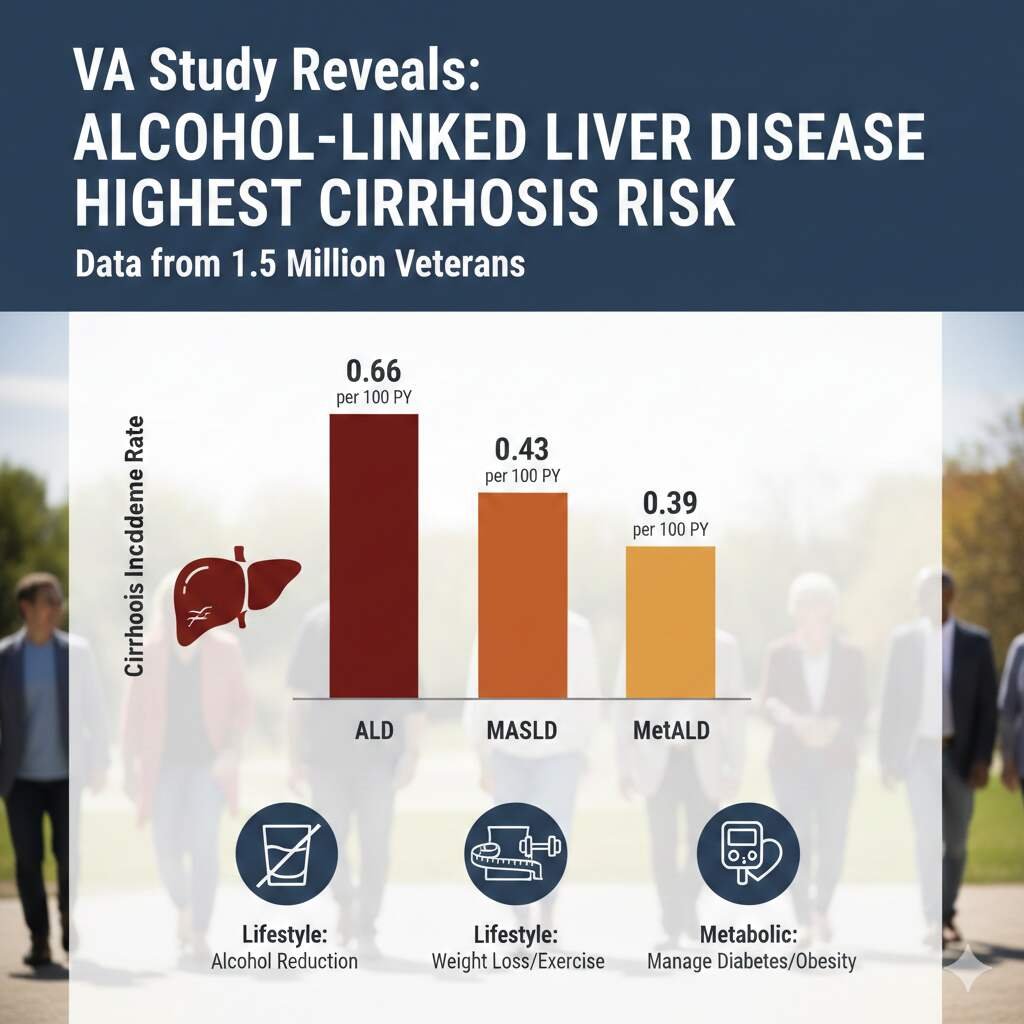
The Risk of Cirrhosis varies considerably depending on the underlying etiology of liver disease. This was demonstrated in a recent study carried out by the Department of Veterans Affairs. The study was a database analysis of patients diagnosed with different forms of liver disease over a period of thirteen years. The study included a total of 1,505,430 patients. The study revealed that patients suffering from alcohol-linked liver disease had the highest risk of cirrhosis at a rate of 0.66 per 100 person-years when compared to those suffering from metabolic dysfunction-associated steatotic liver disease at a rate of 0.43 and MetALD at a rate of 0.39. Understanding cirrhosis risk factors is vital for clinicians in developing targeted prevention strategies. The study identified other risk factors for cirrhosis in patients. These factors included obesity and diabetes. The risk of cirrhosis was found to be increased by 36% in patients suffering from metabolic dysfunction-associated steatotic liver disease. This demonstrates the vital need for addressing both alcohol and metabolic factors.
VA Study Reveals that ALD Has the Highest Risk of Cirrhosis among 1.5 Million Veterans
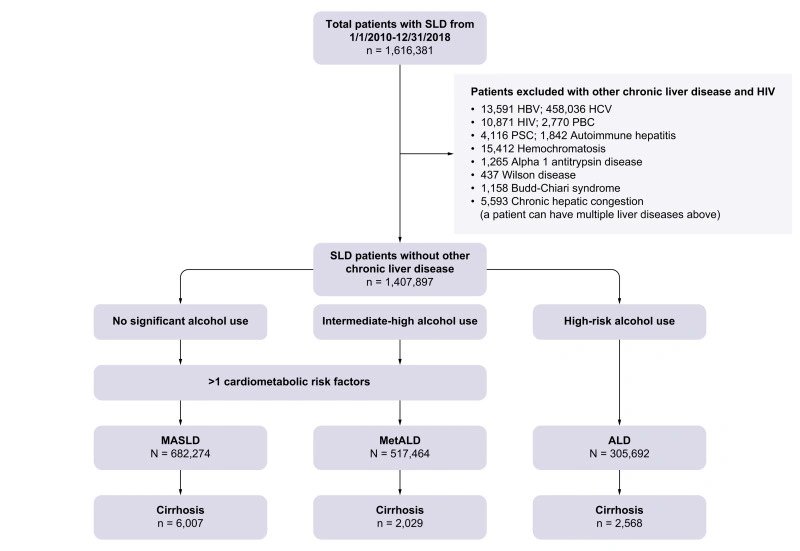
Image Source: ScienceDirect
Key Findings of the Study
The authors carried out a retrospective cohort study using national longitudinal data from the Veterans Affairs Corporate Data Warehouse. The study included veterans between January 1, 2010, and December 31, 2022. The study was extended up to December 31, 2023. The authors identified a total of 1,505,430 veterans with steatotic liver disease. The authors divided steatotic liver disease into three distinct categories: 682,274 patients with MASLD, 517,464 patients with MetALD, and 305,692 patients with ALD. The median follow-up time was 7.2 years. This gave the authors substantial data for assessing long-term risk factors for liver cirrhosis in different disease etiologies.
Steatotic liver disease comprises metabolic dysfunction-associated steatotic liver disease, metabolic and alcohol-associated liver disease, and alcohol-associated liver disease. It remains the most common cause of chronic liver disease in the US. The sheer number of patients in this study enabled the authors to investigate cirrhosis risk factors in unprecedented detail. The authors found patterns in cirrhosis risk factors that smaller studies could not have identified.
Cirrhosis Incidence Rates Across Disease Subtypes
The highest rates of cirrhosis development in patients were found in those with ALD, at a rate of 0.66 per 100 person-years. This was found to be significantly higher than in both MASLD and MetALD patients. The rates for MASLD and MetALD were found to be lower at 0.43 and 0.39 per 100 person-years, respectively. This shows a gradient in the risk of developing liver cirrhosis in patients based on their disease subtype.
The researchers found that the patients in the MetALD group had the lowest risk of developing cirrhosis. This was a notable finding for the researchers. The reason for this trend in cirrhosis development in patients remains unknown. The researchers noted that the outcomes of the study were assessed based on the index diagnosis. The patterns of alcohol and metabolism in patients tend to vary greatly over time.
Mortality Patterns Also Follow the Trend of Cirrhosis Development
The overall mortality rates in patients were found to be similar in trend to those of cirrhosis development. The mortality rates in patients with ALD were found to be higher at a rate of 0.32 per 100 person-years. This was in comparison to the mortality rates in patients with MASLD and MetALD. The rates for MASLD and MetALD were found to be lower at 0.24 and 0.19 per 100 person-years, respectively. The Kaplan-Meier survival curve was found to be significant in all three subtypes of SLD. The lowest survival rate was found in patients diagnosed with ALD.
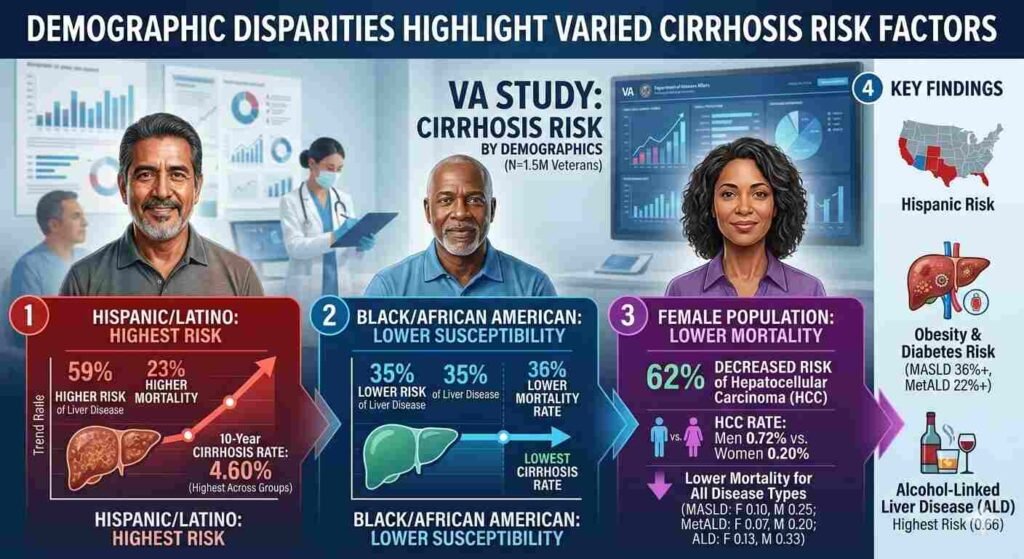
When comparing female and male populations, it was found that females had lower mortality rates compared to their male counterparts for all disease types. In particular, females had a mortality rate of 0.10 compared to 0.25 for MASLD, 0.07 compared to 0.20 for MetALD, and 0.13 compared to 0.33 for ALD.
How MASLD, MetALD, and ALD Compare in Liver Cirrhosis Development
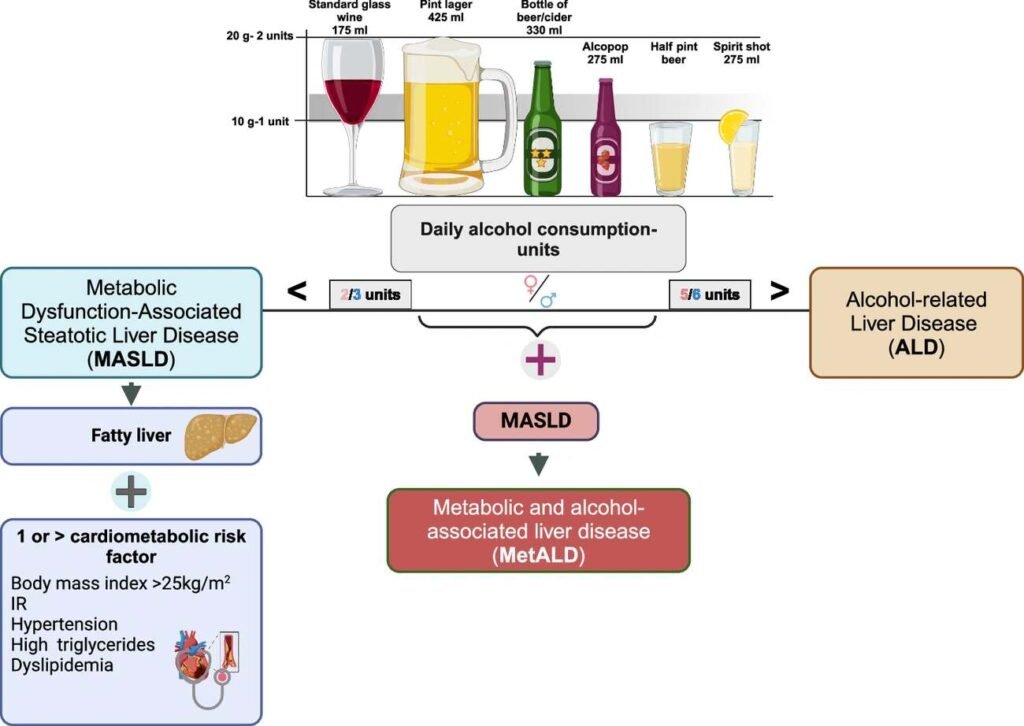
Image Source: Nature
Alcohol-Associated Liver Disease Leads in Cirrhosis Development
It has been found that cumulative risks for developing liver cirrhosis were high for individuals with ALD compared to those with MASLD or MetALD after a long period of time. In particular, it was found that cumulative risks for developing liver cirrhosis were 6.9% for ALD, 3.2% for MetALD, and 3.1% for MASLD. In comparison to individuals without steatotic liver disease, it was found that individuals with ALD had a 2.82 higher risk for developing liver cirrhosis compared to 1.72 and 1.30, respectively. When comparing with non-SLD patients without any cardiometabolic risk factors, the gap has further increased, with ALD patients showing an adjusted HR of 4.74 for the development of cirrhosis. In line with these findings, hepatocellular carcinoma has also demonstrated a similar trend, with ALD patients showing a cumulative incidence rate of 1,176.65 per 100,000 individuals after 10 years.
Metabolic Dysfunction-Associated Steatotic Liver Disease Shows Moderate Risk
MASLD has been found to be associated with an intermediate level of risk. The condition is strongly related to cardiometabolic dysfunction. In diagnosed patients with MASLD, 20.86% had an age-adjusted prevalence of clinically significant fibrosis. In addition, 8.98% had evidence of advanced fibrosis. The combined effect of obesity and diabetes has been found to be significant, with a 36% increased risk of cirrhosis in MASLD patients with these two conditions as opposed to MASLD patients without these conditions.
MetALD Patients Demonstrate Unexpectedly Lower Risk Profiles
MetALD patients had a lower risk of cirrhosis than expected. The age-adjusted percentage of significant fibrosis was found to be 13.27%. This was lower than the expected risk of 20.86% in MASLD. The percentage of advanced fibrosis was found in only 5.47% of MetALD patients compared to the expected risk of 8.98% in MASLD. This contradicts the previously expected risk. The increased risk of cirrhosis in MetALD patients due to the combined effect of obesity and diabetes was found to be only 22%. This was lower than the expected risk of a 36% increase in MASLD.
Demographic Disparities Highlight Varied Cirrhosis Risk Factors
Hispanic Patients Face Elevated Cirrhosis Risk
Racial and ethnic disparities play a crucial role in influencing the risk factors for liver cirrhosis in different patient groups. The risk of liver disease in Hispanic adults was found to be 59% higher than the average risk in the US population in 2018. This risk was found to be twice as high in Mexican American adults. Hispanics had a 23% higher risk of death due to chronic liver disease and cirrhosis in 2022. Hispanic veterans with noncirrhotic metabolic dysfunction-associated fatty liver disease had a considerably higher risk of cirrhosis compared to their counterparts in the non-Hispanic White ethnic group. The risk of cirrhosis in Hispanic veterans was found to be higher than in non-Hispanic White veterans. The risk of cirrhosis was found in 4.60% of Hispanic veterans over a period of 10 years. the highest rate across all racial groups.
African-American and Female Patients Show Lower Susceptibility
In a comparative analysis of Black/African American adults in the United States, the risk of liver disease was found to be 35% lower in this patient population compared to the rest of the US population. The mortality rate of African American patients was found to be 36% lower for chronic liver disease and cirrhosis. A similar trend was noted in females as well. The risk of hepatocellular carcinoma was found to be markedly lower in females compared to their male counterparts. The HR for hepatocellular carcinoma was found to be 0.38 (95% CI: 0.29-0.50). The risk of hepatocellular carcinoma was found to be 0.72% in men compared to a mere 0.20% in women.
Why Patient Demographics Matter in Risk Assessment
The factors influencing liver disease progression in different patient populations are a topic of interest and concern. The fact that veterans of all races have access to healthcare facilities and resources makes this a topic of interest. The question of social determinants influencing liver disease progression in different patient populations arises.
Clinical Implications Shape Treatment and Prevention Strategies
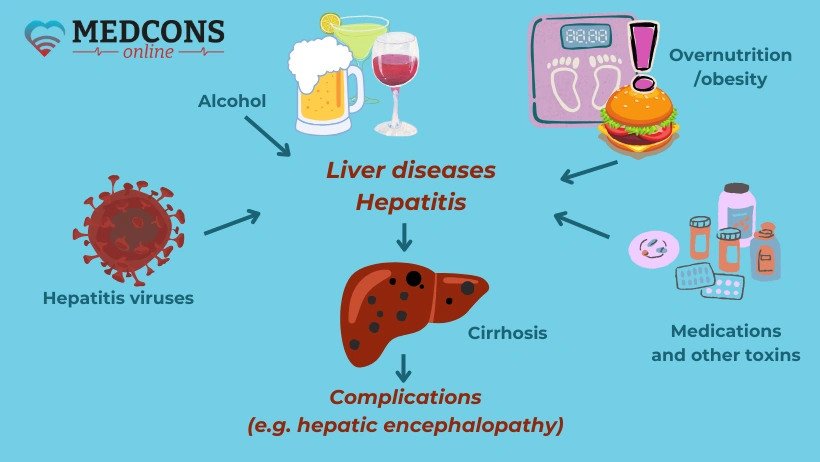
Image Source: Medical Second Opinion – Online Doctors Consultations & 2nd Opinion Services
Lifestyle Modifications Target Multiple Cirrhosis Risk Factors
It has been found that a combination of interventions aimed at modifying lifestyle factors and addressing metabolic comorbidities and reducing alcohol intake is a crucial step in the prevention of cirrhosis. Weight loss interventions have been found to be effective in improving liver function. Bariatric surgery has been found to lower mortality risk by a whopping 37%. In addition, liver-related mortality was found to be 76% lower in MASLD patients with cirrhosis. Lifestyle modification interventions aimed at weight loss through dietary changes and physical activity are highly recommended. Weight loss remains a major
Alcohol Reduction Programs Remain Critical Intervention
Alcohol reduction programs through brief interventions of patient-centered counseling sessions lasting between 5 and 15 minutes have been found effective in reducing alcohol intake. The AUDIT-C screening tool detects risky drinkers. A positive screening result corresponds to a total of 4 or more for men and 3 or more for women. Sequential testing through blood-based and imaging-based tests increases positive predictive value in the referral pathway. The use of an integrated care model in treating mental health in general medical settings remains crucial in the management of alcohol use disorder.
Optimization of Metabolic Comorbidities for Risk Reduction
Early diagnosis and treatment can prevent the progression of fibrosis to cirrhosis in MASLD patients. Adults with prediabetes and type 2 diabetes should undergo risk stratification for liver fibrosis. Nutritional optimization and prehabilitation should also be considered for risk reduction.
Future Research Directions for Risk Stratification
The role of metabolic and alcohol-related factors in the development of cirrhosis should be the subject of further research.
Conclusion
The comprehensive study conducted by the VA has proved that the risk of cirrhosis is significantly high in alcohol-related liver disease compared to metabolic-related liver disease, with demographic differences in the Hispanic and female populations. Above all, the study emphasizes the need for interventions to address both alcohol consumption and metabolic comorbidities. These factors can be used by medical professionals to calculate the risk of cirrhosis in liver disease and design prevention strategies for the affected population. As depicted in the above graph, the progression of disease in the population can be understood, and the allocation of resources can be improved for the population at large.
FAQs
Q1. What is the difference between ALD, MASLD, and MetALD in terms of the risk of cirrhosis?
Alcohol-associated liver disease has the highest risk of cirrhosis, at 0.66 per 100 person-years, followed by MASLD at 0.43 per 100 person-years. Interestingly, the risk of liver disease in MetALD is the lowest, at 0.39 per 100 person-years, despite the presence of both factors in the disease.
Q2. What demographic groups have the highest risk of developing cirrhosis due to liver disease?
Hispanic populations have the highest risk of liver disease, with a 10-year incidence rate of 4.60% and 80% increased risk compared to non-Hispanic White populations. Women and African American populations have low susceptibility to liver disease, with 62% decreased risk of hepatocellular carcinoma in the female population compared to the male population.
Q3. What is the impact of obesity and diabetes on the risk of liver cirrhosis in liver disease patients?
The presence of both obesity and diabetes has a significant impact on the risk of liver cirrhosis in liver disease patients. In the case of MASLD, the presence of both conditions increases the risk of liver cirrhosis by 36%. Even in the case of MetALD, the presence of both conditions increases the risk by 22%.
Q4. What lifestyle modifications can help in reducing the risk of liver cirrhosis?
Weight loss through dietary interventions and exercise is strongly recommended for reducing the risk of liver cirrhosis. Bariatric surgery has shown a reduction in mortality by 76% in MASLD patients with liver cirrhosis. Alcohol reduction interventions, in which counseling is conducted for 5-15 minutes, have also been found to be effective in reducing the risk of liver damage caused by excessive consumption of alcohol.
Q5. What is the effectiveness of screening methods in identifying the risk of liver disease caused by the consumption of alcohol?
The effectiveness of screening methods, such as AUDIT-C, in identifying the risk of liver disease caused by the consumption of alcohol is high, and the presence of scores of 4 or more in males and 3 or more in females is considered to be a positive screening result for hazardous drinking habits. Sequential testing, in which blood-based and imaging methods are used, is also effective in identifying the risk of liver disease caused by the consumption of alcohol.
Read My Website Recent News Article: Astrophotographer
