


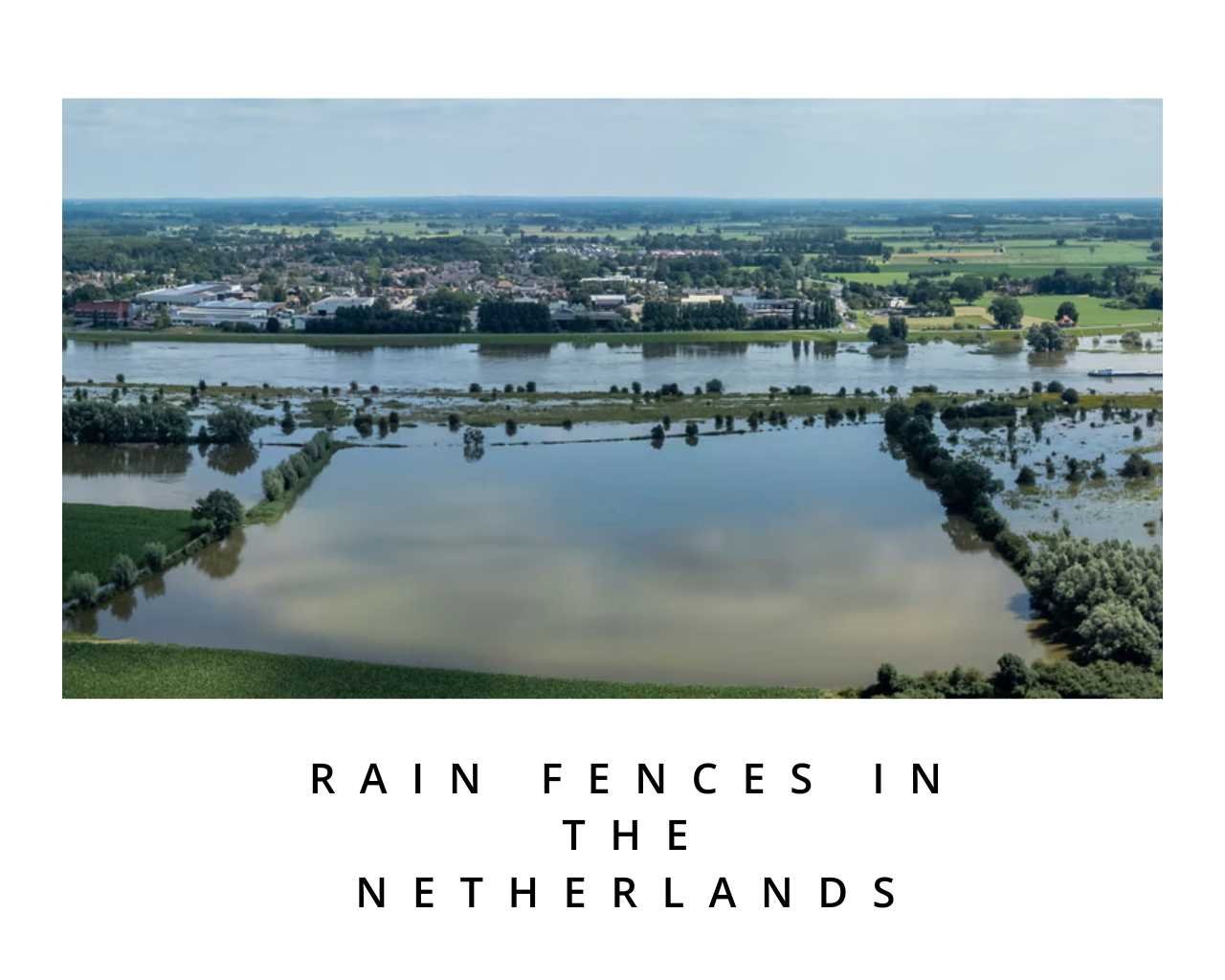
Rain Fences in the Netherlands: When Theo and Willy Bolder looked out at their garden in the Dutch town of Veldhoven, they didn’t just see a decorative boundary line separating them from their neighbors. They were looking at a frontline defense mechanism against a rapidly changing climate.
The Netherlands has a world-renowned history of mastering water. From the catastrophic 1953 North Sea flood emerged the Delta Works, a massive engineering marvel designed to keep the ocean at bay. Today, however, the country faces a highly unpredictable threat: sudden, violent deluges of rainwater from above. In response, social housing organizations and everyday citizens are turning to a surprisingly simple, decentralized solution—the rain fence.
The Dual Threat of Heat Islands and Flash Floods
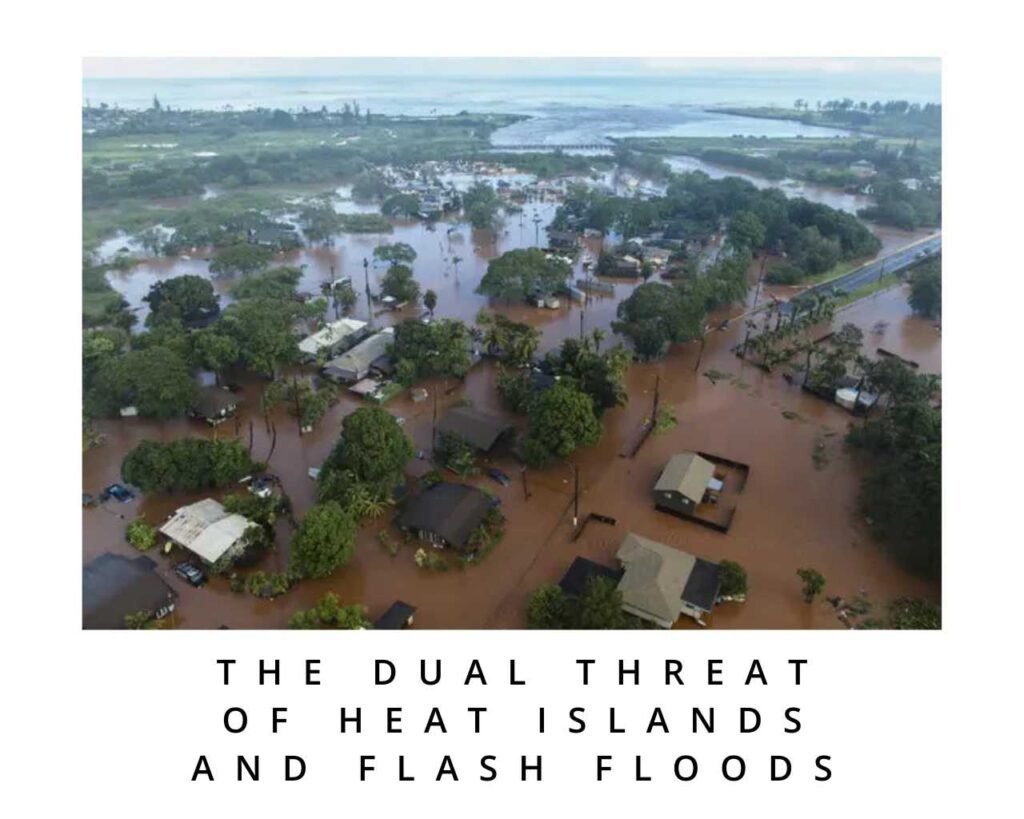
To understand why urban planners are suddenly obsessed with residential fencing, one must look at the paradoxical weather patterns currently shifting across Northern Europe.
Based on climate information from the Royal Netherlands Meteorological Institute (KNMI), the average rise in temperatures in this country since 2000 has been 1 degree Celsius. In densely packed urban environments, this warming trend is severely amplified. Concrete and asphalt absorb solar radiation, creating “urban heat islands” where city temperatures frequently measure up to 5°C warmer than the surrounding countryside.
This localized heat accelerates water evaporation, leading to a frustrating cycle: prolonged, severe summer droughts abruptly interrupted by aggressive cloudbursts.
Remembering the 2021 Limburg Disaster
For many municipalities, the ultimate wake-up call arrived in July 2021. Over a frantic 48-hour period, more than 15 centimeters of rain battered the southern regions of Limburg and Brabant.
The resulting floods forced the evacuation of over 50,000 residents and generated a staggering €1.8 billion in total infrastructure and property damage. Traditional drainage systems, engineered for a gentler, historical climate, completely failed.
Rik Thijs, Eindhoven’s deputy mayor for public space, water, and greenery, summarized the crisis plainly: municipal sewage networks can no longer be expanded fast enough to handle these extreme weather events. When concrete prevents natural soil absorption, city streets inevitably turn into rivers. The only viable path forward is to intercept the water before it ever reaches the municipal drains.
Inside the Engineering of Rain City Fencing
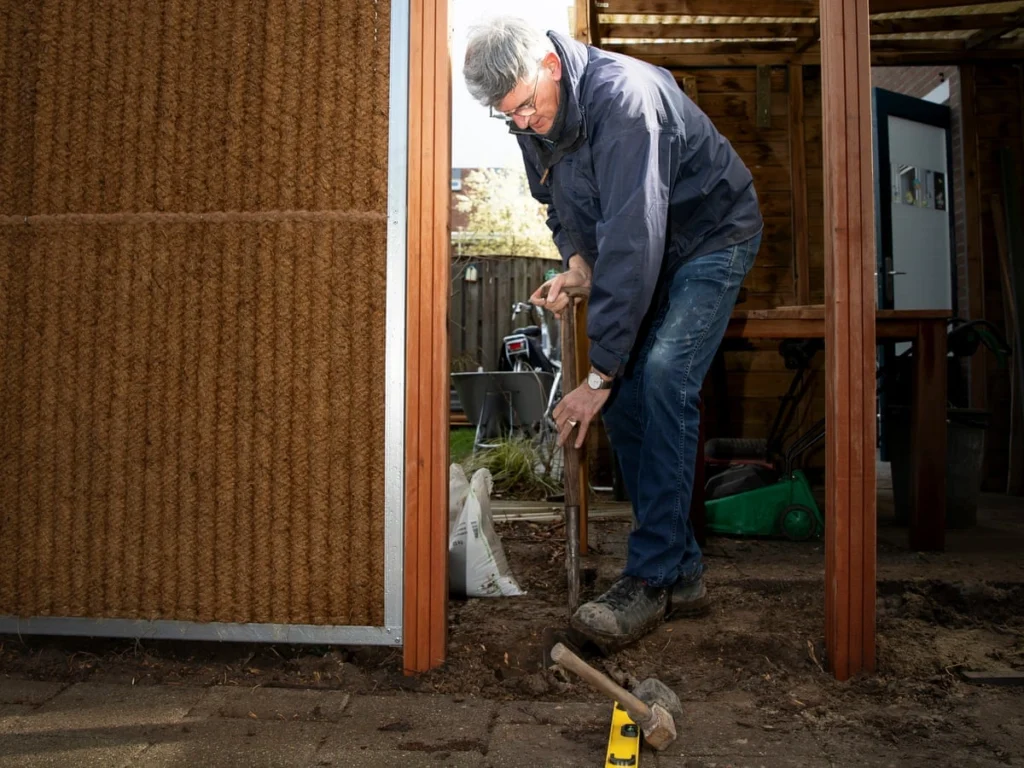
At a passing glance, the rain fence installed at the Bolders’ property looks like a standard, aesthetically pleasing rattan privacy screen. The real innovation is hidden between the exterior panels.
The structural core of the fence is built from heavy-duty, interconnected plastic storage blocks. These modular units are plumbed directly into the home’s existing roof gutters and downspouts. When a heavy storm hits, the massive volume of water cascading off the roof doesn’t rush into the street. Instead, it is safely funneled into the hollow cavity of the fence.
Capturing 2,160 Liters in Plain Sight
The sheer capacity of these barriers is what makes them a viable alternative to municipal sewer upgrades. The maximum volume of rainwater that can be held in the home rain fence is 2,160 liters.
It works as a large shock absorber to the plumbing systems of the surrounding areas by trapping the water. Furthermore, when the inevitable summer drought arrives and municipal hosepipe bans are enforced, homeowners can tap into this localized reservoir to safely irrigate their gardens, entirely bypassing the strained public drinking water supply.
The Economic Case for Decentralized Water Management
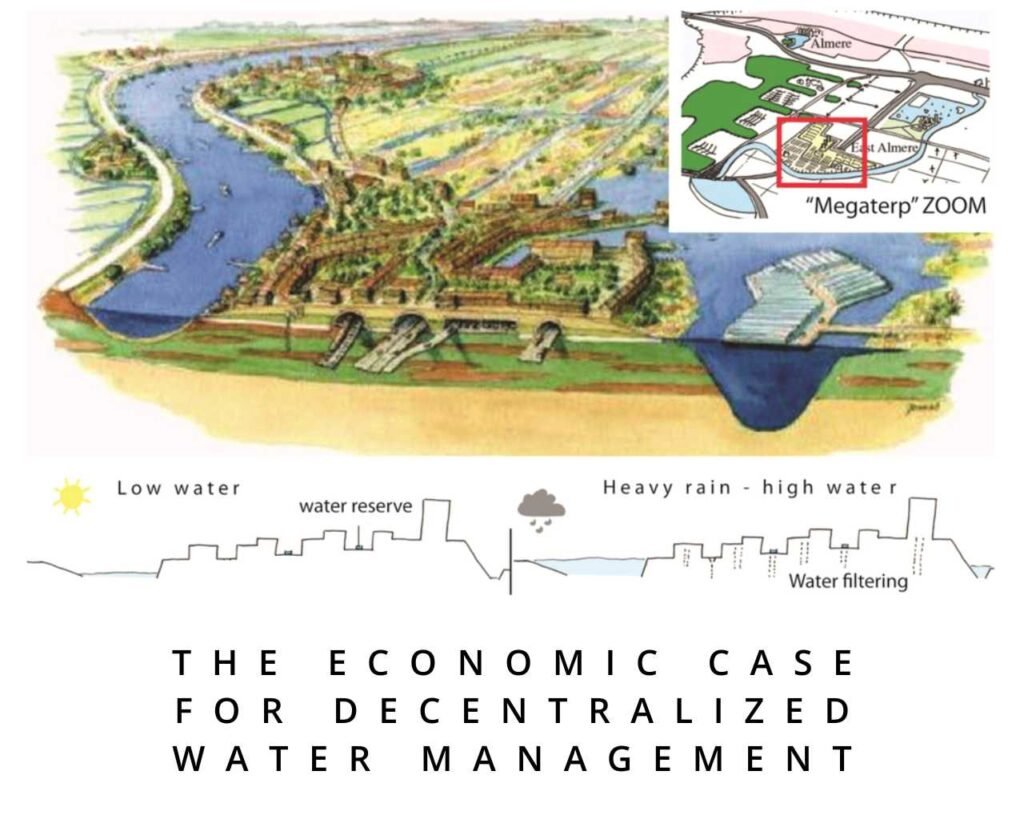
For major housing corporations like Woonstichting ‘thuis—the organization managing roughly 11,000 properties and the driving force behind the Veldhoven pilot—the financial mathematics make perfect sense.
Repairing urban water damage is incredibly expensive. According to global data from flood mitigation agencies like FEMA, just one inch of standing water inside an average home can cause upwards of $25,000 in immediate damage to flooring, drywall, and electrical systems. Severe localized flooding routinely forces housing boards to spend millions on restoration.
By contrast, preventative green infrastructure is astonishingly cheap. Installing a rain fence system typically ranges between $500 and $3,000 per property. Emergency management statistics universally show that every single dollar invested in disaster prevention ultimately saves around $13 in future recovery efforts. This is a key strategy for ensuring that real estate portfolios of large social housing sectors remain free from the effects of depreciation as brought about by climate change.
Conclusion: A Framework for Global Climate Adaptation Strategies
In light of ongoing shifts in climatic patterns across the globe, one can learn from the example of the Dutch, especially concerning the implementation of decentralized, sustainable infrastructure like rain fences. Instead of relying on massive concrete drainage pipes, cities could consider sustainable green infrastructure where each home takes part in the regional water management process. The instance of Veldhoven’s citizens proves that people would gladly embrace sustainable climate adaptation techniques if they help solve real issues and align with the aesthetics of their homes.
Frequently Asked Questions (FAQs)
What is the difference between a rain fence and a rain barrel?
While a rain barrel holds 200 to 300 liters and occupies some precious patio space, rain fences act as a replacement for the property boundary line. With their elongated designs and ability to connect various units, the fences can hold up to 2,160 liters of water without occupying any additional yard space.
Can they withstand the freezing conditions of winter?
Yes. Rain fences have high-quality modules which tolerate expansion in cold winter months. Most high-quality systems incorporate valves that allow excess water to escape without causing cracking in the outer structure of fences.
Can the installation of the fence be done for existing buildings or only new constructions?
The answer is that they are versatile and made specifically for retrofitting homes. It involves simply redirecting the roof downspouts from the ground drains into the intakes of the rain fences.
Is it possible to use the water in these fences for human consumption?
No. Rain fences collect water from the roofs, where it can pick bird droppings, roof materials, and other impurities. Therefore, it is considered greywater which can only be used for gardening and other outdoor purposes.
Read My Website Recent News article: A New Era at Augusta
