


Finding a natural way to oats to lower cholesterol fast is often frustrating. With nearly a third of the global population dealing with high cholesterol, the search for a dietary solution that actually works—and works fast—is crucial. While most diet plans take months to show results, a groundbreaking new study has found something surprising: a specific “oat intervention” can significantly lower cholesterol in just 48 hours.
This isn’t just about eating a bowl of porridge now and then. Research from the University of Bonn, published in Nature Communications, reveals that a short-term, high-dose oat diet can “reset” your metabolism better than we previously thought.
Here is what the science actually says, and why your gut bacteria might be the real heroes of this story.
The Breakthrough: 10% Reduction in Two Days
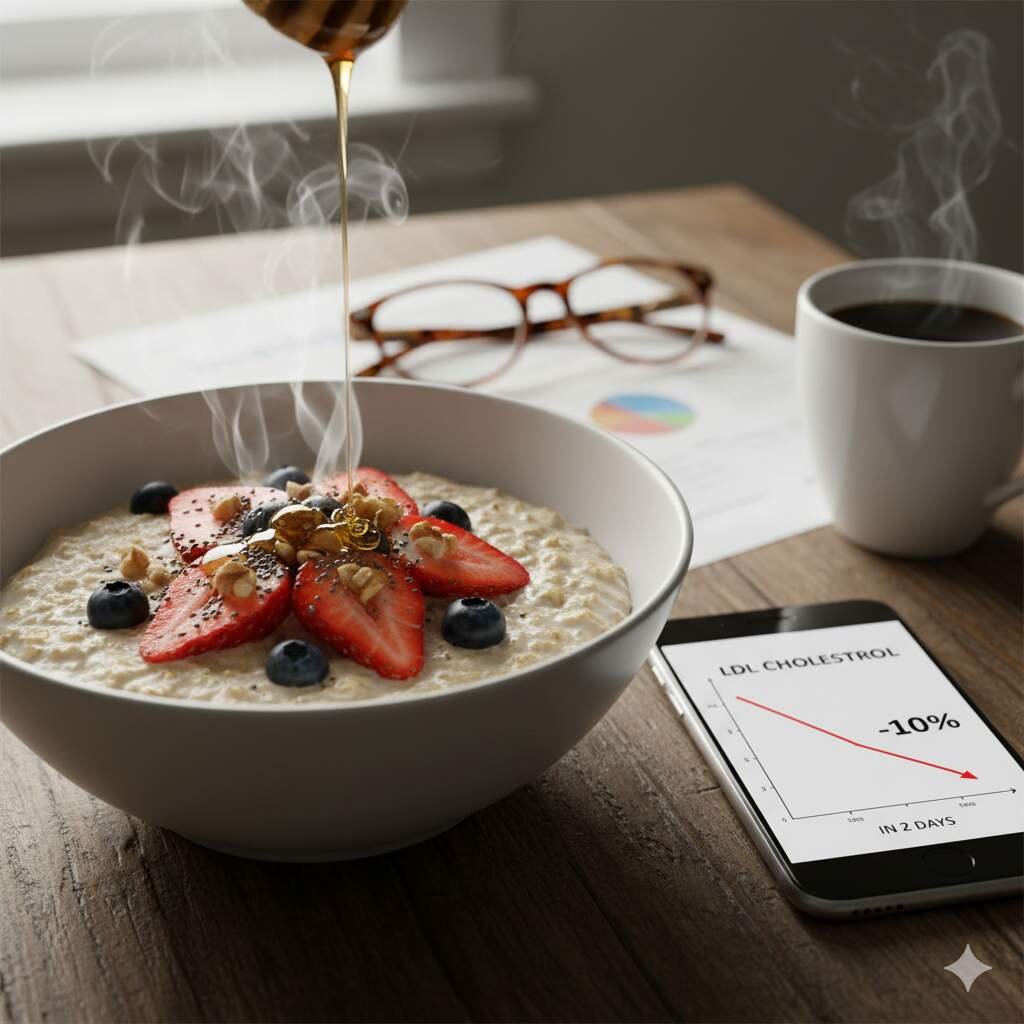
The most striking finding from the study wasn’t that oats are healthy—we already knew that. It was the speed of the results. Participants who followed a specific high-oat protocol saw their harmful LDL cholesterol levels drop by 10% in just two days.
Even more impressive? This wasn’t a temporary fix. That substantial drop in cholesterol persisted for six weeks after the experiment ended. As a bonus, participants also lost an average of 2kg (4.4 lbs) and saw improvements in their blood pressure.
Compared to a control group that simply cut calories without eating oats, the oat-eaters saw significantly better results in both total cholesterol and LDL markers.
How the “Oat Detox” Worked
So, what exactly did they eat? The researchers designed a protocol that was simple but intense. It wasn’t about sprinkling some granola on yogurt; it was a medical intervention.
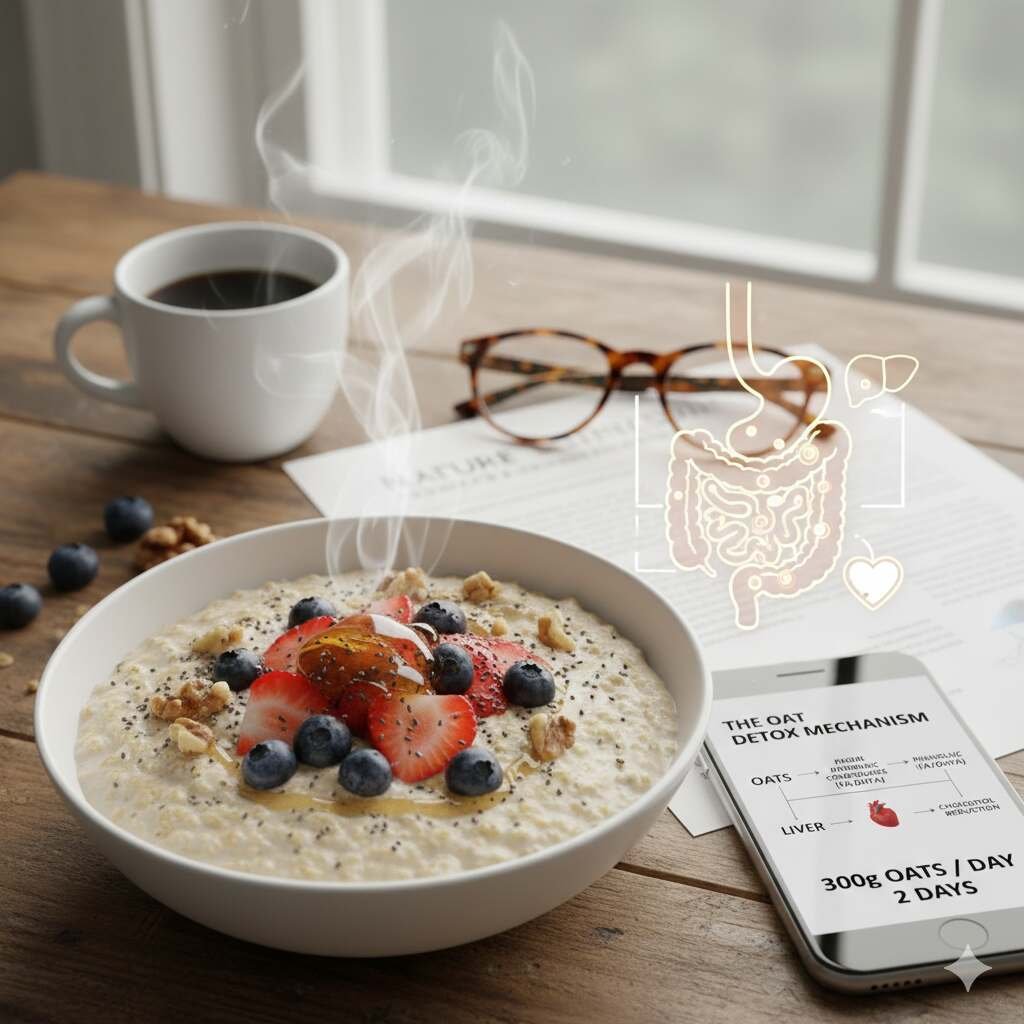
- The Diet: Participants ate 300g of oats per day for two days.
- The Method: This was divided into three meals (breakfast, lunch, dinner), each consisting of 100g of rolled oats boiled in water or milk.
- The Add-ons: They were allowed light additions like small amounts of fruit or vegetables, effectively cutting their usual calorie intake by half for those two days.
Interestingly, this “shock to the system” proved much more effective than previous studies where people ate a moderate amount (80g) of oats daily for six weeks. It seems that hitting the body with a high dose of beta-glucan (the fiber in oats) creates a metabolic shift that slow-and-steady consumption might miss.
The Secret Ingredient: Your Gut Bacteria

Why did this work so well? The scientists dug deeper and found that the magic happens in the gut.
When you eat oats, you aren’t just feeding yourself; you are feeding the bacteria in your intestines. The study found that this high-fiber diet caused a spike in specific gut bacteria. These bacteria ferment the oats and produce powerful compounds called Ferulic Acid (FA) and Dihydroferulic Acid (DHFA).
Think of these compounds as natural medicine produced inside your own body. The study showed that as levels of these compounds rose in the bloodstream, cholesterol levels fell. It turns out that the gut microbiota is a key “middleman” that helps regulate how our bodies handle fats and lipids.
Why “More” Was Better
For years, the advice has been to eat a standard bowl of oatmeal (about 40-50g) for breakfast. While healthy, that amount might not be enough to trigger rapid changes in people with metabolic syndrome.
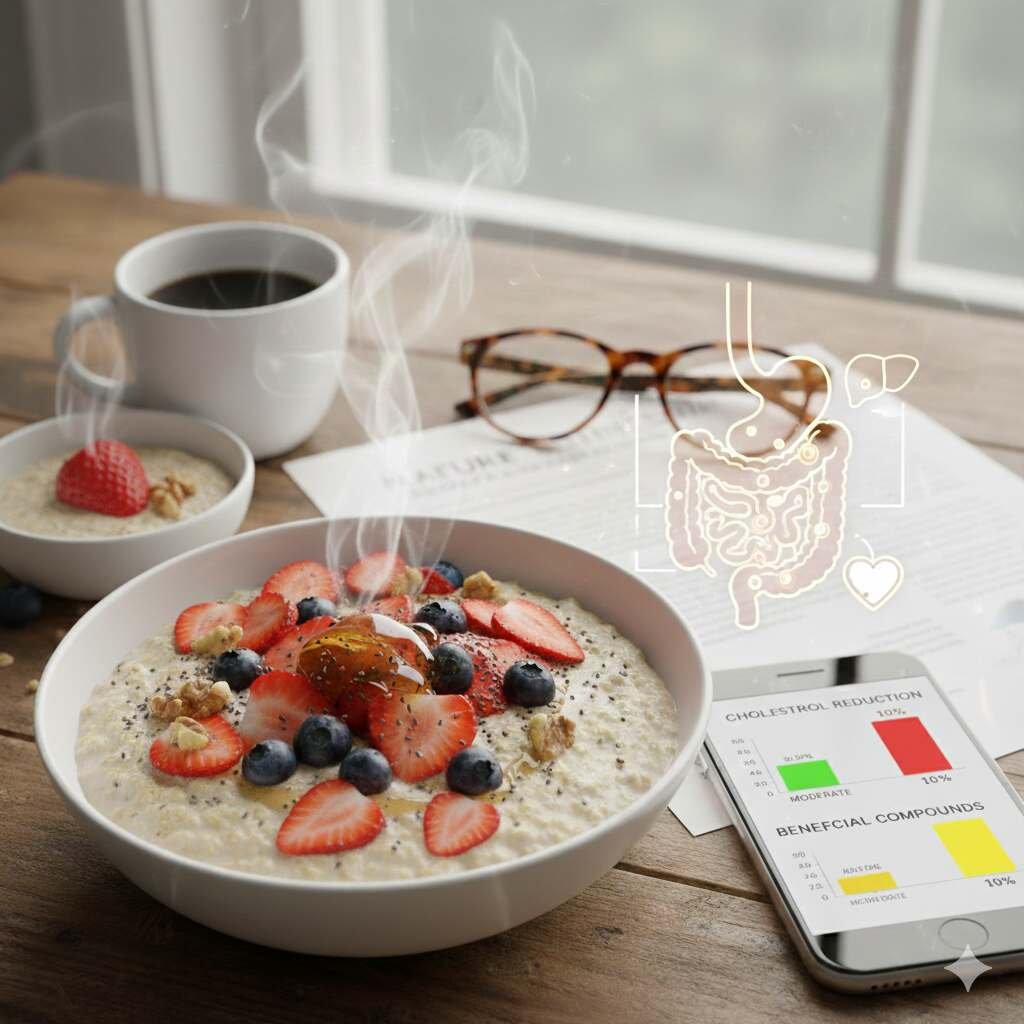
The study compared the “Triple-Dose” approach (300g/day) against the standard approach. The difference was stark. The high-dose group reached a critical threshold of bioactive compounds that the moderate group simply didn’t achieve. This suggests that oats can act almost like a therapeutic treatment when taken in specific, higher quantities, rather than just being a general dietary choice.
However, there is a catch.
One Size Does Not Fit All

While the results were exciting, the researchers noted that not everyone responded exactly the same way. Because the mechanism relies on gut bacteria, and everyone’s microbiome is as unique as a fingerprint, the results varied.
Some participants saw dramatic drops in cholesterol, while others saw modest improvements. This highlights a move toward personalized nutrition. In the future, doctors might check your gut bacteria profile before recommending a specific diet plan to ensure it will work for your body type.
The Bottom Line
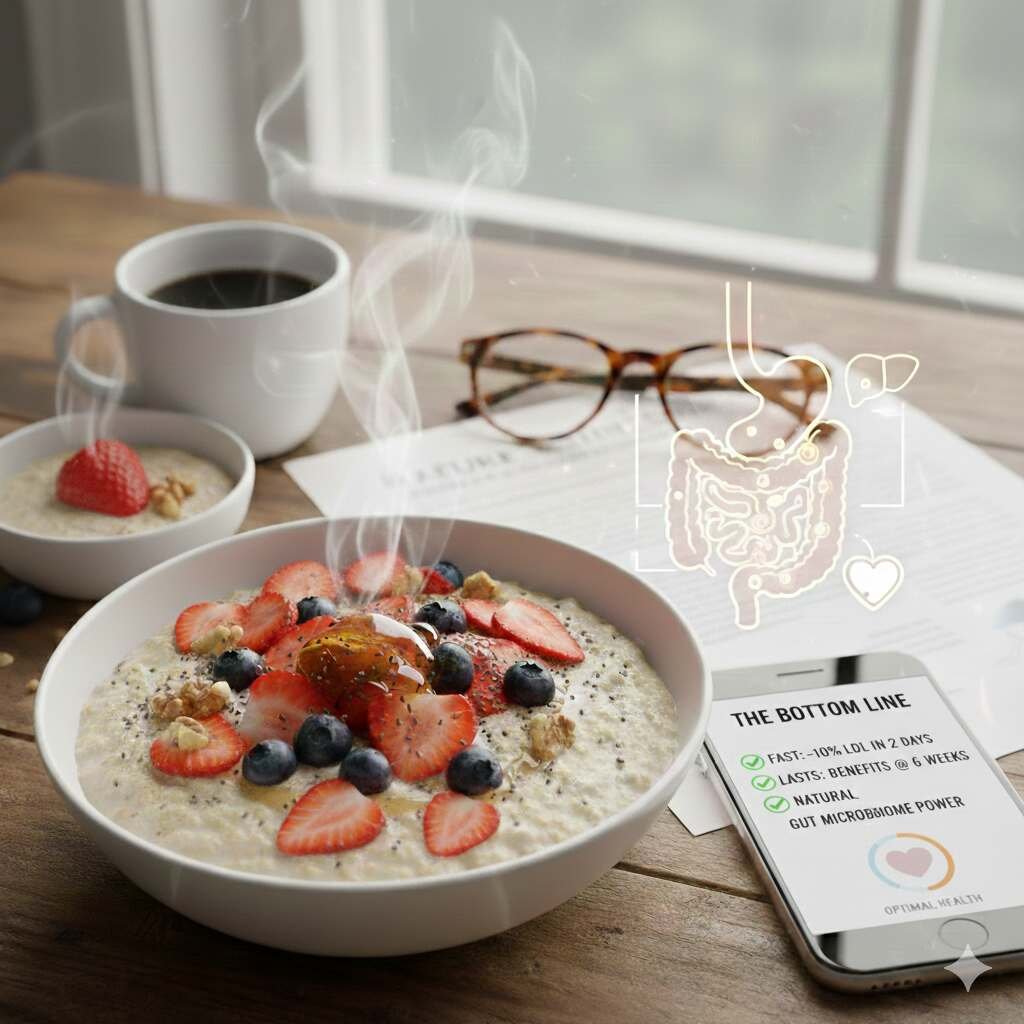
This study challenges the conventional wisdom that lowering cholesterol always requires months of strict dieting or medication. It suggests that oats are a powerhouse food that, when consumed in the right way, can deliver rapid results.
Key Takeaways:
- It’s Fast: A high-dose oat diet dropped LDL cholesterol by 10% in 48 hours.
- It Lasts: The benefits were still visible six weeks later.
- It’s Natural: The mechanism works through your gut bacteria producing healthy compounds.
While eating 300g of oats a day is a lot for the average person, this research confirms that increasing your oat intake is one of the smartest moves you can make for your heart health.
Frequently Asked Questions (FAQs)
Q1: Did the study really say cholesterol dropped by 40%?
No. The actual reduction in LDL cholesterol was approximately 10%. While this is a very significant drop for a dietary change in just two days, claims of 40% are exaggerated and not based on this specific finding.
Q2: How much oatmeal do I need to eat to get these results?
The study participants consumed 300g of oats daily (about 3 large bowls) for two days. This is a very high amount compared to a standard breakfast serving (which is usually 40-50g).
Q3: Is this safe for everyone?
Sudden increases in fiber can cause bloating or digestive discomfort. While the study participants handled it well, it is always best to consult a doctor before starting an extreme dietary protocol, especially if you have digestive issues or are on medication.
Q4: Can I add sugar to the oats?
The study focused on the oats themselves, usually prepared with water and minimal additives like fruit. Adding large amounts of sugar would likely counteract the metabolic benefits and weight loss effects.
Disclaimer
This article is based on research published in Nature Communications by the University of Bonn. It is for informational purposes only and does not constitute medical advice. Always consult your healthcare provider before making significant changes to your diet.
My Website Recent News Article: Sharpest Dark Universe Image
