


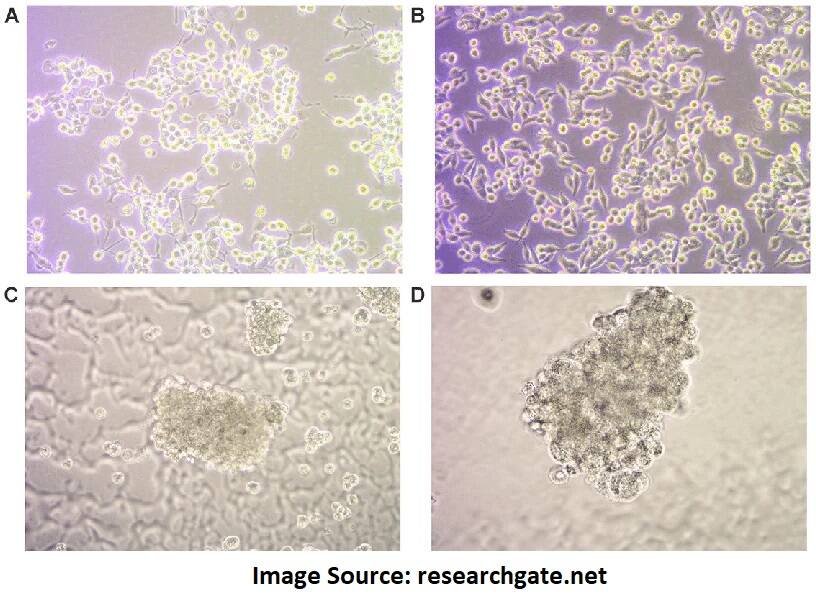
MIIP Protein: One of the most prevalent types of cancer-related deaths globally remains colorectal cancer, largely due to the development of metastatic sites and the ineffectiveness of immunotherapy in the majority of patients. Colorectal cancer accounts for the majority of “immune-cold” cancers, indicating a lack of immune response despite the availability of immune checkpoint therapies. A recent study identified the MIIP protein as a major player in the immune response to cancer. For example, low MIIP protein expression was found to be associated with an increased number of M2 macrophages and a worse clinical outcome. Thus, the study identified the way in which the MIIP protein inhibits cancer cell proliferation via the control of STING-related immune response.
What Is MIIP Protein?
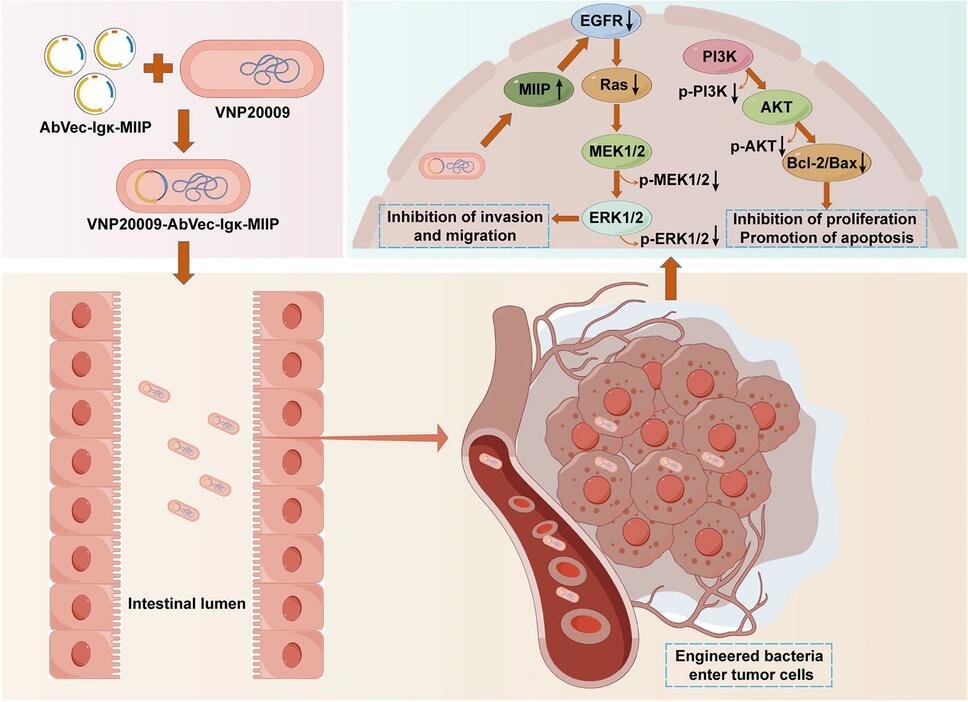
Image Source: Springer
Migration and invasion inhibitory protein, also known as MIIP, is a protein composed of 291 amino acids, with a gene located on chromosome 1p36.22, a locus that is frequently deleted in various types of cancer. The protein was initially recognized as a binding partner to insulin-like growth factor binding protein 2 in a study on the cell invasion mechanisms of glioma cells. It has tumor suppressor activity, inhibiting cell proliferation, migration, and invasion in a wide range of cancer types.
In the context of colorectal cancer, the expression of MIIP is progressively reduced in the adenoma-adenocarcinoma sequence. Indeed, in a study involving 526 tissue samples from patients with colorectal cancer, reduced MIIP expression was significantly associated with lymph node metastasis (P = 0.003) and metastasis to a distant site (P = 0.020). Significantly, in the context of colorectal cancer, MIIP is frequently subject to a hemizygous deletion, with a reduction in protein expression of approximately 50% in cancer tissues compared to normal tissues.
However, the significance of MIIP in cancer does not stop at the expression level. Indeed, in a study involving 182 samples of colorectal cancer, it was demonstrated that patients with high levels of phosphorylated MIIP-S303 had significantly reduced overall survival compared to patients with low or no phosphorylated MIIP-S303. Significantly, in a study involving patient datasets, low levels of MIIP were associated with activation of the STING pathway and M2 macrophage infiltration in the tumor microenvironment.
How MIIP Protein Regulates Immune Cell Signaling

Image Source: Pixabay
Researchers from the Tianjin Medical University Cancer Institute & Hospital have demonstrated that MIIP blocks M2 macrophage polarization via the STING-NFκB2-IL10 signaling pathway, as investigated through multi-omics, cell, and animal studies.
Laboratory experiments have also confirmed that lowering the levels of MIIP results in increased levels of cytoplasmic DNA stress signals, thereby triggering the activation of the STING signaling pathway, which in turn activates NFκB2 signaling, thereby increasing the levels of IL-10, a cytokine that promotes M2 macrophage polarization, a tumor-promoting type of macrophage polarization in the context of cancer development. Experiments conducted in the context of co-culture also demonstrated that macrophages interacting with cancer cells deficient in MIIP exhibited high levels of M2 polarization, along with high levels of IL-10, which in turn significantly enhanced cancer cell migration and invasion.
Animal studies also provided a demonstration of how the molecular mechanism of MIIP in the context of cancer development works, as tumor models with high levels of MIIP exhibited reduced tumor growth, reduced metastasis to the liver, as well as reduced M2 macrophage polarization, while blocking the activity of the STING signaling pathway also reversed the tumor-promoting effects of reduced MIIP levels, thereby demonstrating the potential of the molecular mechanism for treatment purposes.
Clinical tissue analysis also provided a demonstration of how the molecular mechanism of MIIP in the context of cancer development is linked to the prognosis of cancer patients, as a negative correlation was observed between MIIP levels and the levels of STING, IL-10, as well as macrophages in cancer tissues.
The discovery also redefines the function of MIIP as a regulator in immune communication in tumors, rather than a tumor suppressor function within tumor cells.
What This Discovery Means for Colorectal Cancer Treatment
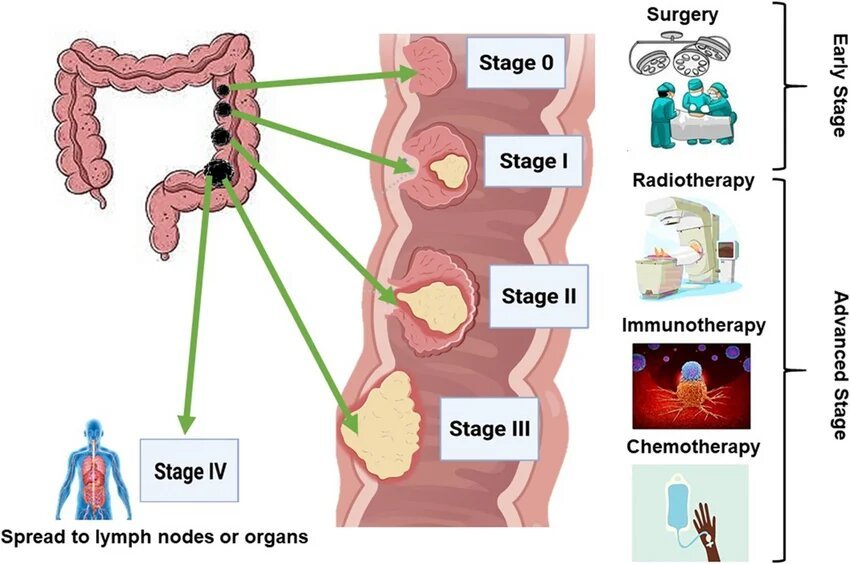
Image Source: ResearchGate
The discovery also means that measuring MIIP expression could be a biomarker in identifying patients with colorectal cancer who would benefit from therapy targeting the STING pathway or macrophage-induced immune suppression. The pharmacological inhibition of the STING pathway also showed promise in experimental models and could be a way of transforming immune-resistant tumors into treatment-responsive tumors. This is because the inhibition reversed tumor-promoting effects associated with the loss of MIIP. This is a confirmation of the relevance of this pathway in a clinical setting.
According to the study’s authors, this is an exciting area for future therapies, particularly for those whose tumors are not responding to current immune checkpoint therapies. This is an important treatment gap, as only 5% of colorectal cancer patients have MSI-H or dMMR tumors that respond well to existing immunotherapies.
Overall, this study establishes an important principle that tumor growth can be controlled by modifying the way in which the immune system behaves, not by directly targeting the tumor itself. Future therapies may involve modulating the immune microenvironment in addition to existing treatments to prevent metastasis and improve long-term survival outcomes for colorectal cancer patients. By controlling macrophage polarization, MIIP determines whether the tumor microenvironment is favorable or not for tumor growth, thus providing an avenue for precision medicine beyond colorectal cancer.
Conclusion
Based on this study, the MIIP protein is an important factor in controlling colorectal cancer growth, primarily through its control of the way in which the immune system behaves in response to the tumor. Low levels of MIIP cause the STING pathway to be activated, leading to the infiltration of M2 macrophages and the formation of an immune-cold tumor environment. This is an exciting area for future therapies, particularly through STING inhibition and macrophage repolarization strategies. Overall, this is an exciting area for future therapies, particularly for those whose tumors are not responding to current treatments, as this is an important treatment gap for those who are not responding to existing therapies.
FAQs
Q1. What breakthrough immunotherapy drug is showing promise for colorectal cancer treatment?
Dostarlimab is an immunotherapy drug that is currently in clinical trials for the treatment of colorectal cancer and is showing great promise in its potential to treat this type of cancer and possibly eliminate the need for surgery, radiotherapy, and chemotherapy in the future for those suffering from colorectal cancer.
Q2. How does the MIIP protein affect the effectiveness of immunotherapy in colorectal cancer?
The MIIP protein is involved in the regulation of immune cell activities in cancer. Low expression of MIIP results in an increase in tumor-infiltrating M2 macrophages, which results in “immune cold” tumors that are resistant to immunotherapy. Therefore, understanding the involvement of MIIP helps in identifying cancer patients who could benefit from immune signaling pathway therapies.
Q3. Can immunotherapy cure metastatic colorectal cancer?
Immunotherapy has the ability to cure metastatic colorectal cancer for some cancer patients with microsatellite instability-high (MSI-H) colorectal cancer, which represents only 3 to 5 percent of all colorectal cancer cases. This type of cancer does not respond to chemotherapy and other treatment options but responds to immunotherapy, which has curative capabilities.
Q4. What dietary elements are most associated with colorectal cancer development?
Red meat, pork, lamb, and processed meat, including bacon, hot dogs, and deli meat, are considered to be possible carcinogens for colorectal cancer development. These foods may damage the healthy colon lining, which may result in cancerous cell development and rapid cell reproduction.
Q5. How does the discovery of the MIIP protein influence future colorectal cancer treatment?
The discovery of the MIIP protein has changed treatment from focusing on attacking cancerous cell development to changing the tumor’s immune environment through STING signaling pathways and macrophage activities. This new approach may result in converting immune-resistant tumors into treatment-responsive tumors, which is currently lacking for many cancer patients.
Read My Website Recent News Article: Glowing Forests
