


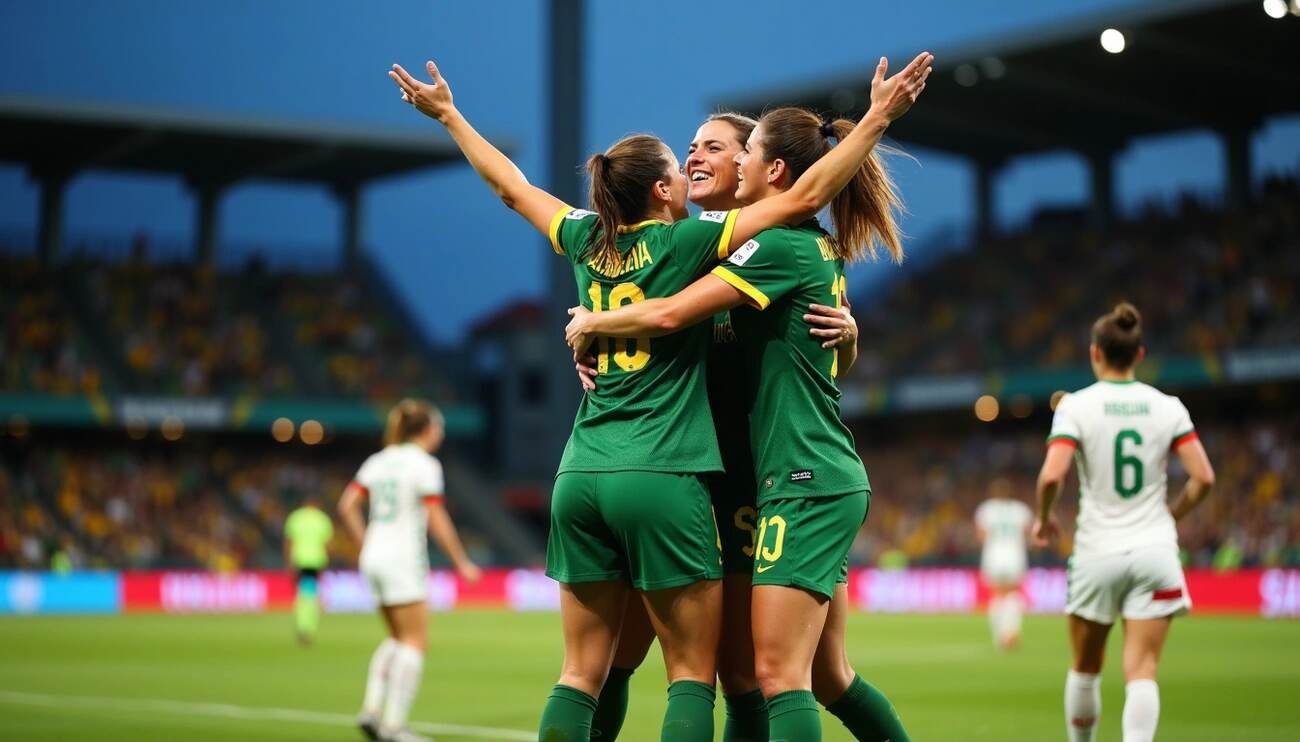
The Matildas delivered a commanding performance on home soil, dismantling Iran 4-0 in front of 22,398 fans at the Gold Coast to secure their spot in the Women’s Asian Cup quarterfinals. Australia’s attacking dominance was undeniable, registering 30 shots while controlling 78.6 percent of possession throughout the match. Amy Sayer, Mary Fowler, and Alanna Kennedy found the back of the net in a clinical first-half display, with Kennedy adding a second goal later in the game. The matildas soccer team now faces South Korea in their final group-stage encounter, with first place in the group and tournament momentum hanging in the balance as they continue their quest for continental glory.
Matildas Dominate First Half with Clinical Finishing
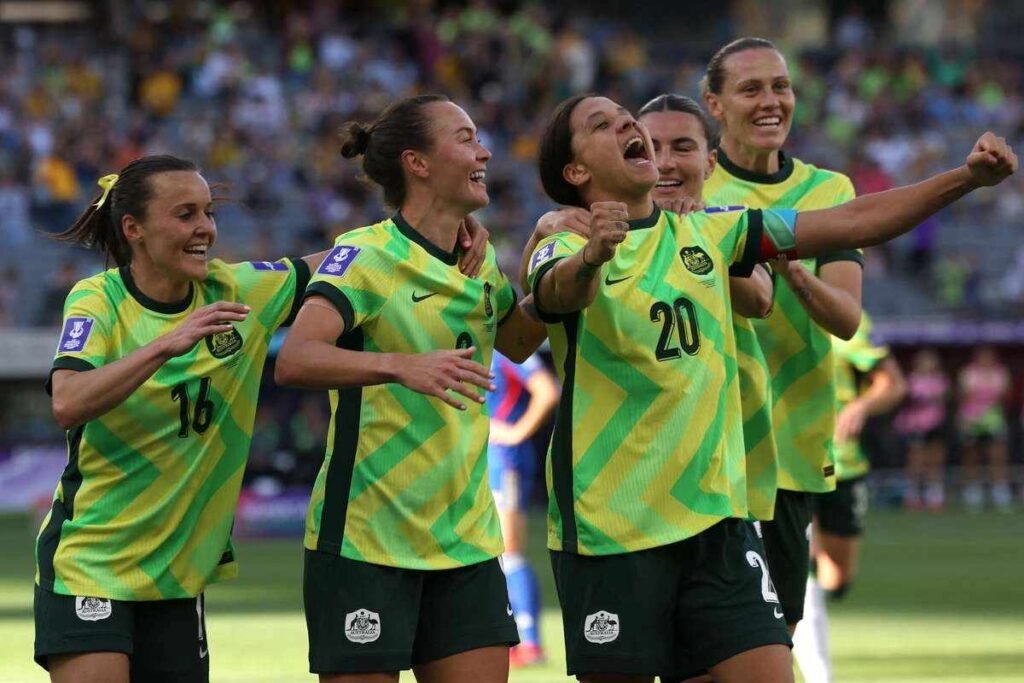
Image Source: Flashscore.com
Australia controlled proceedings from the opening whistle, camping the ball in Iran’s defensive third with relentless pressure that produced results within minutes.
Amy Sayer Opens Scoring with Stunning Cross-Goal
Amy Sayer broke the deadlock in the eighth minute with a strike that sparked debate about intent. Operating from the right-hand side after linking up with Ellie Carpenter, Sayer unleashed a delivery from deep that looped perfectly over goalkeeper Maryam Yektaei’s outstretched arms. The ball sailed into the top corner, catching Yektaei completely off guard as she misjudged its flight path. Whether the effort was a cross or shot remained open to interpretation, but the outcome was undeniable. The goal marked Sayer’s first at a major tournament for Australia.
Mary Fowler Capitalizes on Goalkeeper Error
Caitlin Foord thought she had doubled the advantage with a powerful finish, but the goal was ruled out due to marginal offside. Foord eventually turned provider in the 27th minute with a teasing delivery into the penalty area that bent past Sam Kerr’s run. Yektaei fumbled the cross, spilling the ball at the far post where Fowler pounced. The Manchester City forward lunged forward to toe the ball home, marking her first international start in 332 days with a clinical finish. The goal ended a 331-day scoring drought for Fowler in national team colors.
Alanna Kennedy Extends Lead Before Halftime
Kennedy made it three in the 34th minute after charging into the Iranian box from her midfield position. Emily van Egmond’s deep cross was brought down by Kerr, who turned back to goal and teed up Kennedy arriving from deep. The London City player fired low and hard into the bottom corner from 12 yards for her 13th international goal.
VAR Denies Two Additional Goals
Kerr had the ball in the net just before halftime regulation time, but the Video Assistant Referee ruled the captain offside by the narrowest of margins. Foord’s first-half strike had also been chalked off following a lengthy VAR review. Despite the disallowed goals, Australia’s dominance was reflected in the statistics: 77% possession, 14 shots to zero, and six shots on target.
How Key Players Stepped Up in Crucial Victory
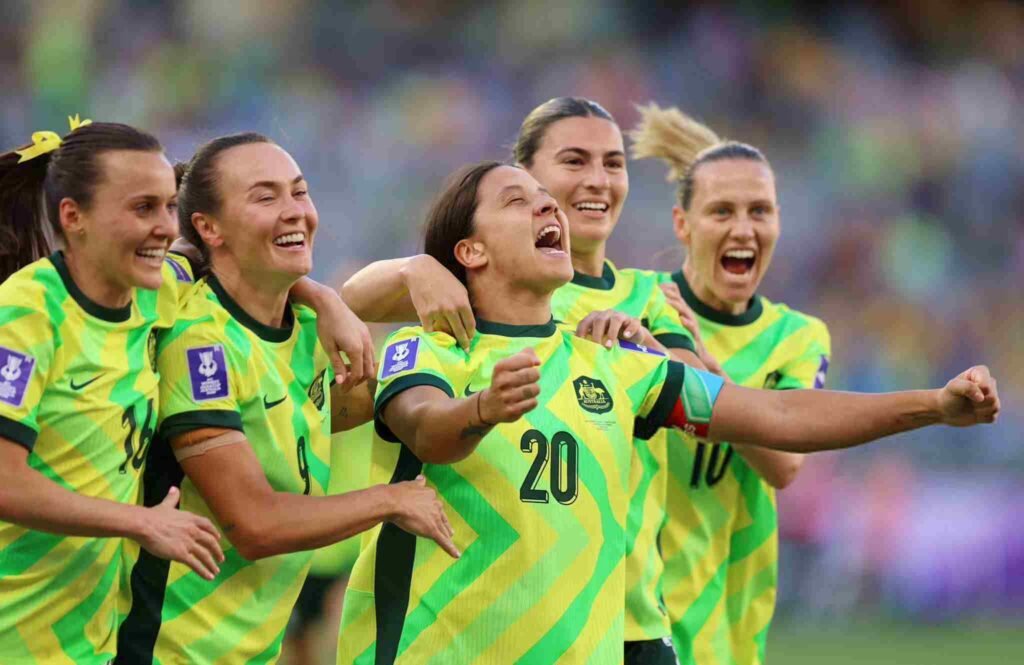
Image Source: Facebook
Joe Montemurro’s five changes to the starting lineup paid immediate dividends, with several players seizing their opportunities to make statement performances.
Fowler’s Remarkable First Start Since ACL Tear
Mary Fowler’s inclusion represented the biggest fitness gamble taken by Montemurro, given she had logged just 15 minutes of playing time following her return from an ACL rupture. The Manchester City forward suffered the injury in April 2025 during an FA Cup semi-final against Manchester United, forcing a lengthy rehabilitation process. Her presence in the Asian Cup squad came after she returned to action on February 1, less than a year after the injury. Fowler demonstrated no lingering effects from the layoff, combining technical sharpness with intelligent movement throughout her 90-minute appearance. The 23-year-old’s goal marked her first for Australia in 331 days, capping a remarkable recovery timeline that defied typical ACL rehabilitation periods.
Kennedy’s Unexpected Brace from Midfield Role
Alanna Kennedy would have been far down the list of players expected to score twice, yet the center-half-turned-defensive-midfielder delivered both goals with precision. Starting in place of Clare Wheeler, Kennedy controlled the tempo while screening the defense, showcasing technical ability that extended beyond her usual defensive responsibilities. Her snapshot for the third goal came after charging forward from deep, while her second arrived via a towering header from Emily van Egmond’s corner. Kennedy acknowledged her goals were atypical: “For me, scoring isn’t something that I do often, but I was happy to get a couple of goals as well”. Montemurro praised her as player of the match, noting she had proven her case for inclusion in the starting XI despite limited club minutes.
Debutant Charlize Rule Solidifies Defense
Charlize Rule made her tournament debut at center-back, one of five personnel changes implemented by Montemurro. The Brighton defender, who previously earned just one cap in a 5-0 loss to Canada, provided stability alongside the defensive unit that kept Iran without a shot on target.
Iranian Players Face Intense Pressure Amid Political Protests
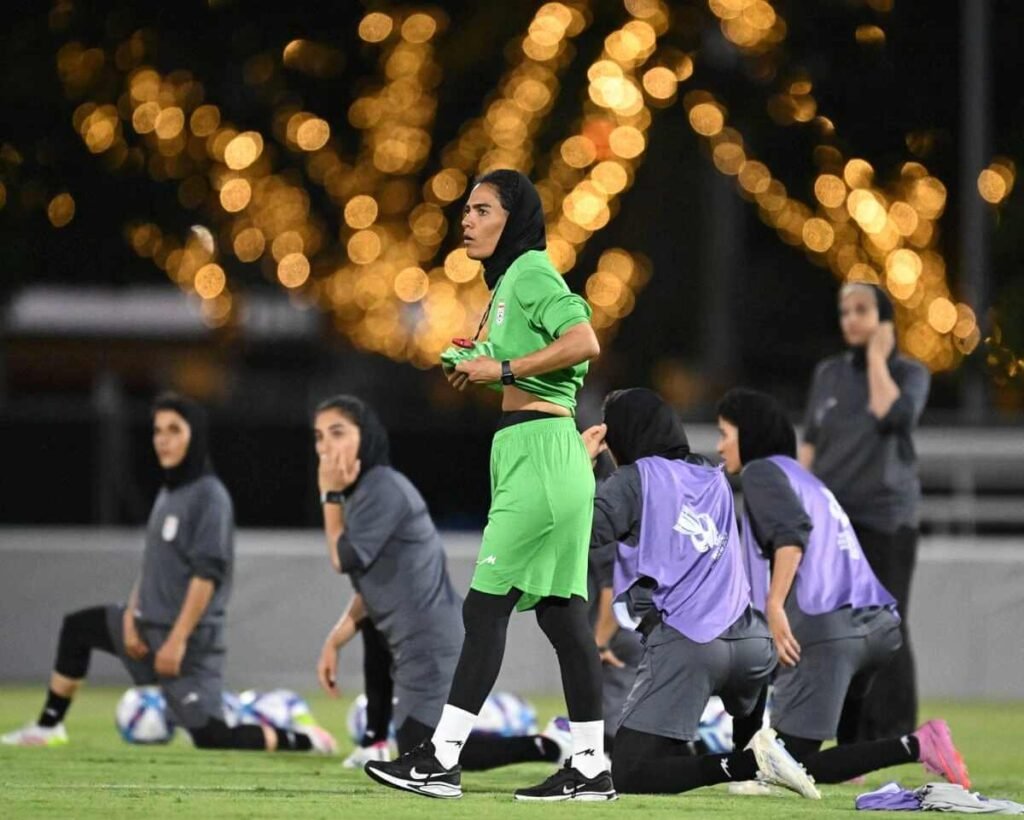
Image Source: The Guardian
Iran’s players walked onto the Gold Coast pitch bearing far more than the weight of a tournament campaign.
Team Sings Anthem After Refusing in Opening Match
The Iranian squad stood in complete silence during their national anthem before the opening match against South Korea on March 2, refusing to sing in what observers interpreted as an act of resistance. Three days later, before facing the Matildas, the team sang and performed a military salute during the anthem, a stark reversal that sports integrity consultant Catherine Ordway attributed to receiving a “message from home”. Alireza Mohebbi from Iran International TV stated there was “no doubt” the players were under instructions from the regime and security team to sing and salute. Striker Sara Didar fought back tears during a press conference, speaking about being separated from loved ones and wishing for “good news” for Iran.
Fans Stage Demonstrations Outside Stadium
Iranian-Australian protesters gathered outside Gold Coast Stadium waving the Lion and Sun flag, the pre-1979 revolution symbol that has become an emblem of opposition to the current regime. The demonstrators displayed Israeli and Australian flags alongside banners supporting human rights. Ara Rasuli, present in the crowd, explained the protesters chanted “Iranian female team, come and stay here!” and “down with Islamic Republic!”.
Players Struggle with Conditions and External Tensions
Human rights activist Cyrus Jones alleged Iranian security occupied the players’ hotel floor at night, preventing them from leaving rooms unaccompanied or using public bathrooms. Jones claimed the players were monitored during breakfast and bus trips, describing them as “prisoners” under surveillance. Coach Marziyeh Jafari acknowledged the team had “so much concern regarding our families and the people in Iran” but emphasized their commitment to concentrate on football professionally.
What the Win Means for Matildas’ Tournament Path
The victory secured more than three points for Australia, guaranteeing progression to the knockout stages with one group match remaining.
Quarterfinal Qualification Secured
Australia and South Korea both qualified from Group A with six points from two wins. The result means the Matildas will finish either first or second in Group A, depending on the outcome against Korea Republic on Matchday 3.
South Korea Showdown Will Determine Group Winners
The winner of Sunday’s clash in Sydney will determine which team finishes top and secures a stay in the city for the quarterfinals. South Korea currently leads Group A following their 3-0 victories against both Iran and the Philippines. If the Matildas finish second, they return to Perth for a quarterfinal and potentially a semifinal.
Hayley Raso’s Concussion Raises Selection Concerns
Raso was forced into two concussion tests after suffering separate balls to the face from point-blank range. She underwent concussion protocols and was replaced by Michelle Heyman in the final minutes. The repeated nature of the impacts raised significant concerns about her availability for the South Korea match.
Goal Difference Gap Keeps Pressure On
South Korea maintains a superior goal difference of +6 compared to Australia’s +5. Consequently, a draw in the final group match will not suffice to secure top spot. Nothing short of three points will guarantee first place for the Matildas.
Conclusion
The Matildas’ emphatic 4-0 triumph over Iran demonstrated their championship credentials on home soil. Kennedy’s unexpected brace, coupled with goals from Sayer and Fowler, showcased Australia’s attacking depth and tactical versatility. With quarterfinal qualification secured, the focus shifts entirely to Sunday’s decisive group-stage finale against South Korea. By all means, victory in Sydney will secure top spot and maintain momentum for the tournament favorites as they pursue continental glory before their passionate home supporters.
FAQs
Q1. Who scored the goals for Australia in their 4-0 victory over Iran?
Amy Sayer opened the scoring in the 8th minute, followed by Mary Fowler in the 27th minute. Alanna Kennedy scored twice, first in the 34th minute and later in the match, completing the 4-0 victory for the Matildas.
Q2. How significant was Mary Fowler’s performance after her ACL injury?
Mary Fowler’s performance was remarkable as it marked her first international start in 332 days following an ACL tear suffered in April 2025. She scored her first goal for Australia in 331 days, demonstrating a complete recovery after returning to action on February 1st with just 15 minutes of prior playing time.
Q3. What does this win mean for the Matildas’ tournament progression?
The victory secured Australia’s qualification to the quarterfinals with six points from two wins. They will finish either first or second in Group A depending on their final match against South Korea, with the winner claiming top spot and remaining in Sydney for the quarterfinals.
Q4. Why did the Iranian team’s behavior during the national anthem change between matches?
The Iranian team remained silent during their anthem before their opening match against South Korea but sang and performed a military salute before facing Australia. Sports integrity experts suggested the players received instructions from home, with the team facing significant external pressures and alleged surveillance throughout the tournament.
Q5. What tactical changes did coach Joe Montemurro make for this match?
Montemurro made five changes to the starting lineup, including giving Mary Fowler her first start since recovering from ACL surgery, deploying Alanna Kennedy in a defensive midfield role instead of her usual center-back position, and handing Charlize Rule her tournament debut at center-back.
Read My Website Recent News Article: Kyle and Jackie O
