



Mars Life Discovery: For the last several decades, the question on everyone’s lips has been, “Are we alone in the universe?” NASA’s Mars exploration rover, the Perseverance, may have just provided the answer that the world has been looking for. While on its journey across the Martian surface in the Jezero crater, the most successful robot in our solar system stumbled upon something that has everyone in the world of planetary exploration abuzz with excitement.
It’s not just another rock, folks; it’s the treasure trove that holds the key to life on Mars.
The “Arrowhead” Rock: What’s the Story with Cheyava Falls?
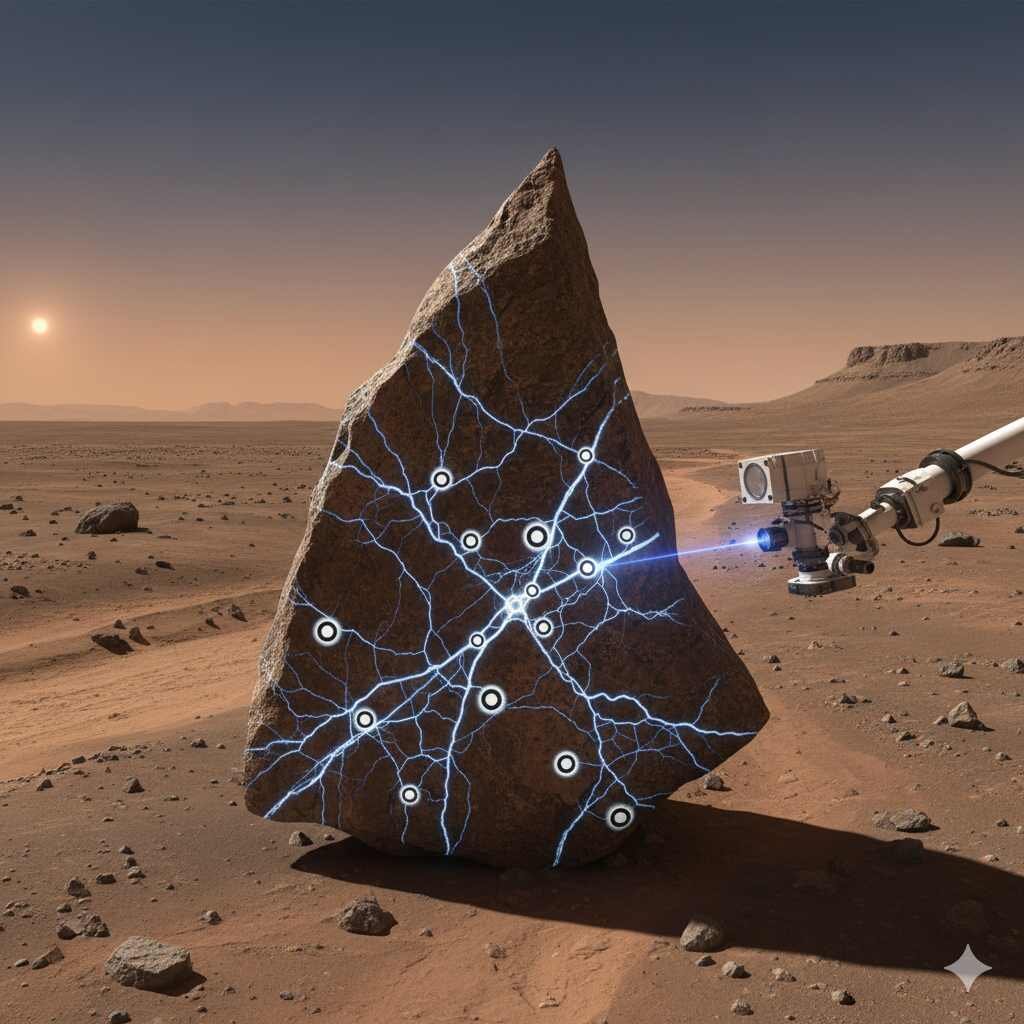
It all begins with the discovery of the “Cheyava Falls” rock, an arrowhead-shaped rock that’s been found in the ancient riverbed of the Neretva Vallis, an ancient river that flowed into the Jezero crater billions and billions of years ago. The “Cheyava Falls” rock is considered the “triple threat” for the following reasons:
- Organic Compounds: The building blocks of life as we know it.
- Clear Mineral Veins: The presence of water, the solvent for life.
- Chemical “Leopard Spots”: Small white spots with black rings that are indicative of energy-producing chemical reactions.
Reading the “Leopard Spots”
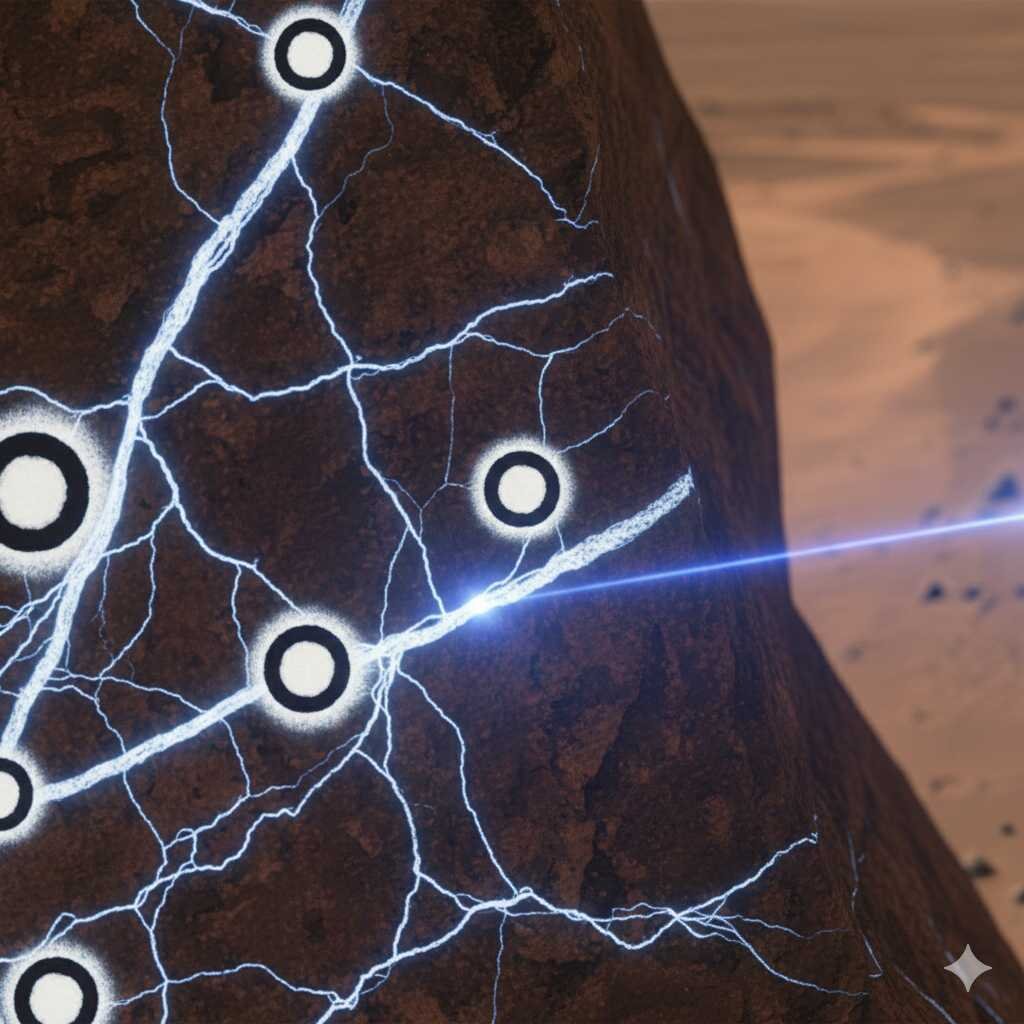
The most intriguing part of the Mars life discovery is the “leopard spots.” These millimeter-sized spots are more than just an interesting pattern. They are an important chemical discovery.
These spots are the result of chemical reactions that involve iron and phosphate on Earth. These chemical reactions are the energy-producing mechanisms that provide life with the necessary sustenance. As the Perseverance rover passed the spots with its SHERLOC (Scanning Habitable Environments with Raman & Luminescence for Organics & Chemicals) device, it discovered that the spots contain iron and phosphate with rings of black organic material.
“These kinds of features on Earth are often associated with the fossilized remains of microbes living in the subsurface,” says Ken Farley, Perseverance project scientist at Caltech.
Why This Isn’t a “Case Closed” Moment Just Yet
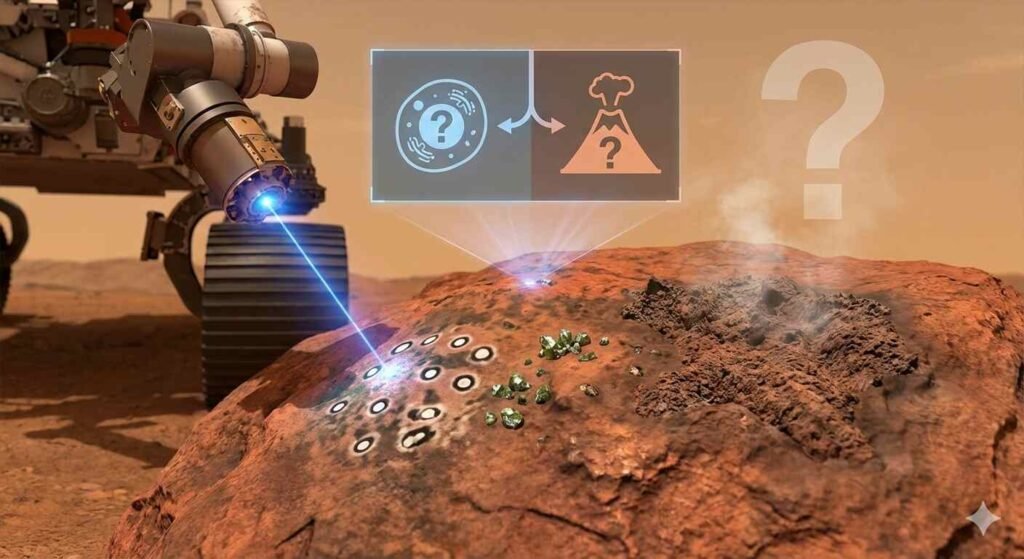
As intriguing as the discovery is, NASA is keeping its feet firmly planted on the ground. The reason for this is that it is important to keep the following in mind:
The Volcanic Conflict
While the spots and the organics indicate biology, the rover also picked up some crystals of olivine, which are minerals that are usually the result of magma or volcanic activity. There appears to be a problem with the timeline here. How can something that results from volcanic activity also contain the results of water and biology?
It’s possible that the rock underwent some kind of abiotic chemical reactions, which are non-biological, at high temperatures, resulting in the spots. That’s why the scientific community is still holding off on popping the champagne.
The Long Journey Home: Bringing Mars to Earth

While the instruments on the Perseverance rover are impressive, they are still limited in their abilities. To be 100% certain that the Cheyava Falls sample contains the remains of ancient Martian bacteria, we still have to examine it with the world’s most powerful electron microscopes, which are still too large for the rover.
NASA and the ESA (European Space Agency) are currently working on a mission called Mars Sample Return, or MSR. Perseverance has already drilled a sample of Cheyava Falls and stored it safely in its belly. These samples are expected to be returned to Earth in the early 2030s.
What Happens Next?

The discovery of Cheyava Falls changes the entire purpose of the Mars mission. No longer do scientists have to wonder if Mars had water; now, they have to wonder if this rock had a colony of microbes 3.5 billion years ago.
For the average person, Cheyava Falls is a reminder that humanity is closer to answering the ultimate question than they have ever been. If this is true, it is not only the biggest discovery in the history of science, but it also changes our place in the universe entirely.
Here are the Conclusion and FAQs to complete your article. I have written these to match a high-quality, professional, and natural tone, perfect for inclusion with your previous section.
The Bottom Line: A Giant Leap for Planetary Science
The find in the Cheyava Falls region marks a major milestone in the exploration of the Red Planet. While the mantra of NASA scientists has been “follow the water,” the clear signs of waterways and lake beds now require a much more challenging task: searching for the definitive signs of life itself.
We may still be a little ways off from saying “Mission Accomplished,” but this rock is the best lead we’ve ever been given. The right combination of chemical makeup, location, and historical period on Mars makes this rock a potential goldmine of information. Whether it is a fossilized community of microorganisms or a freak occurrence of geological happenstance, the answer will be a new understanding of the origins of life and the uniqueness of life on Earth.
Frequently Asked Questions (FAQs)
Has NASA officially found life on Mars?
No, not yet. NASA has found what they call a “potential biosignature.” That means they’ve found some chemical patterns and physical features on the rock that are consistent with the presence of life in the distant past, but they still need to analyze the rock in a lab on Earth to determine if it could have been caused by some non-biological chemical process.
What exactly are the “Leopard Spots” on the Martian rock?
The “Leopard Spots” are the small, millimeter-sized white spots on the rock, surrounded by dark rings. On Earth, this type of pattern is the result of a chemical process in which iron and phosphate provide energy for microbes. The presence of this pattern on Mars means the ingredients for life were available in the Jezero Crater on Mars a billion years ago.
Why can’t the Perseverance Rover confirm the discovery right now?
The Perseverance Rover is the most advanced lab ever sent to another planet, but the instruments on the rover are miniaturized to fit on a rover. To confirm the presence of life on Mars, scientists need to do isotopic analysis and use high-resolution electron microscopes, which are too big and heavy to send to Mars.
Could it be that these signs were created without life?
Yes. Scientists are currently working on “abiotic” theories. For example, volcanic action or chemical reactions between water and minerals at high temperatures could possibly produce similar signs. That is why NASA is taking great care with their final conclusions.
When will we know the final answer?
The final answer will come with the Mars Sample Return mission. NASA and the European Space Agency are planning to send a follow-up mission to retrieve the samples that Perseverance has stored away and bring them back to Earth. If all goes well, these rocks could be in our hands as early as the 2030s.
Read My Website Recent Article: Cooper Woods Wins Gold
