


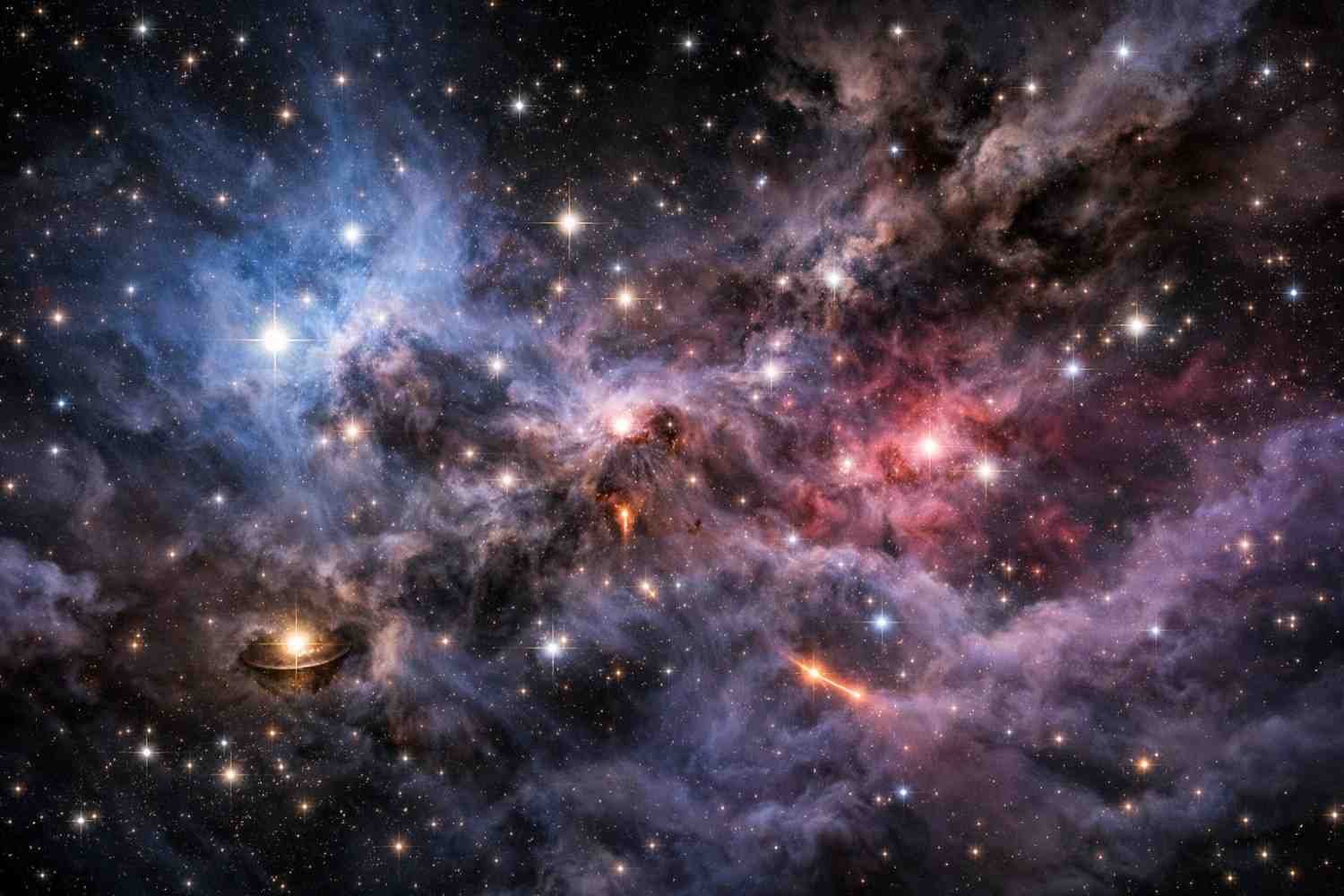
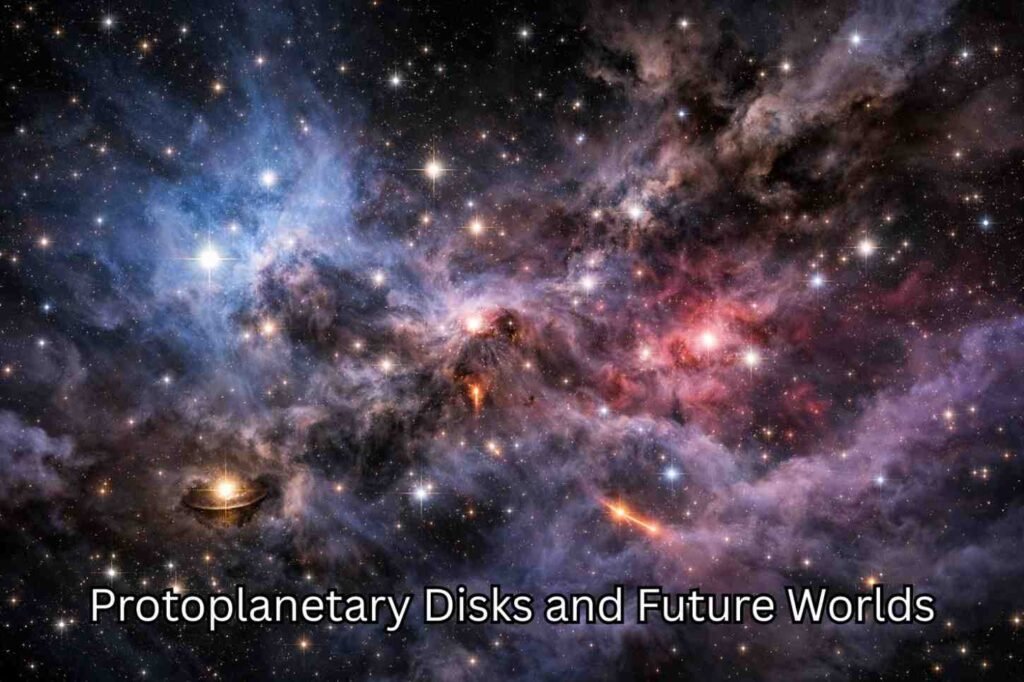
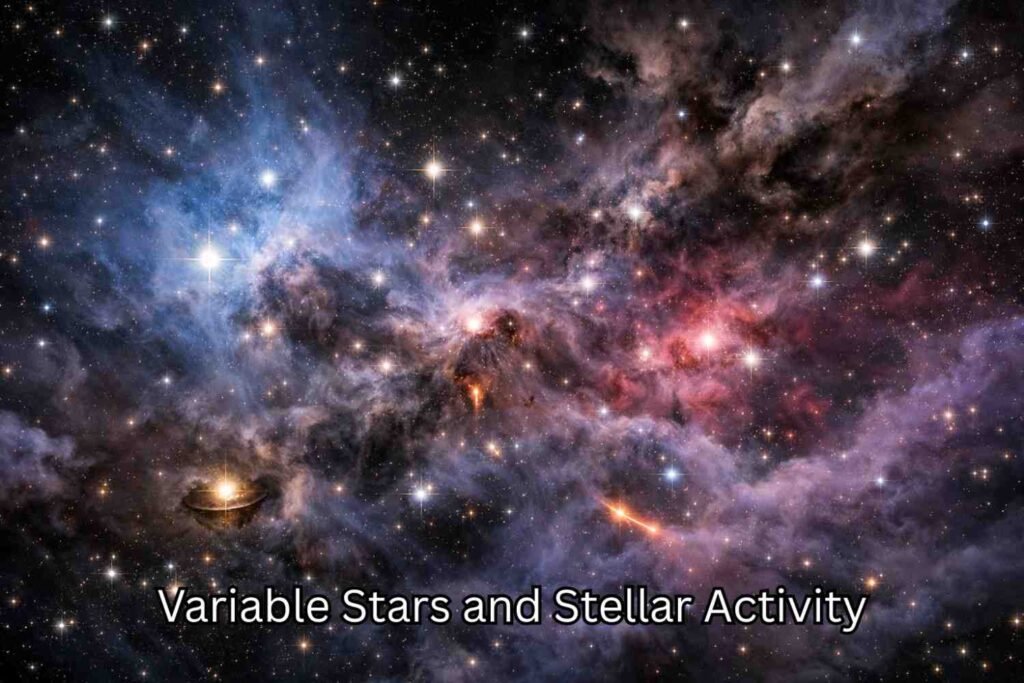
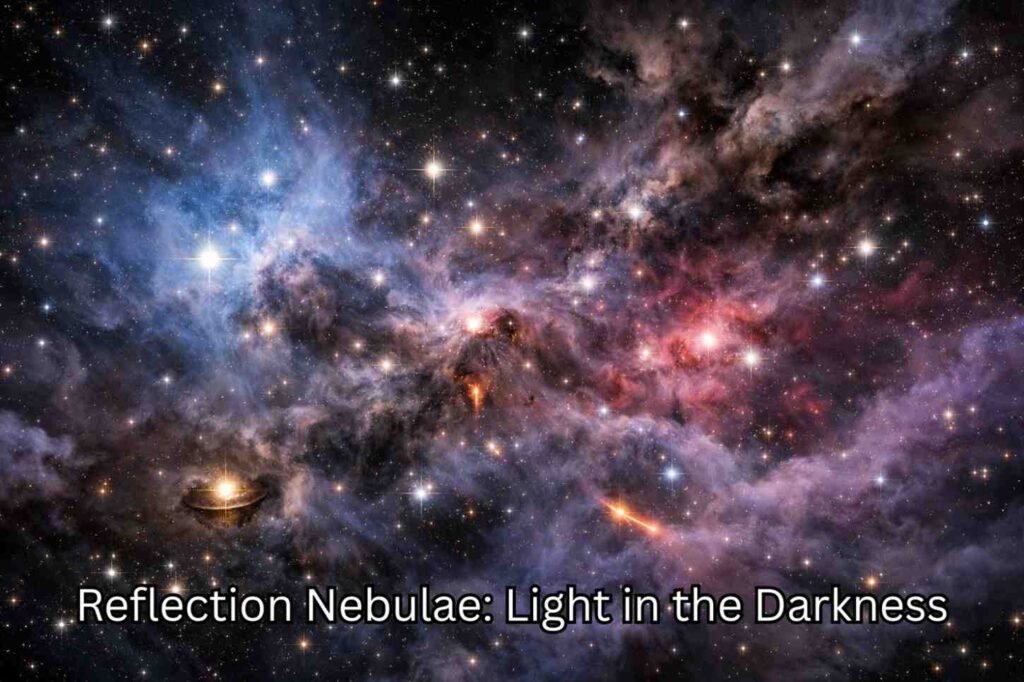
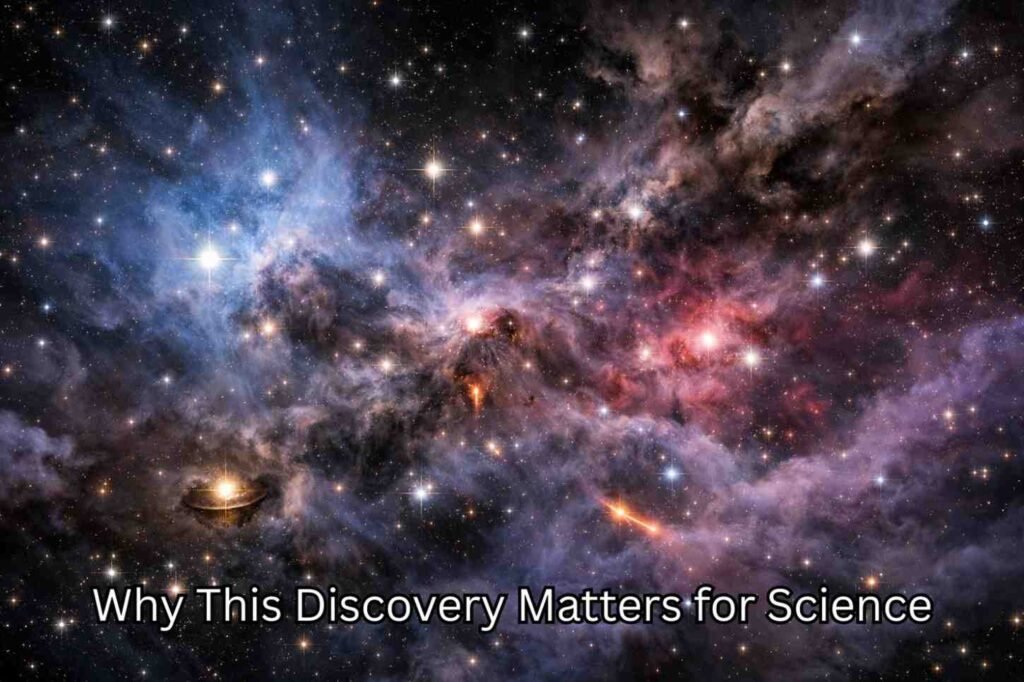
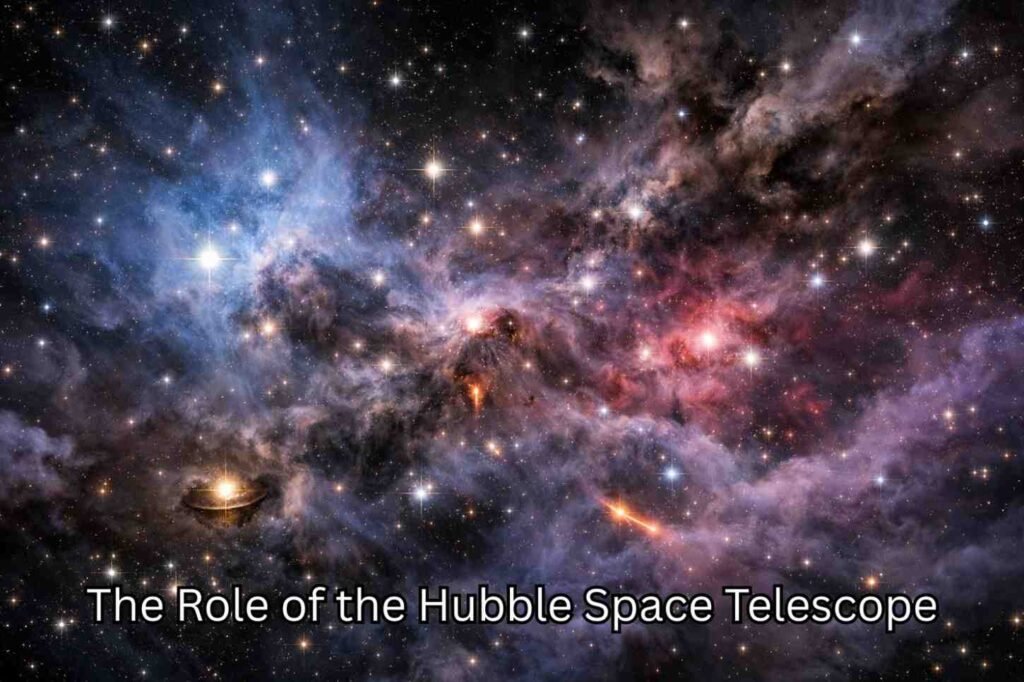
Hubble young stellar objects: The NASA/ESA Hubble Space Telescope has again provided a stunning view of the universe, this time capturing a complex scene filled with young stellar objects in an active star-forming region. This newly released image provides a glimpse into the diversity of early stellar life and offers scientists a closer look at the process of star and possibly planetary system formation.
This observation is much more than just a pretty picture, as it is a representation of actual, cutting-edge scientific research in the field of astronomy.
A Closer Look at a Stellar Nursery
What Is a Stellar Nursery?
A stellar nursery is a region of high gas and dust density where new stars are actively being formed. Such regions are usually obscured from visible light, but thanks to the advanced capabilities of the Hubble Space Telescope, scientists can see what is happening in these regions.
The newly discovered region is located in NGC 1333, which is a well-known star-forming region that is approximately 950 light-years away from our planet and is situated in the Perseus constellation. This region has long fascinated astronomers due to the high density of young stars.
The “Menagerie” of Young Stellar Objects
Why Scientists Call It a Menagerie
The reason the image is called a menagerie is because it contains a variety of young objects. Rather than viewing the formation of one star, scientists are able to view a whole gallery of “star personalities” in one picture.
These include:
- Protostars that are still accumulating mass
- Young stars with protoplanetary disks
- Variable stars with unstable brightness
- Clouds of luminous dust affected by stellar winds
Each object reveals a different aspect of the process of star formation.
Protostars: Stars in the Making
The Earliest Phase of Stellar Life
Protostars are young stars that have not yet started the nuclear fusion process in their cores. They are formed when gas and dust collapse due to the force of gravity, and as more material falls on top of the star, it heats up. In the Hubble photograph, at least one bright protostar is visible that is embedded in a thick disk of dust. This disk could potentially develop into a planet-forming environment, much like our solar system developed billions of years ago.
Protoplanetary Disks and Future Worlds
Where Planets Are Born
Some of these young stars have protoplanetary disks around them. These disks are flat and composed of gas, ice, and dust. These materials take millions of years to come together and form planets, moons, and asteroids.
Hubble’s observation is important for understanding:
- How long these disks will last
- How Stellar Radiation Influences Planet Formation
- Why some systems form planets while others do not
These findings are critical for any research involving exoplanets and the potential for life existing elsewhere in the universe.
Variable Stars and Stellar Activity
Unstable but Important
Some of the stars in the picture are part of a group called Orion variable stars. The young stars vary in brightness irregularly because of:
- Magnetic activity
- Accretion of material
- Stellar Flares and Eruptions
Stars like HBC 340 and HBC 341 show how turbulent the life of a star can be. Watching this kind of variation helps astronomers learn how stars stabilize as they age.
Reflection Nebulae: Light in the Darkness
Dust that shines without heat
NGC 1333 is a reflection nebula, which means that the clouds in this nebula do not emit light. The clouds in this nebula are actually reflecting the light of nearby stars.
These nebulae are significant because they:
- Describe the structure of star-forming regions
- Explain how dust affects starlight
- Aid astronomers in charting interstellar matter
The high resolution of the Hubble Telescope enables scientists to observe the details of these glowing clouds.
Why This Discovery Matters for Science
Advancing Our Understanding of Star Formation
Star formation is one of the most basic processes in the universe. Through observations of regions such as NGC 1333, researchers are able to:
- Test theories of stellar evolution
- Investigate the role of environment in the formation of stars
- Learn how planetary systems form
This work will also serve to support future missions, such as the James Webb Space Telescope, which will study similar areas to an even higher degree of detail.
The Role of the Hubble Space Telescope
Still Delivering Breakthroughs After Decades
The Hubble Space Telescope was launched in 1990 and remains one of the most significant scientific tools ever developed. Even today, Hubble is an essential tool for:
- High-resolution optical imaging
- Long-term astronomical observations
- Aiding newer space telescopes
This new picture shows that Hubble is still making modern astronomy.
What This Means for the Search for Life
From Stars to Planets to Possibility
The process of star and planetary system formation is directly related to the search for life in the universe. By analyzing young stellar objects:
- Scientists discover where habitable planets could emerge
- Astronomers find environments like our young solar system
- Scientists improve models of planetary evolution
Each new discovery moves the human race one step closer to answering one of the greatest questions in science: Are we alone?
Frequently Asked Questions (FAQs)
Is this Hubble discovery true?
Yes. The picture and results are from NASA/ESA’s Hubble Space Telescope and are part of official peer-reviewed astronomical research.
What are young stellar objects?
Young stellar objects are stars in the early stages of formation, such as protostars and newly formed stars that are still enveloped in dust and gas.
Where is NGC 1333 located?
NGC 1333 is situated in the Perseus molecular cloud, about 950 light-years away from our planet.
Can planets form around these young stars?
Yes. Many of the stars that have been observed have protoplanetary disks, which are where planets are formed.
Why is this discovery important?
It assists scientists in comprehending the formation of stars and planetary systems, thus enhancing our understanding of the universe and our own origins.
Conclusion
This new image from the Hubble Space Telescope is far more than a work of art – it is a window into the early process of star formation. Through the collection of a variety of young stellar objects, the Hubble Space Telescope continues to expand our understanding of the universe.
More Interested News: Gestational Diabetes Insulin Anxiety
