


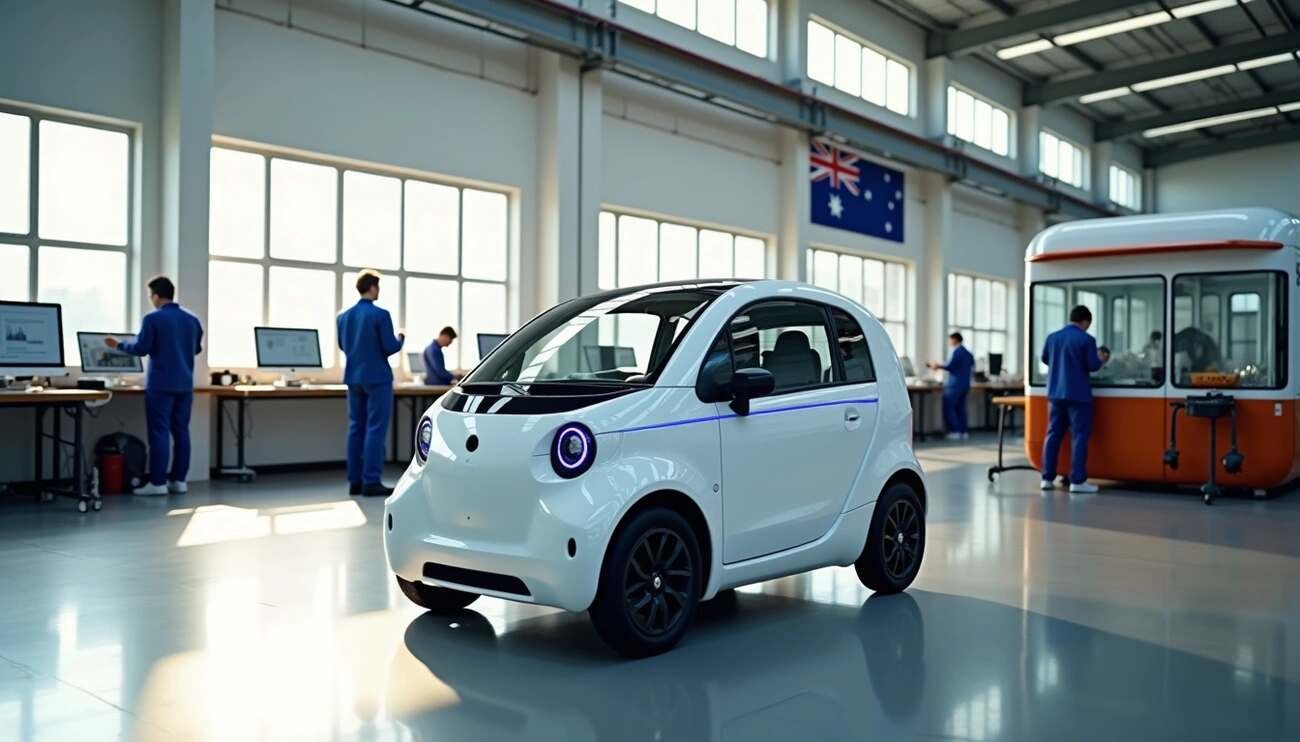
Australia Backs Autonomous Vehicle Startup: Recently, the Australian Government has given a huge push to autonomous vehicles with a $30.7 million investment in the local startup Applied EV. We are seeing a huge breakthrough in autonomous vehicles news as this huge investment has come from the government’s $15 billion National Reconstruction Fund Corporation (NRFC), which has already invested $1.19 billion in Australian companies.
Applied EV was founded in 2015 and has developed a strong and scalable business model for autonomous driving vehicles. Currently, the company has 20 vehicles on the road, and its physical platform and innovative ‘Digital Backbone’ is now in its sixth generation. Moreover, this investment will help Applied EV to develop 100 units of its Blanc Robot cab-less autonomous vehicles. Prior to this investment announcement, the company had 113 employees and had already received investment from Japanese automaker Suzuki after a deal between the two companies in 2021.
Government Invests $30.7M in Applied EV
The National Reconstruction Fund Corporation (NRFC) has made its first investment in the transport sector with a $30.7 million equity investment in Applied EV as part of the company’s $58 million Series B funding round. This huge investment is more than half of the total amount, along with investment from Barrenjoey, Japan Post Capital, and existing investor Suzuki Motors Corporation.
What is the National Reconstruction Fund Corporation?
The NRFC was established on September 18, 2023, through the National Reconstruction Fund Corporation Act 2023. The NRFC is a corporate Commonwealth entity that will help improve the core sectors of the Australian economy. The organization is responsible for the management of a $15 billion sovereign investment fund that will be used to diversify and transform the Australian industry. The NRFC also finances projects in Australia that will contribute to the transformation of the industry through debt, equity, and guarantees.
The NRFC has identified seven priority areas, which include renewables and low emissions technologies, medical science, transport, value-added agriculture, value-added resources, defense capability, and enabling capabilities. Currently, the NRFC has made 20 investments worth $1.19 billion in these sectors.
Why the government chose Applied EV
The Australian government chose Applied EV as its first investment in the transport sector because of the company’s innovative approach to autonomous electric vehicles. Applied EV has a unique digital control system that combines electronics and software. This system enables autonomous electric vehicles to function in accordance with the highest safety standards in the world, especially in remote and dangerous areas.
Statements from NRFC and government officials
NRFC CEO David Gall highlighted the significance of this investment: “We are proud to be investing in a company that commercializes Australian innovation, builds the country’s manufacturing capabilities, and creates highly skilled jobs”.
He further stated that Applied EV’s “product pipeline, commercial contracts, and partnerships with industry leaders will enable it to quickly scale its business”.
This investment is expected to generate a maximum of 25 new highly skilled trade, technical, and commercial jobs in Melbourne, in addition to Applied EV’s existing staff of 113 employees. Julian Broadbent, Applied EV’s CEO and co-founder, said that the company “saw an opportunity” following the end of traditional vehicle manufacturing in Australia in the 2010s, adding: “Today, that vision is delivering real-world impact, with Australian-developed technology at the forefront of the autonomous transport revolution”.
Applied EV Develops Autonomous Vehicle Platform
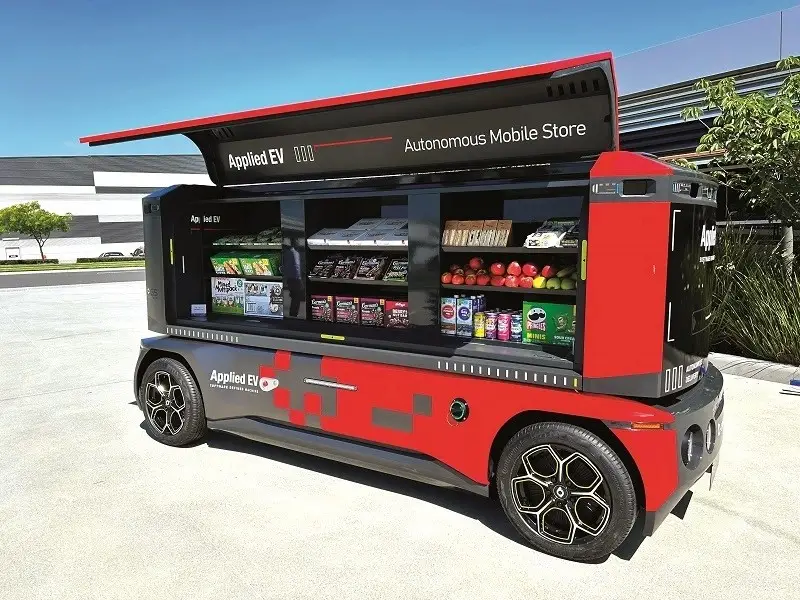
Applied EV has taken the lead in the autonomous vehicle space through its innovative hardware and software integration.
Who founded Applied EV and when?
Applied EV was founded in June 2015 by Julian Broadbent, a former General Motors Executive, with the aim of changing the face of global transport solutions. The initial focus was on the development of the Digital Backbone and the Blanc Robot projects. Broadbent recognized an opportunity in the market that was created by the cessation of traditional vehicle production in Australia.
Development of the Blanc Robot
The Blanc Robot was first unveiled as a prototype in 2016, and the Blanc Robot Gen IV was launched at the Las Vegas CES in September 2019. The Blanc Robot was later launched in Germany at the ITS Hamburg event in the same year.
The current 6th Generation Blanc Robot is a major development, which is based on Suzuki’s long wheelbase ‘Jimny’ platform, thereby cutting the cost of production. This collaboration with Suzuki, which was first established in 2021 and later reaffirmed in 2023, has allowed Applied EV to mass-produce the Blanc Robot.
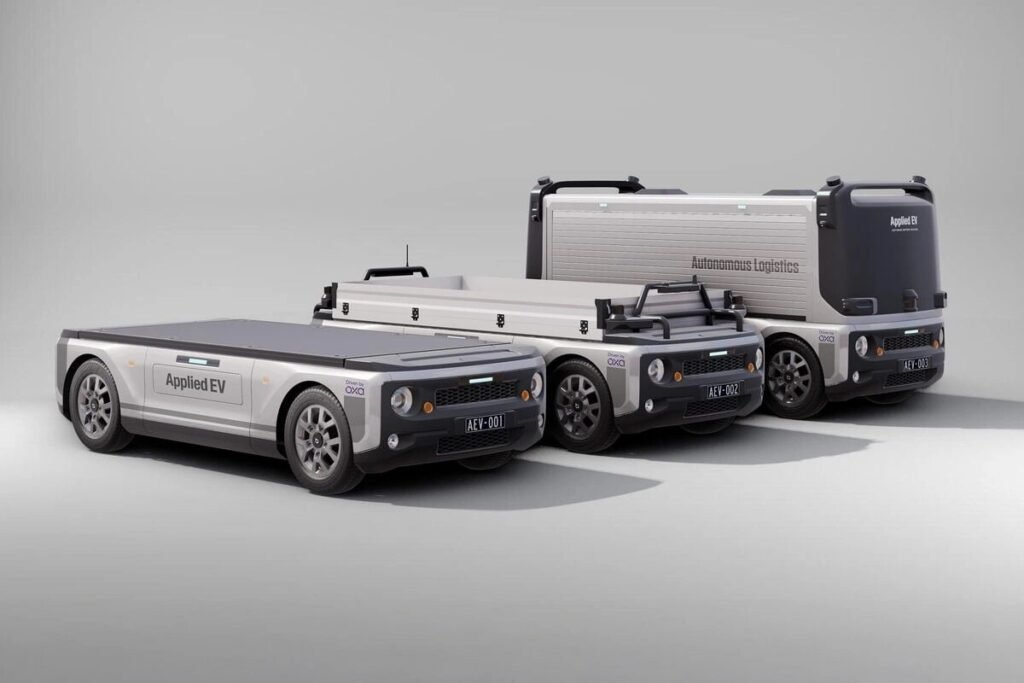
In essence, the Blanc Robot is a cabinless, versatile vehicle designed specifically for autonomous logistics and industrial transport. The “table-top” chassis enables the vehicle to be configured for a variety of autonomous commercial applications, both on-road and off-road. The vehicle is designed to handle tasks that fall under the category of “dull, dirty, difficult or dangerous,” while also providing operational advantages – customers can expect double or triple shift uptime from an autonomous Blanc Robot.
What is the Digital Backbone system?
The key to Applied EV’s innovation is its proprietary Digital Backbone™ technology – a centralized control system that is breaking new ground in safety-rated vehicles. In its current 6th Generation, the Digital Backbone is the world’s first SDV (Software-Defined Vehicle) architecture for developing autonomous vehicles with configurable utility.
From a technical standpoint, the Digital Backbone includes a quad-core safety processor operating at 800MHz, the ability to handle up to 32 cameras and sensors, and a sophisticated safety architecture with ASIL-D processing. The system also includes three secure interfaces: Drive API for autonomous driving software, App Space API for non-driving applications, and Cloud API for secure data and diagnostics.
This technology combines all control functions into a single platform, making vehicle architecture simpler, eliminating hundreds of components, and increasing efficiency.
Suzuki and Japan Post Partner with Applied EV
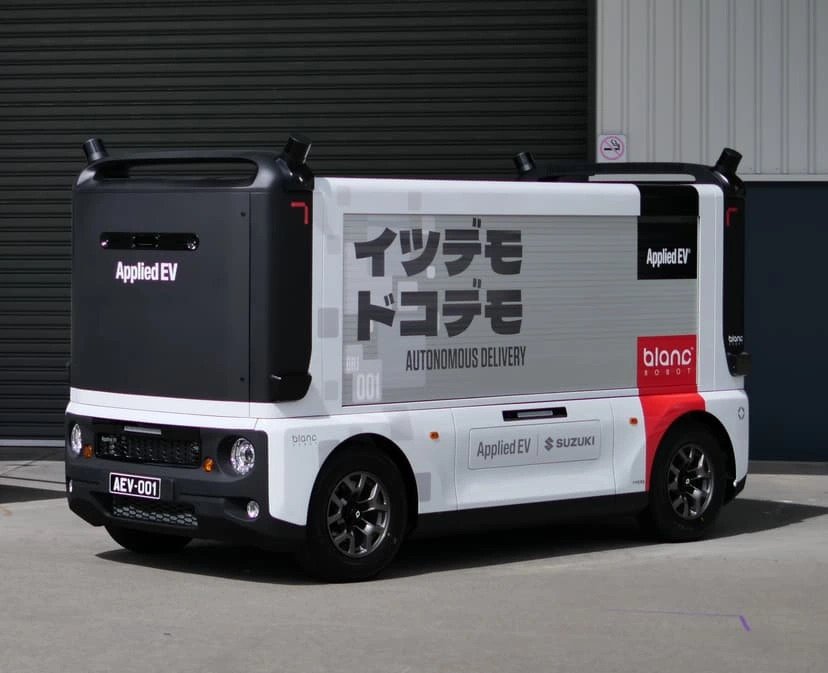
Strategic partnerships with key Japanese firms have enabled Applied EV to move ahead in the autonomous vehicle industry. These partnerships are a vital step forward in mass production and implementation.
How Suzuki assists in manufacturing
Suzuki Motor Corporation invested in Applied EV to facilitate software development for next-generation mobility solutions. This agreement has developed into a manufacturing partnership where Suzuki manufactures all body structures for the Blanc Robot vehicles. In fact, the 6th Generation Blanc Robot is designed using Suzuki’s long wheelbase ‘Jimny’ platform, which has substantially lowered production costs and made mass production possible. At the moment, Applied EV has finished assembling the first 100 Blanc Robot vehicles with frames manufactured by Suzuki in Japan.
Why Japan Post is testing the technology
Japan Post Capital has invested in Applied EV. As a result, the postal service, which has about 80,000 vehicles in operation, is testing the implementation of autonomous technology. Their testing is mainly conducted at low speeds in urban areas, responding to the issue of population decline in Japanese cities. Thus, Japan Post performed driving tests on autonomous delivery robots at Nagasaki Institute of Applied Science, showing their confidence in these technologies to improve their logistics services.
What this means for global deployment
This partnership is a major milestone for the autonomous driving vehicles sector. Specifically, it is the first time that an autonomous logistics vehicle with software-defined capabilities can be produced on an automotive scale. However, while it tackles “megatrend-size challenges,” the first deployment phase is still relatively small.
Australia Repositions as a Tech Manufacturing Hub
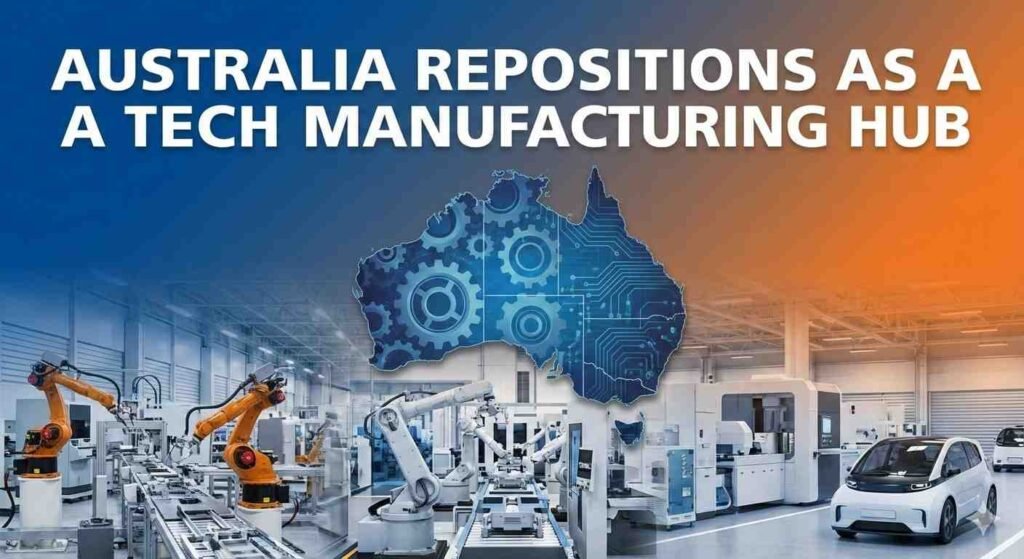
The Applied EV investment is a major turning point for the Australian manufacturing sector, which is undergoing a transition to more advanced high-tech manufacturing capabilities.
How this project creates local jobs
The Applied EV project will create about 25 new jobs in Melbourne, which will add to its existing staff of 113 employees. This is consistent with the current state of the manufacturing industry in Australia, which is currently contributing USD 134.70 billion per year with 870,000 employees. As the industry undergoes a transformation, new employment opportunities are emerging in robotics, digital design, and logistics, which are more representative of the industry’s new dynamics.
What it means for post-Holden auto industry
Since the shutdown of Mitsubishi, Ford, Holden, and Toyota factories, the Australian automotive industry has been undergoing a process of reinvention. While the end of car manufacturing led to the loss of an estimated 200,000 jobs across the country, including 6,500 direct employees of car manufacturing plants, the industry has proved surprisingly resilient. Today, the Australian automotive industry continues to produce more than USD 3.20 billion in revenue each year. Indeed, 74% of the automotive supply chain businesses continued to operate after the major factory shutdowns, with Australian-owned companies proving particularly resilient at 86%.
Growth potential for exports and international expansion
Looking forward, the Australian autonomous vehicles industry offers tremendous growth potential, with forecasts suggesting a value of USD 15.9 billion by 2034 and an astonishing 28% CAGR. The country is slowly finding itself at the nexus of AI, logistics, and heavy industry. Throughout this process, exports have become increasingly important—the number of businesses that export has increased from 56% to 81% between 2013 and 2017. Australian innovation in autonomous driving vehicles is already being applied globally through collaborations with global corporations such as Suzuki and Japan Post.
Conclusion
The Australian government’s investment in Applied EV is a major turning point for the autonomous vehicle industry in the country. The $30.7 million investment from the National Reconstruction Fund Corporation is definitely going to give the country a strong position in the field of advanced manufacturing. Applied EV’s innovative solutions, especially in its Digital Backbone technology and the Blanc Robot vehicles, are a testament to the fact that Australian engineering is capable of competing with the best in the world.
The partnerships with Suzuki and Japan Post have definitely given Applied EV a boost in its growth plans. The company not only gets financial support but also manufacturing facilities and testing grounds. This puts the company in a position to expand its presence in the global market while still retaining its Australian roots.
This investment is definitely a new beginning for the automotive industry in Australia, especially after the shutdown of the traditional auto manufacturing plants in the country. The addition of 25 new skilled jobs to the company’s existing staff is a reflection of the changing face of manufacturing jobs in the country. Technology-based jobs will become more prominent in the future.
Looking forward, Applied EV is one such example of how Australia can turn industrial challenges into opportunities. The autonomous vehicle industry is still expanding at a breakneck pace, with big projections for the next decade. This gives Australia the opportunity to not only keep up with the rest of the world but to lead in this new industry as well.
The path from Julian Broadbent’s original vision to government support expansion demonstrates what Australian innovation can achieve when given the right support. This investment ultimately represents more than just financial support for one business—it represents Australia’s commitment to building a future-ready economy through the use of advanced technology and manufacturing expertise.
FAQs
Q1. What is Applied EV, and why did it get government funding? Applied EV is a new Australian startup that focuses on the development of autonomous electric vehicles. It received $30.7 million in funding from the Australian government’s National Reconstruction Fund Corporation to help with the manufacturing and development of its Blanc Robot autonomous vehicles.
Q2. How is Applied EV’s technology different from other autonomous vehicle companies? Applied EV’s main innovation is its Digital Backbone system, which is a centralized control system that combines all the functions of the vehicle into one system.
Q3. What kind of partnerships has Applied EV established to further its technology? Applied EV has established partnerships with Suzuki Motor Corporation for manufacturing and with Japan Post for testing its autonomous vehicles. Such partnerships are essential for mass production and implementation of the technology.
Q4. How is this investment likely to affect the manufacturing sector in Australia? The investment in Applied EV will help generate new skilled employment in Melbourne and help reposition Australia as a high-tech manufacturing hub. The investment marks a move towards high-tech manufacturing in the post-traditional auto-manufacturing era.
Q5. What are the likely global implications of Applied EV’s success? Applied EV’s success will help Australia emerge as a leader in the burgeoning autonomous vehicle industry. The fact that Applied EV has partnerships with global corporations such as Suzuki Motor Corporation and Japan Post indicates that the company has the potential to export its technology in the autonomous vehicle industry.
My Website Recent Article: Oats to Lower Cholesterol Fast
