


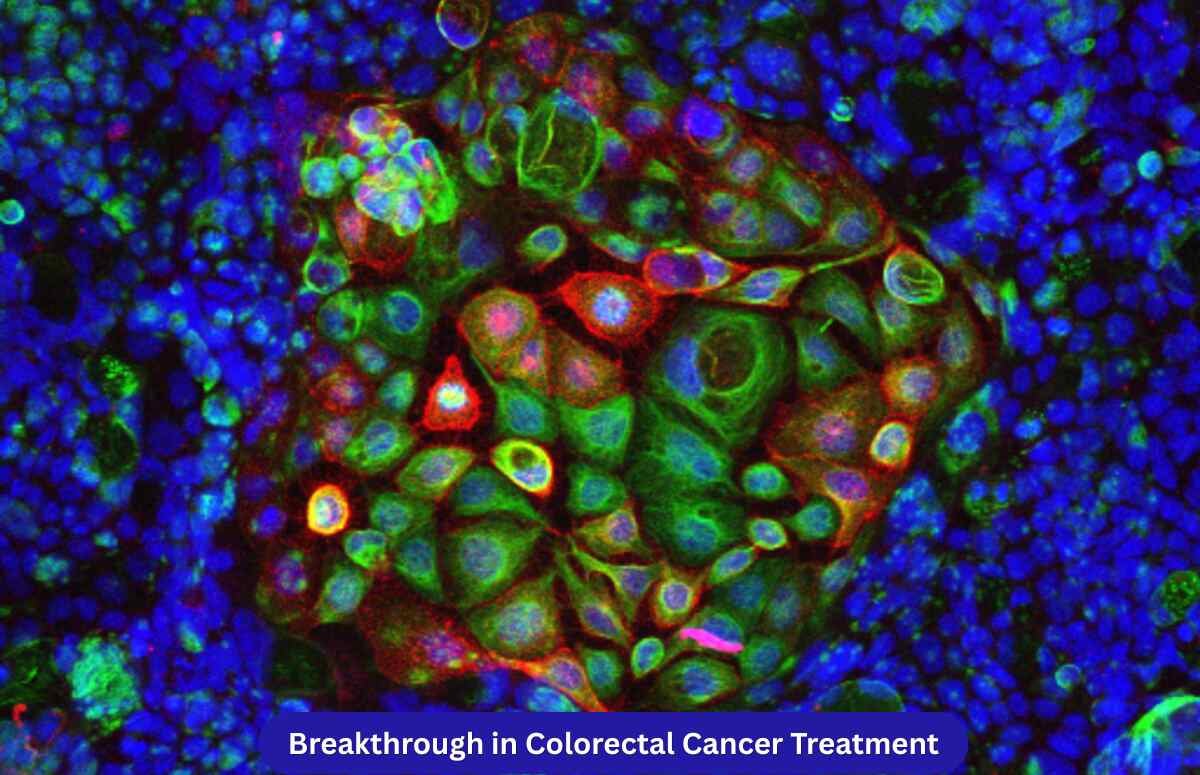
Endoscopic treatment colorectal cancer advances are arriving at a critical time, particularly as colorectal cancer has become the leading cause of cancer deaths in those under 50. This has resulted in the age at which screening should be performed having fallen to 45 years or younger for average-risk adults. Early intervention has never been more important, and the endoscopic treatment of colorectal cancer, including the endoscopic treatment of t1 colorectal cancer, provides a minimally invasive alternative that removes cancer without the need for surgery or the loss of healthy tissue. This provides a prime example of the advancements that modern medicine has made in the fight against cancer.
The Process of Endoscopic Submucosal Dissection in the Endoscopic Treatment of Colorectal Cancer
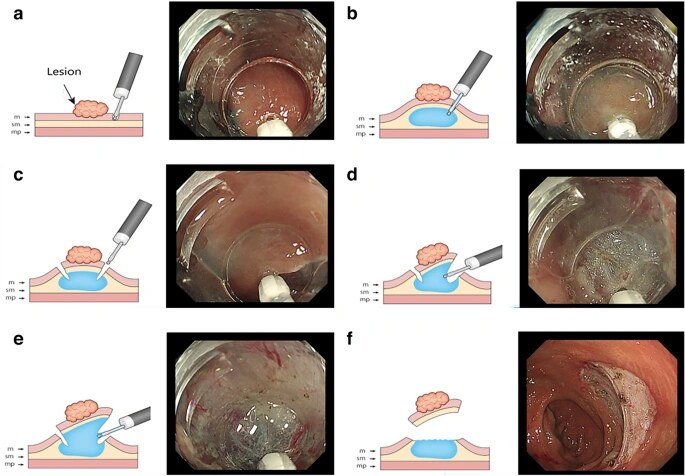
Image Source: Nature
Endoscopic submucosal dissection removes large colorectal cancer tumors by inserting a flexible endoscope into the colon and utilizing special tools to remove the tumor by lifting it out of the body. This endoscopic treatment of colorectal cancer is different from conventional endoscopic mucosal resection in that it removes the tumor in large pieces.
During this procedure, physicians outline the tumor borders by using coagulation current. They then inject special fluids under the tumor, lifting it off from normal tissues. A high-frequency electrical knife is then used to remove the tumor in one single piece. This procedure takes about one to three hours.
The endoscopic procedure for t1 colorectal cancer, performed by ESD, has shown remarkably high en bloc resection rates, unlike other techniques. Tumor recurrence is seen in only 1% of patients. Compared to EMR, where recurrence is seen in a range of 15% to 20%, this is remarkably lower. Studies on 700 patients revealed that curative resection was possible in 78% of the cases.
Perforation is seen in about 5% to 8% of colon procedures. These perforations are usually treated simultaneously by endoscopic closure techniques. This procedure requires special technical skills and training. Endoscopists usually require observation of expert procedures, workshops, and animal models before independently performing this.
Patient Recovers Cancer-Free After Minimally Invasive Procedure
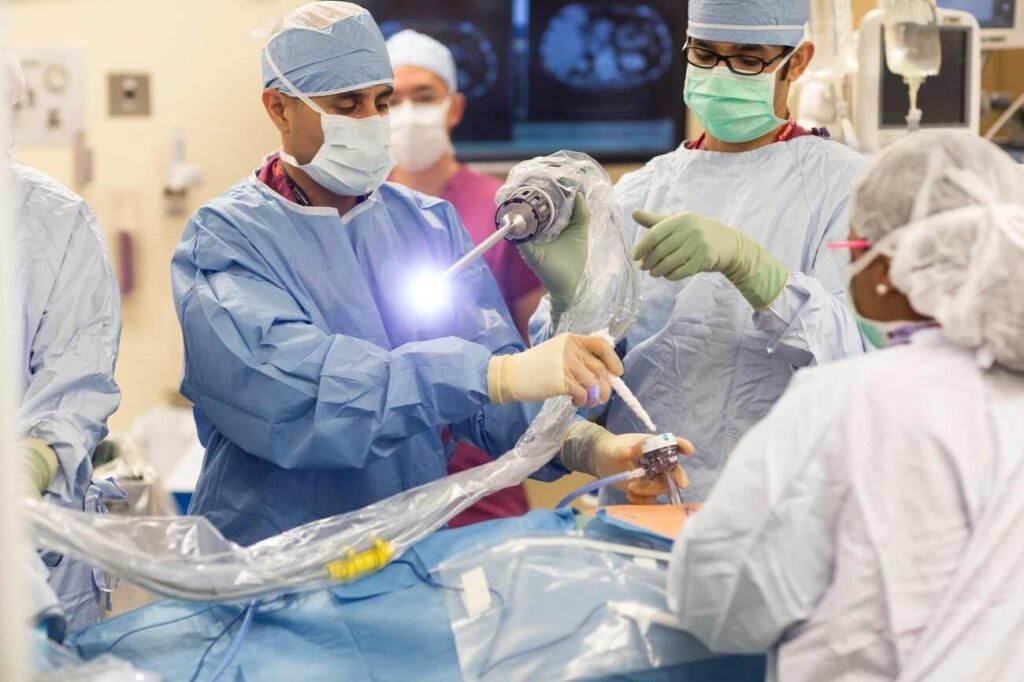
Image Source: MD Anderson Cancer Center
The first patient who underwent endoscopic treatment of colorectal cancer in the United States spent only one night in the hospital for observation and then went home the following day. A microscopic examination of the tissues removed by the endoscope confirmed the complete removal of the cancer. This is a fully curative resection of the cancer.
The long-term results of endoscopic procedures for the treatment of colorectal cancer have shown impressive results when compared with laparoscopic procedures. Overall survival rates for patients who underwent endoscopic procedures were 91.5%, while the overall survival rate for patients who underwent laparoscopic procedures was 87.4%. Disease-free survival rates for patients who underwent endoscopic procedures and laparoscopic procedures were similar and stood at 90.4% and 87.4%, respectively.
Systemic recurrences of the cancer in patients who underwent endoscopic procedures were lower than in patients who underwent laparoscopic procedures. Patients who underwent endoscopic procedures had only 1.6% systemic recurrences of the cancer, while patients who underwent laparoscopic procedures had 2.0%.
Disease-free survival of patients with low risk factors such as well and moderately differentiated cancers and sufficient cancer-free resection margins stood at 98%, while the recurrence rate in such patients was only 0.8%. Patients with high risk factors had 89% disease-free survival and a recurrence rate of 6.6%.
In the endoscopic treatment of t1 colorectal cancer, 15 patients who underwent the endoscopic procedure refused the radical resection of the cancer despite the doctor’s recommendations. This is because of old age and other factors such as co-morbidities.
Colorectal Cancer Strikes Younger Adults at Alarming Rates
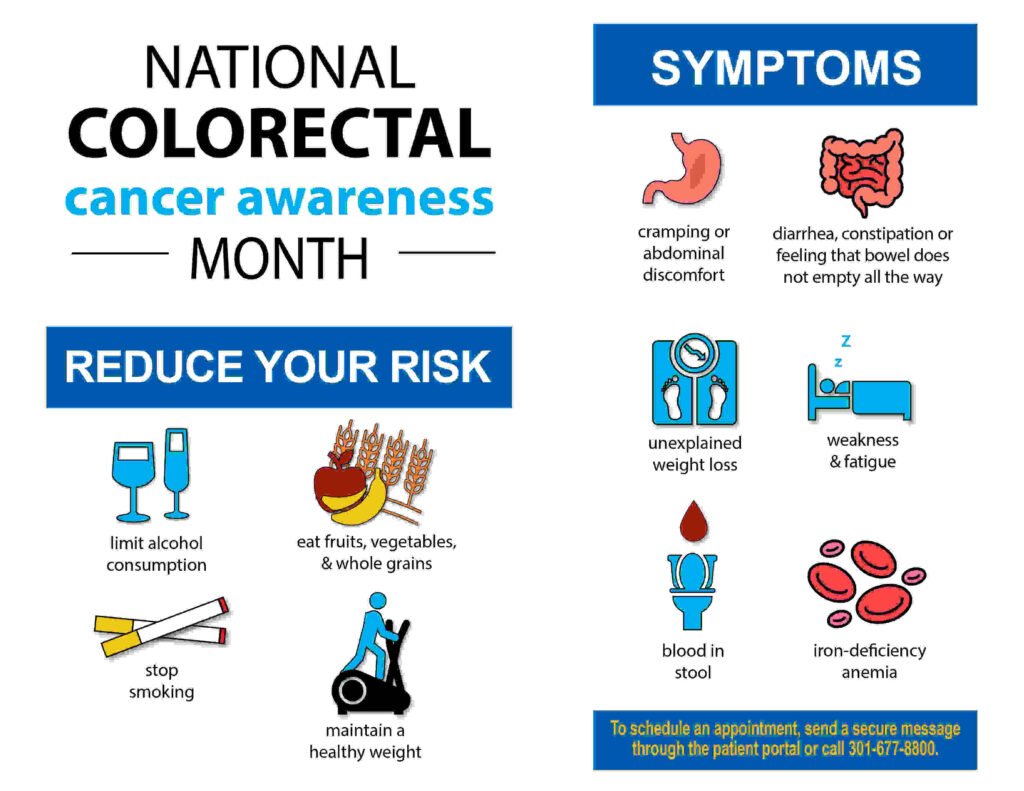
Image Source: Kimbrough Ambulatory Care Center – Tricare
In the United States, the incidence of new cases of colorectal cancer among people aged less than 50 has been rising by 2% each year. In the same period, the mortality rate of people aged less than 50 has been rising by 1% each year. In the United States, colorectal cancer is the most common cause of cancer-related deaths in men aged less than 50 and the second most common cause of cancer-related deaths in women aged less than 50. In the past two decades, the incidence of colorectal cancer in people aged less than 55 has doubled.
The incidence rates in adults aged 40 to 49 years have shown a rise of nearly 15% in the period between 2000-2002 and 2014-2016. Projections show a 90% increase in incidence rates in Americans aged 20 to 39 years by 2030. An estimated 10.5% of the incidence rates in the US occur in individuals under the age of 50.
The most frequently observed symptoms in patients with early-onset colorectal cancer are abdominal pain, rectal bleeding, diarrhea, and iron deficiency anemia. The appearance of only one sign in patients with early-onset colorectal cancer doubles the chances of early diagnosis. In addition, the appearance of three or more signs in patients has a risk factor of over sixfold. Despite the appearance of the symptoms, the time taken for diagnosis in patients with early-onset colorectal cancer varies between 4 to 6 months.
Nearly half of the patients diagnosed with early-onset colorectal cancer show rectal bleeding and abdominal pain, whereas one-fourth show changes in bowel habits. In comparison to their White counterparts, Black adults show a higher incidence and mortality rates for colorectal cancer in all age groups.
Conclusion
Endoscopic submucosal dissection is a groundbreaking procedure for patients diagnosed with early-stage colorectal cancer. The alarming incidence rates in younger adults make this procedure a welcome respite. The procedure has shown remarkable success rates, with only 1% tumor recurrence and survival rates exceeding 90%. In addition, the fact that this procedure is available at the right time in the medical community is noteworthy.
FAQs
Q1. What is the standard treatment approach for early-stage colon cancer?
The standard approach in the treatment of early-stage colon cancer involves the removal of the tumor via surgery, followed by chemotherapy in selected cases. The procedure helps in the removal of cancer cells, thereby curing the patient. In many cases, the removal of the tumor via surgery alone is enough to cure the patient.
Q2. How does the procedure of Endoscopic Submucosal Dissection differ from the usual colonoscopy procedures?
The procedure of Endoscopic Submucosal Dissection differs from the usual colonoscopy procedures in the sense that in ESD, the tumor is removed in its entirety rather than in pieces. Fluids are injected into the tumor to detach it from the surrounding tissues, and then a high-frequency electrical knife is used to remove the tumor in its entirety through the colonoscope.
Q3. What are the success rates for the endoscopic treatment of early colorectal cancer?
The success rate for the endoscopic treatment of colorectal cancer through ESD is very high, with only 1% of patients experiencing tumor recurrence. The overall survival rate for patients with colorectal cancer is 91.5%, with disease-free survival rates at about 90.4%. Disease-free survival can reach as high as 98% in patients with low-risk tumors with sufficient margins.
Q4. Why are colorectal cancer screening tests now recommended to begin at age 45?
The screening tests are now recommended to begin at age 45 due to the increase in colorectal cancer cases in individuals younger than 50, with an increase in cases by 2% each year. It has now become the leading cause of death in men younger than 50, making colorectal cancer the second leading cause of death in women younger than 50.
Q5. What are the symptoms that should prompt someone to have colorectal cancer screening tests done prior to age 45?
The four key warning signs are abdominal pain, rectal bleeding, diarrhea, and iron deficiency anemia. When a person experiences any of these four key warning signs, they are at a higher risk of developing colorectal cancer at an early age. When a person experiences only one symptom, the risk of developing colorectal cancer at an early age is doubled. When a person experiences three or more symptoms, the risk is more than six times higher.
Medical Disclaimer: The information contained in the articles published by Orbit News Hub is for educational and information purposes only. It should not be used in place of a consultation with a qualified medical practitioner or healthcare provider. You should always consult a healthcare provider before seeking answers to medical questions or making health-related decisions.
Read My Website Recent News Article: Sperm in Space
