


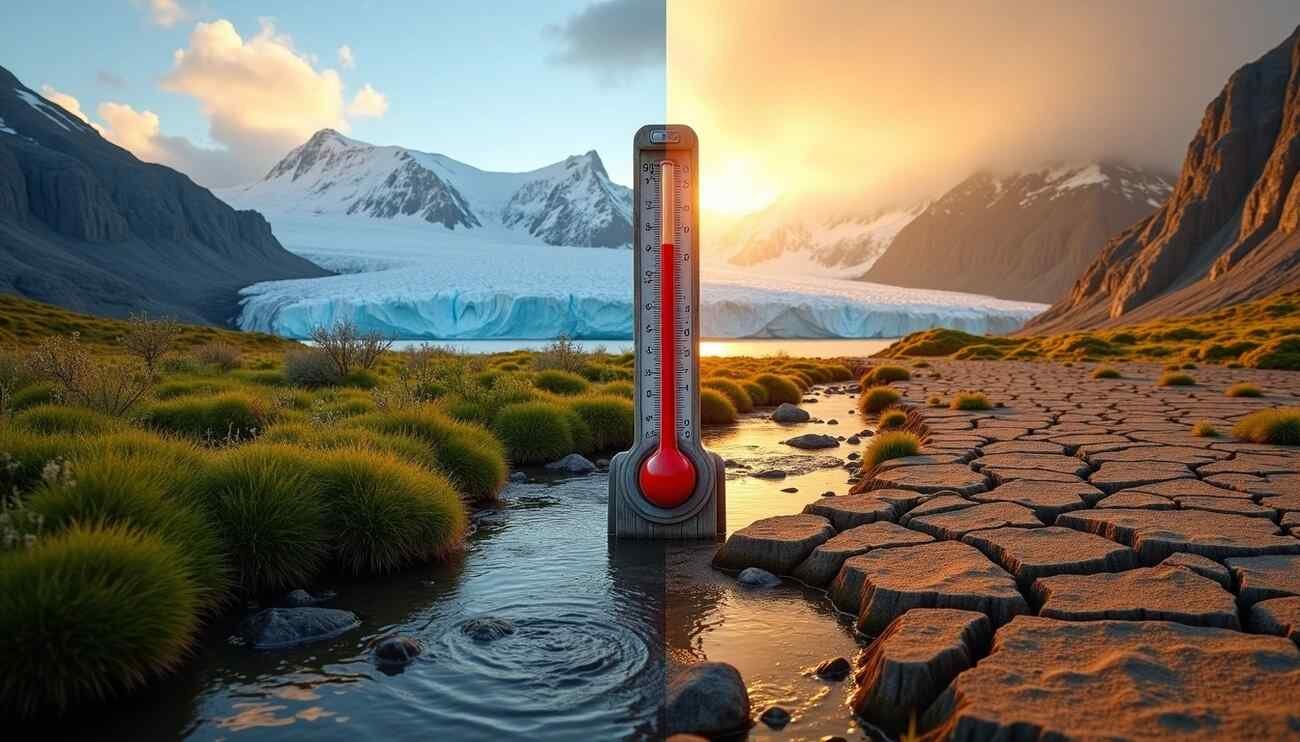
New Study Reveals: Scientists have revealed that the rate at which human beings are warming the planet is the fastest rate ever measured. The rate of global warming is nearly doubling, with the rate of climate breakdown speeding up. In the last decade, the rate of global warming has almost doubled, rising to 0.35 degrees C every decade, while in the past 45 years, it was rising at a rate of less than 0.2 degrees C every decade. This is the fastest rate that the planet has ever experienced since 1880 when the rate of temperature change was first measured. This has meant that the planet is now 1.4 degrees C warmer than it was before the Industrial Revolution. This has raised serious concerns that the rate at which the planet is warming could mean that the 1.5 degrees C limit set by the Paris Agreement will be exceeded before 2030, leading to serious concerns about whether this is a permanent change in the way the planet’s climate is behaving.
Study Finds Global Warming Rate Nearly Doubled in Recent Decade
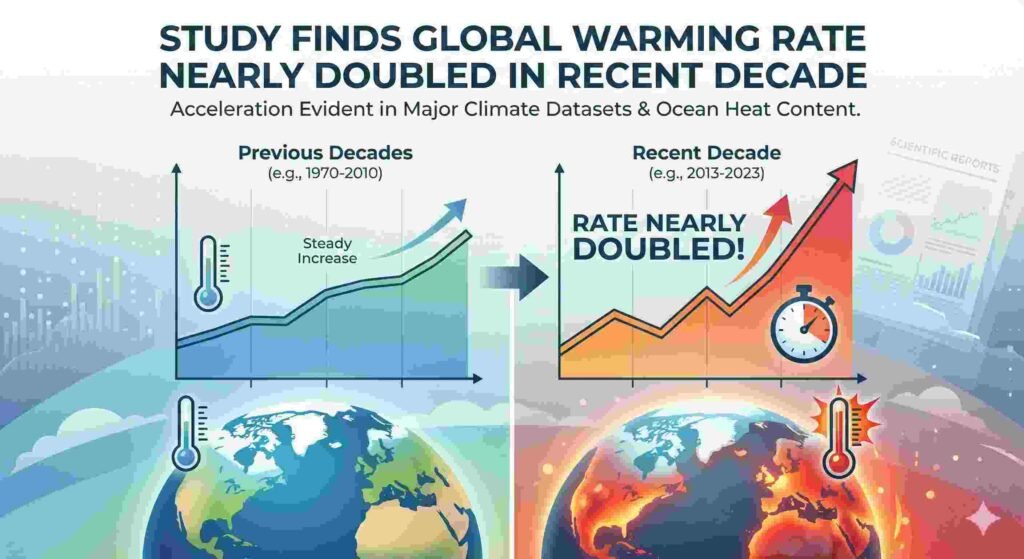
The researchers from the Potsdam Institute for Climate Impact Research used a method to reduce the noise in the five major temperature data sets to arrive at their findings. The researchers studied the data from NASA, NOAA, the Met Office Hadley Centre’s HadCRUT5, Berkeley Earth, and the Copernicus ERA5. The method helps eliminate the influence of various natural phenomena that mask the actual trends, such as El Nino, volcanic eruptions, and solar irradiance.
The speeding up of the rate of global warming was evident in the data from the five sources between February 2013 and February 2014. The rates of warming increased to between 0.34°C to 0.42°C per decade after adjusting the data. The highest rate was from the ERA5 data at 0.42°C per decade, followed by the Berkeley Earth and NASA data at 0.36°C per decade, and the HadCRUT data at 0.34°C per decade.
The statistical tests provided over 98% confidence levels for the findings from the data from the five sources. When the tests were conducted on unadjusted data without the reduction of the influence of various natural phenomena, the results did not reach even 95% confidence levels. This shows the significance of separating the anthropogenically induced warming from the various natural fluctuations in the climate.
Furthermore, ocean temperature trends also support the acceleration trend. Half of the global ocean heat content increase since 1865 has taken place over the last two decades.
Paris Agreement’s 1.5C Threshold at Grave Risk of Being Breached Before 2030
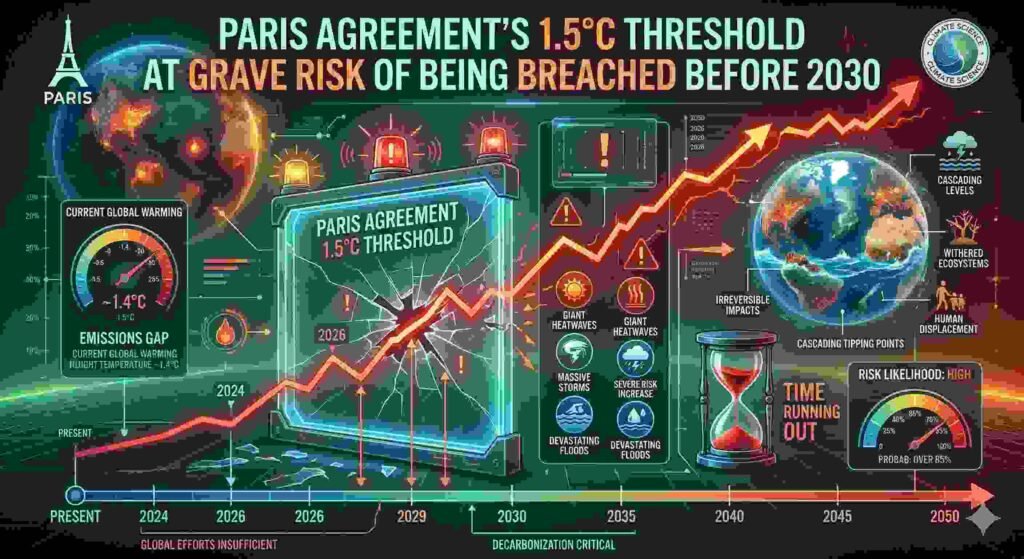
The accelerated rate of global warming puts the Paris Agreement’s 1.5C temperature limit at immediate risk. If the accelerated rate of warming continues, the 5 major temperature trends indicate that the Paris Agreement’s 1.5C temperature limit will be breached between 2026 and 2029. According to the NASA and NOAA trends, the 1.5C temperature limit is expected to be breached in 2028, while the HadCRUT trend indicates that the 1.5C temperature limit is expected to be breached in 2029, while the ERA5 trend indicates that the 1.5C temperature limit may be breached as early as 2026.
The long-term average global temperature currently stands at 1.34C to 1.41C above pre-industrial levels. Despite the current average global temperature, 2024 was the first year that the average global temperature remained above 1.5C for the entire year, reaching 1.55C above pre-industrial levels. According to the World Meteorological Organization, the chances that at least one year between 2025 and 2029 will breach the 1.5C temperature limit are 86%, with 70% chances that the 5-year average itself will breach the 1.5C temperature limit.
The remaining carbon budget for the 1.5C temperature limit stands at 130 Gt CO2, which is set to be consumed in more than 3 years at the current rate of 40 billion tons of emissions annually. For the 1.5C temperature limit, greenhouse gas emissions have to fall by 55% by 2035. However, under the current pledges made by nations, the reduction in greenhouse gas emissions is expected to fall between 12% to 15% by 2035. Despite the pledges made by nations, the world is still expected to warm by 2.3C to 2.5C by the end of the century.
Scientists Debate the Lasting Nature of the Accelerated Rate of Global Warming
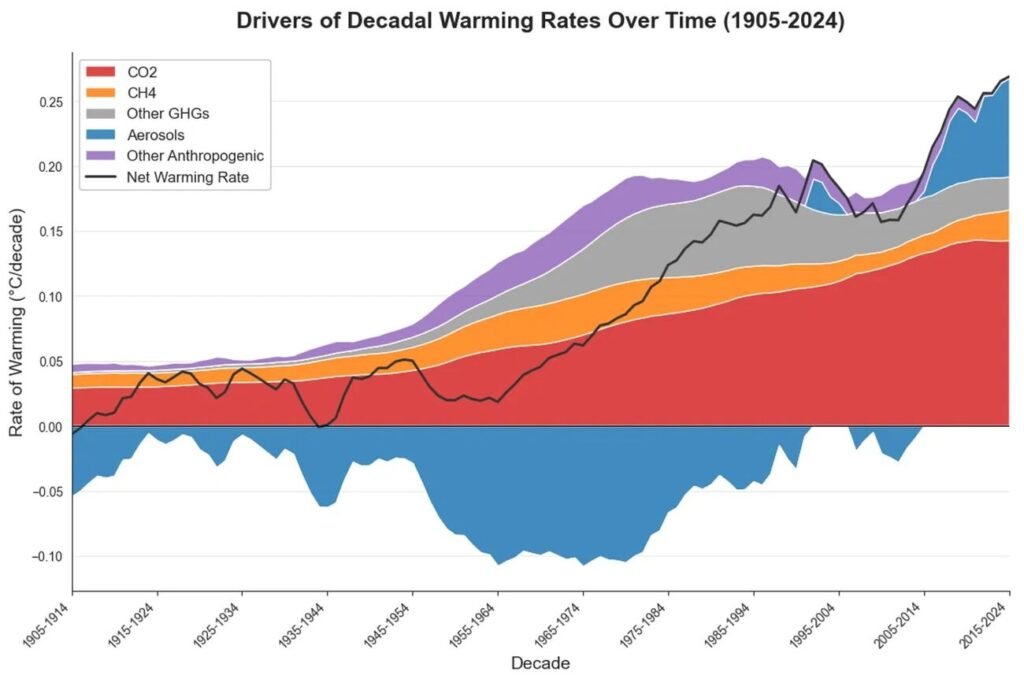
Image Source: Skeptical Science
Scientific consensus on the accelerated rate of global warming is still divided. Scientists have been sharply divided into two groups, with the two groups debating the nature of the accelerated rate of global warming.
The observationalists believe that the current temperatures are still within the expected range when one considers the historical emissions of greenhouse gases and the shift from La Niña to El Niño events. They cite similar events in the 2015-2016 El Niño cycle, when temperatures broke records, only to drop in the following years. They believe that making definitive statements on the speeding up of global warming only serves to create unwarranted fear and that more time is needed to understand the complex factors at play.
The accelerationists believe that the current climate models do not take into consideration the decrease in air pollution and fossil fuels. They believe that the increasing energy deficit is a sign of the continued speeding up of global warming. Johan Rockström, of the Potsdam Institute, believes that the planet is showing massive cracks in its resilience, with terrestrial ecosystems losing their carbon storage capacity and the oceans exhibiting instability factors.
Forests, plants, and soils absorbed almost no carbon in 2023, and climate models have not been able to factor this in. Ocean carbon sinks, responsible for absorbing 90% of the warming associated with fossil fuels, show signs of instability. Philippe Ciais believes that the accumulation of CO2 in the atmosphere in 2023 was very high, resulting in very low absorption of carbon by the terrestrial biosphere.
Conclusion
The data is unequivocal and indicates unprecedented acceleration in global warming, with rates increasing by nearly twice the original rates in the last ten years. The planet is perilously close to breaching the 1.5C temperature barrier by the end of the coming decade, and emissions reductions are still insufficient. Scientists are unsure if this is a new normal, particularly as natural carbon sinks show signs of weakening.
FAQs
Q1. Is the rate of global warming unprecedented in recent history?
Yes, the rate of global warming is the highest since systematic temperature records began in 1880, at 0.35C per decade. This is nearly double the rate between 1970 and 2015, when the rate was less than 0.2C per decade.
Q2. When is the threshold of 1.5C likely to be breached?
The threshold of 1.5C is likely to be breached between 2026 and 2029, depending on the temperature data set used. According to the World Meteorological Organization, there is an 86% chance that at least one year between 2025 and 2029 will exceed this threshold.
Q3. How much will the rate of greenhouse gas emissions need to fall to stay within the 1.5C threshold?
Greenhouse gas emissions need to fall by about 55% by 2035 to stay within the threshold of 1.5C, but the current commitments of nations will only reduce greenhouse gas emissions by 12% to 15% by 2035 if fully implemented.
Q4. Are the carbon sinks still able to soak up carbon dioxide?
The carbon sinks are showing worrying signs of decline. In 2023, forests, plants, and soil were unable to soak up any carbon dioxide at all, and the carbon dioxide absorption ability of the oceans, which have been able to soak up 90% of the warming from fossil fuels over the past few decades, is also declining.
Q5. Do the world’s leading climate scientists agree that the rate of global warming is accelerating?
The world’s leading climate scientists are split over whether the rate of global warming is accelerating.
Read My Website Recent News Article: Matildas Crush Iran 4-0 in Women’s Asian Cup Opener
