



Aeromonas Gastrointestinal Illness: For a long time, the focus of the medical community in the diagnosis of gastrointestinal illness was centered on Salmonella, Escherichia coli, and Campylobacter. However, new research released in February 2026 highlights a silent player that has moved to the forefront of digestive health issues: Aeromonas gastrointestinal illness.
Aeromonas, which was once considered a less significant agent that mainly affected aquatic life, is now recognized as the second most frequent bacterial agent of intestinal infections in many areas. This new trend makes medical professionals reassess the treatment strategies for chronic diarrhea and intestinal inflammation.
What is Aeromonas and Why is Its Rise in Prevalence Occurring at This Time?
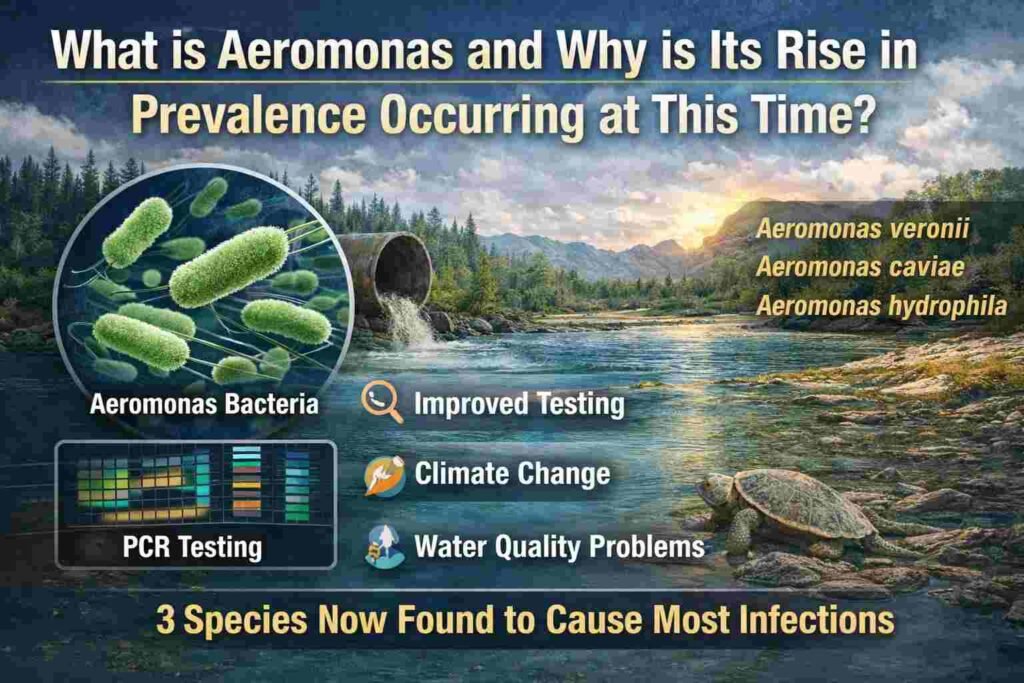
Aeromonas is a type of Gram-negative, rod-shaped bacterium that is normally found in freshwater and brackish environments. Although it has been known about for several decades, it has often been overlooked because it was not detectable through standard laboratory testing in human stool samples.
As of 2026, through the use of advanced genomic sequencing, it has been found that three particular species, Aeromonas veronii, Aeromonas caviae, and Aeromonas hydrophila, are the cause of the vast majority of human infections. The rise in human infections is due to the following factors:
- Improved Testing: More sensitive PCR testing is now able to identify infections that were not detectable before.
- Climate Change: Higher water temperatures promote the rapid growth and multiplication of these bacteria.
- Water Quality Problems: Even in developed countries, there is a problem with the treated water supply and an increase in the prevalence of Aeromonas.
Common Symptoms of Aeromonas Infection
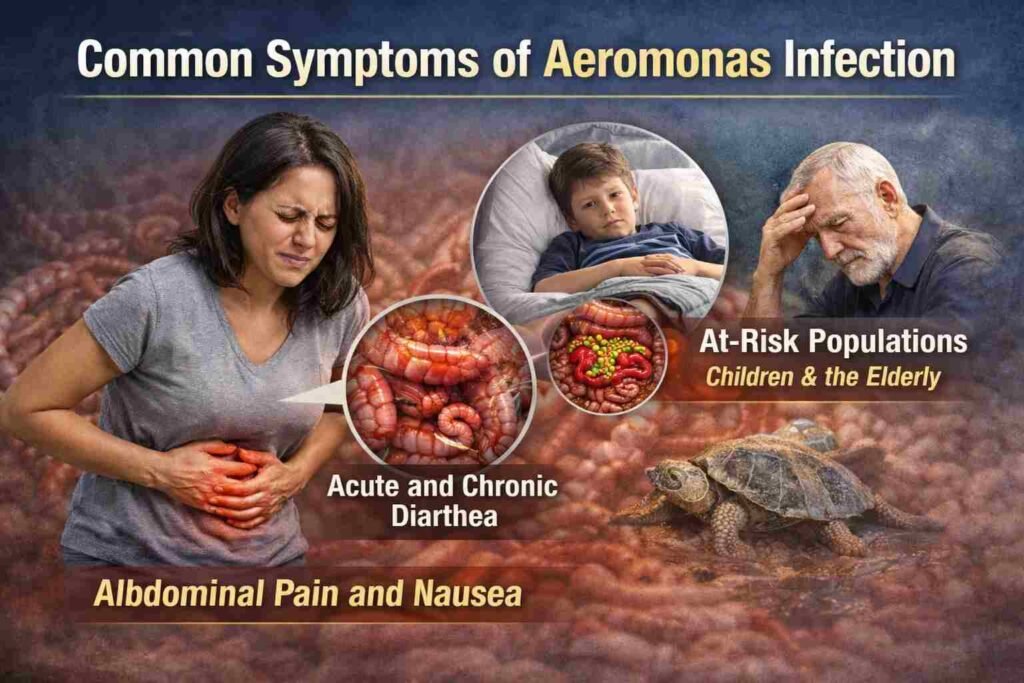
The clinical presentation of an Aeromonas infection can vary significantly, which often leads to misdiagnosis. Unlike a typical 24-hour “stomach flu,” this illness can persist for weeks if left untreated.
Acute and Chronic Diarrhea
The most common sign is watery diarrhea. In many patients, this can transition into a chronic state, lasting more than two weeks. This “lingering gastro” is a hallmark of Aeromonas.
Abdominal Pain and Nausea
Patients frequently report severe cramping and nausea. In more aggressive cases, the bacteria can cause colitis (inflammation of the inner lining of the colon), leading to blood in the stool.
Vulnerable Populations
While healthy adults can usually fight off the infection, two groups are at high risk:
- Children: Aeromonas is increasingly found to be a primary cause of pediatric gastro.
- The Elderly: Older adults are more likely to experience “sepsis” or blood infections if the bacteria escapes the gut.
The Surprising Link to Inflammatory Bowel Disease (IBD)
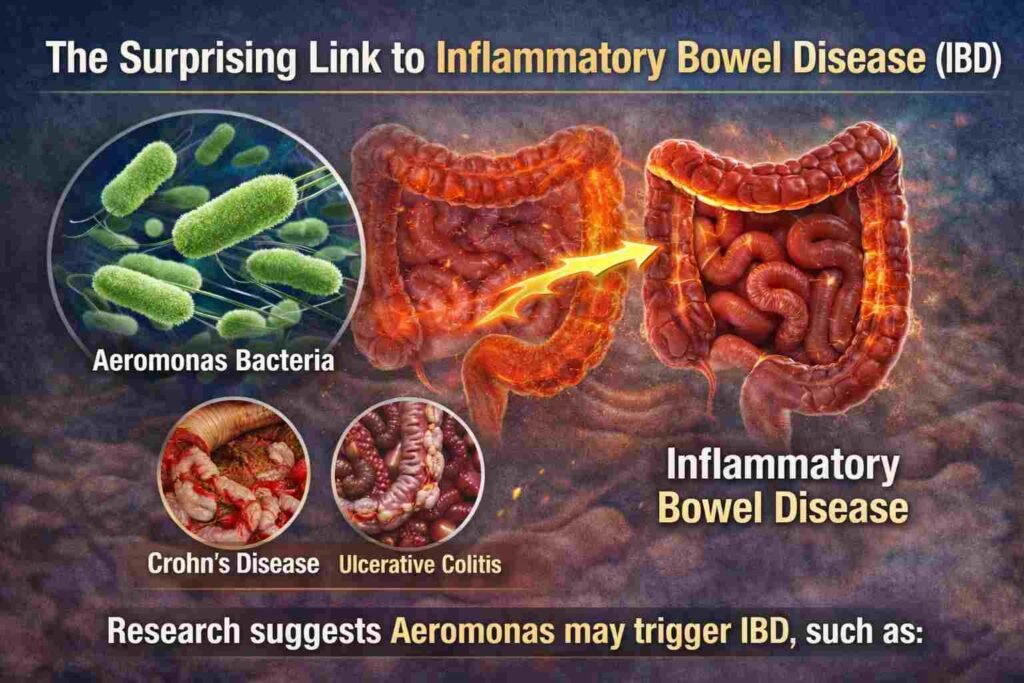
One of the most concerning findings in the 2026 reports is the correlation between Aeromonas and Inflammatory Bowel Disease (IBD). Researchers have discovered that the bacteria can trigger a “pro-inflammatory” response in the gut.
In some patients, the infection not only resolves but also upsets the gut microbiota to the point that it can be a causative factor in the development of chronic diseases such as Crohn’s disease or ulcerative colitis. This highlights the importance of early diagnosis and antibiotic treatment.
How Do People Catch Aeromonas?

Understanding the transmission of Aeromonas gastrointestinal illness is key to prevention. Since the bacteria is “ubiquitous” (found everywhere), exposure is common.
- Contaminated Water: Drinking untreated well water or accidental ingestion of water while swimming in lakes or rivers.
- Seafood and Produce: Eating raw or undercooked fish and shellfish, or vegetables washed in contaminated water.
- Animal Contact: Handling pets, particularly fish, turtles, or reptiles, without proper hand hygiene.
Prevention and Treatment Strategies

Because some strains of Aeromonas have developed resistance to common antibiotics like ampicillin, a “one size fits all” treatment no longer works.
- Proper Cooking: Ensure all seafood is cooked to an internal temperature of at least 145°F (63°C).
- Water Safety: Use filtered or boiled water if the local supply is under a “boil water” advisory.
- Medical Consultation: If diarrhea lasts longer than 5 days or is accompanied by high fever, a specific stool culture for Aeromonas should be requested.
Final Thoughts for 2026
The emergence of Aeromonas as a major gastrointestinal threat is a reminder that the landscape of infectious diseases is always changing. As we move through 2026, staying informed about these “overlooked” pathogens is essential for maintaining long-term gut health.
Conclusion: Proactive Vigilance Against Aeromonas
The growing awareness of Aeromonas gastrointestinal illness marks a paradigm shift in the perspective of digestive health in 2026. What was previously considered an ignored or isolated illness is now understood to be a significant factor in chronic gastrointestinal problems. As climate patterns change and water sources face new challenges, these bacteria are finding new ways to affect human health.
The key point is awareness. If you or a loved one are suffering from “lingering gastro” that doesn’t seem to be alleviated by conventional over-the-counter remedies, it is important to consider that the usual suspects like Salmonella may not be the problem. By being educated on the sources of Aeromonas and implementing new water and food safety protocols, the danger from this new disease can be mitigated.
Frequently Asked Questions (FAQs)
How does Aeromonas gastrointestinal illness compare to the stomach flu?
While both can present with diarrhea and vomiting, stomach flu (usually viral) usually lasts 24 to 48 hours. Aeromonas infection of the gastrointestinal tract is bacterial and can be chronic, lasting two weeks or longer. This often requires specialized medical diagnosis and treatment, even antibiotics, which are different from those used to treat stomach flu.
Is Aeromonas contagious from person to person?
Yes, but person-to-person transmission is less likely than waterborne transmission. While the mode of infection is usually waterborne or foodborne, the bacteria can also be transmitted through the fecal-oral route. Poor hand hygiene practices following bathroom use or diaper changes can contribute to household transmission.
Can Aeromonas be present in tap water?
In most contemporary cities, water treatment plants use chlorine to kill bacteria. However, Aeromonas has been shown to produce biofilms in pipes, which can sometimes protect it from standard disinfection practices. This is slightly more likely in older cities or when using a private well.
What is the best way to test for an Aeromonas infection?
The common stool tests often do not detect Aeromonas unless it is specifically searched for in the lab. Until 2026, the only reliable test for Aeromonas infection is through Polymerase Chain Reaction (PCR), which looks for the DNA of the bacteria. If you have a suspected infection, ask your doctor for a full enteric pathogen test that includes Aeromonas species.
Is an Aeromonas infection a life-threatening disease?
It is a very unpleasant but not life-threatening condition for most healthy people. But it can be dangerous for people with compromised immune systems, liver disease, or older people. In these cases, the bacteria can get into the bloodstream (sepsis), which is a serious medical emergency.
Read My Website Recent News Article: Earth’s Magnetic Field Shift
