


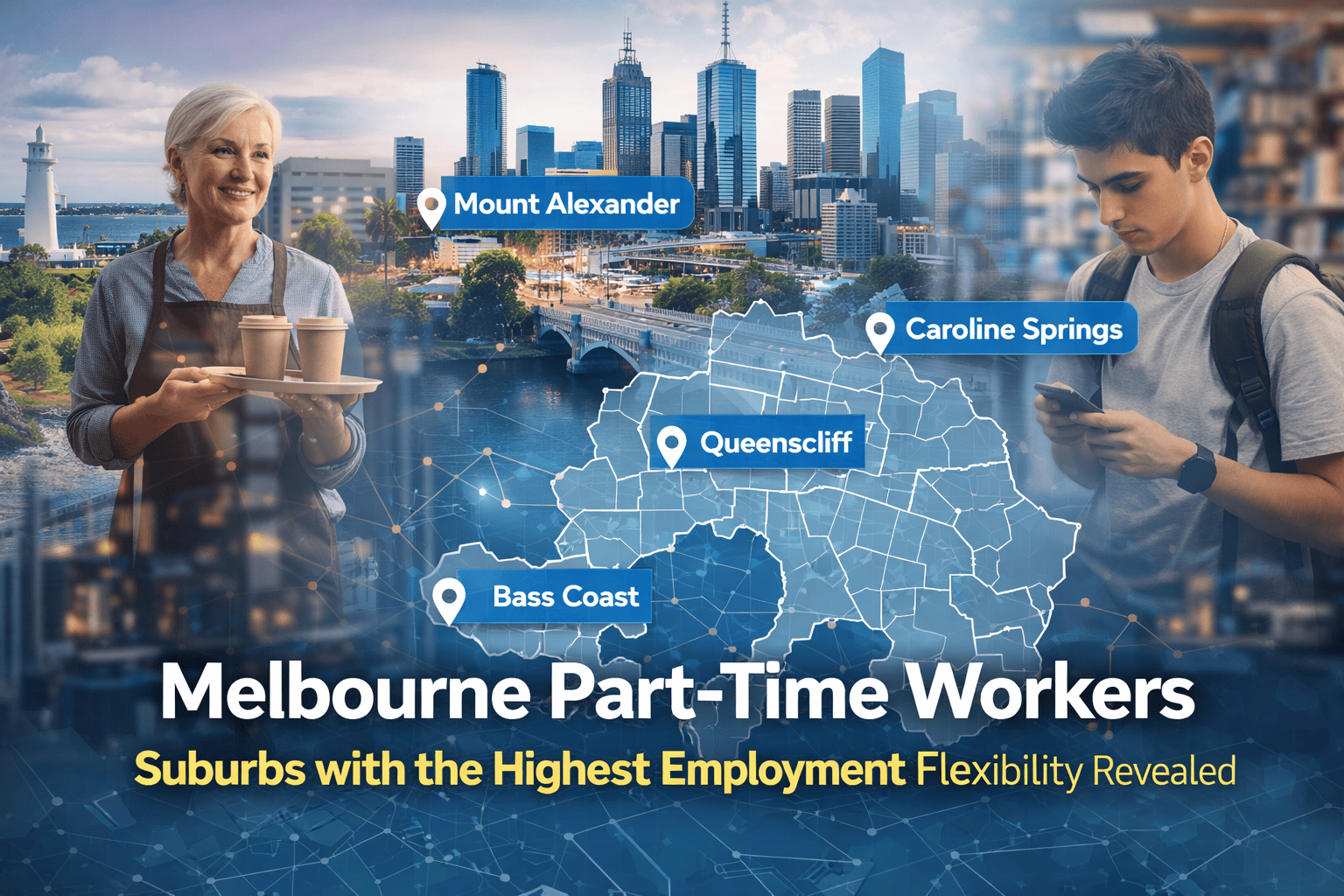
Melbourne Part-time Workers: The Victorian labor market has registered a significant shift. As we move further into 2026, statistics suggest an increase in part-time employment in various areas of Melbourne and Victoria. Although the traditional concept of a 9-to-5 work schedule remains at the base of our economy, an increasing segment of our population has either chosen to work part-time or has no alternative.
A Growing Trend: Why Melbourne Is Moving to Part-Time Roles
The rise of part-time work in Melbourne can be directly linked to changes in Melbourne’s demographic makeup rather than being coincidental. According to the latest data from the Australian Bureau of Statistics (ABS), in certain areas of Melbourne, almost one-third of the labor force has adopted part-time work.
According to experts, the main causes of this shift to part-time work are the “sandwich generation”—individuals who are forced to take care of both children and parents—and an increase in international students who are only allowed to work part-time. However, they are essential to our retail sector. The “lifestyle reboot” post-COVID has also forced many professionals to switch to part-time work in favor of more free time.
Top Suburbs Leading Melbourne’s Part-Time Workforce
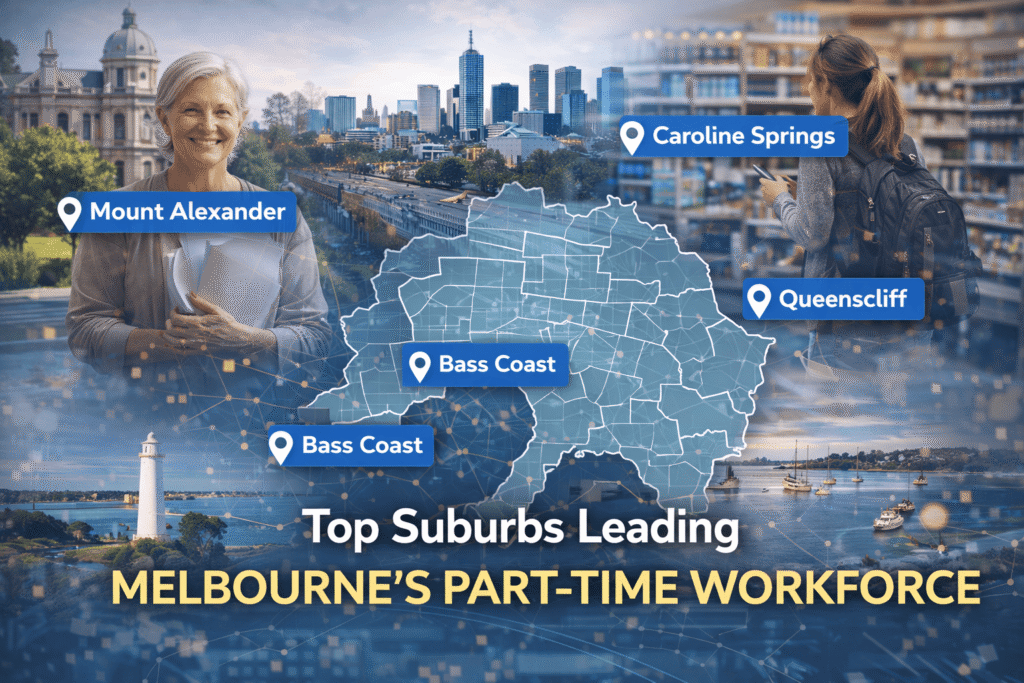
Statistics reveal a stark difference in various zones of Melbourne. While inner-city corporate areas are dominated by professionals with full-time jobs, certain areas are registering a higher presence of part-time workers.
Mount Alexander and Regional Hubs
Mount Alexander has registered one of the highest rates of part-time work in Victoria. The statistics reveal that over 43% of workers in this region are engaged in part-time work. This region has an aging population. As a result, many workers are opting to work on a part-time basis in what has been termed “semi-retirement”—where individuals contribute to the economy with their experience without the commitment of a full-time work schedule.
Coastal and Lifestyle Hotspots
Queenscliff and the Bass Coast are also among the top areas with high rates of part-time work. These areas are popular with individuals who seek a better work-life balance. The “sea change” phenomenon has resulted in an influx of skilled professionals to these areas who prefer to work on a part-time basis rather than traveling to work in Melbourne’s CBD.
The Western Suburbs: The Youth Population and Retail
In Melbourne’s West, areas such as Caroline Springs, Tarneit, and Ravenhall are characterized by a high concentration of part-time workers. However, unlike in the regional hubs, it’s not due to an increase in hub-based employment. Rather, it’s due to the youth population. These areas are important due to their high concentration of retail centers and hospitality spots. These are essential part-time employment options for students and people entering the work force for the first time.
Economic Factors Influencing the Shift

The economic conditions of 2026 are having a double-edged effect on the statistics. Some people are forced into part-time work due to “underemployment,” where they want to work more hours but are only being given fewer hours by employers due to high business costs.
The “Gig Economy” has also become a reality. People in the City of Whittlesea and Melbourne are now juggling multiple part-time jobs to make a full-time wage. This gives them flexibility, which one business cannot offer.
The Future of Work in Victoria

As outlined by the Victorian Government’s jobs and careers initiatives, the rise of part-time workers presents both a workforce challenge and a strategic opportunity for infrastructure and employment planning. The infrastructure and transport systems of Melbourne will now have to accommodate not just the traditional “peak hours” but will have to cater to the part-time worker at different hours of the day.
To businesses and organizations, the message is very clear: flexibility at work is no longer a luxury but a necessity. The suburbs that have shown high levels of part-time employment are now the new focus of investment as these people spend more and more of their time and money in these areas as opposed to the city center.
Summary of Key Findings:
- Highest Part-Time Rate: The region of Mount Alexander tops the list with 43.2 percent.
- Key Drivers: The rise of part-time employment in Melbourne has been driven by the aging demographic trends and the student populations. The rise of the “sea changers” and those seeking a lifestyle change has also contributed to the rise of part-time employment in Melbourne.
- Impact Areas: The coastal regions and the rapidly growing suburbs of the West will feel the impact of part-time employment.
- Economic Trend: The rise of part-time employment represents an important shift from the traditional 38-hour week to diversified and flexible income streams.
Conclusion: The New Face of the Victorian Workforce
The increasing prevalence of part-time employment across Melbourne’s suburban landscape represents a fundamental change in how Victorians perceive their “Australian Dream.” Gone are the days of a monolithic, one-size-fits-all approach to a 40-hour work week, with a growing number of Victorians embracing a flexible approach that suits different stages of their lives.
Whether a retired professional living in Mount Alexander or a university student living in Melbourne’s Western suburbs, the “part-timer” represents a new backbone of community resilience that will likely underpin Melbourne’s growth trajectory. While issues surrounding underemployment and cost of living remain pressing issues, a growing trend towards flexibility represents a potential vision for a future that puts “life” before “work.”
Frequently Asked Questions (FAQs)
What Melbourne suburbs have the highest number of part-time workers?
According to data, regional fringe areas such as Mount Alexander have the highest number of part-time workers, with over 43% of workers engaging in part-time employment as of 2026. High-density areas, including the Bass Coast region and the growing western suburbs, including Caroline Springs and Tarneit, also have a high number of part-time workers.
Is this an increase in part-time workers by choice or necessity?
The increase in part-time employment represents a combination of both choice and necessity, with many “sea change” and “tree change” workers engaging in part-time employment by choice, while a growing number of younger workers, including those in the retail sector, engage in part-time employment by necessity.
What effect will this trend have on the Melbourne property market?
Neighborhoods with a high rate of part-time employment will likely experience a boom in “lifestyle” properties, with increased commercial viability for cafes, co-working spaces, and shopping centers, as these workers will be spending less time commuting to the CBD and more time within their local community.
What drives regional areas such as Mount Alexander at the forefront of this trend?
Regional areas tend to have a higher ratio of older workers who, while not ready to retire, wish to transition out of full-time employment and into a part-time role, perhaps a form of consulting, which keeps them active but removes some of the stresses that come with full-time employment.
Does part-time employment offer the same level of job security as full-time employment in 2026?
Traditionally, part-time employment does not offer the same level of security as full-time employment, but this is not necessarily true in the 2026 employment market, which appears to have a “permanent part-time” employment option, providing benefits such as sick leave and annual leave, a compromise between the insecurity of the gig economy and full-time employment.
Read My Website Recent News Article: Measles Outbreak in North London
