


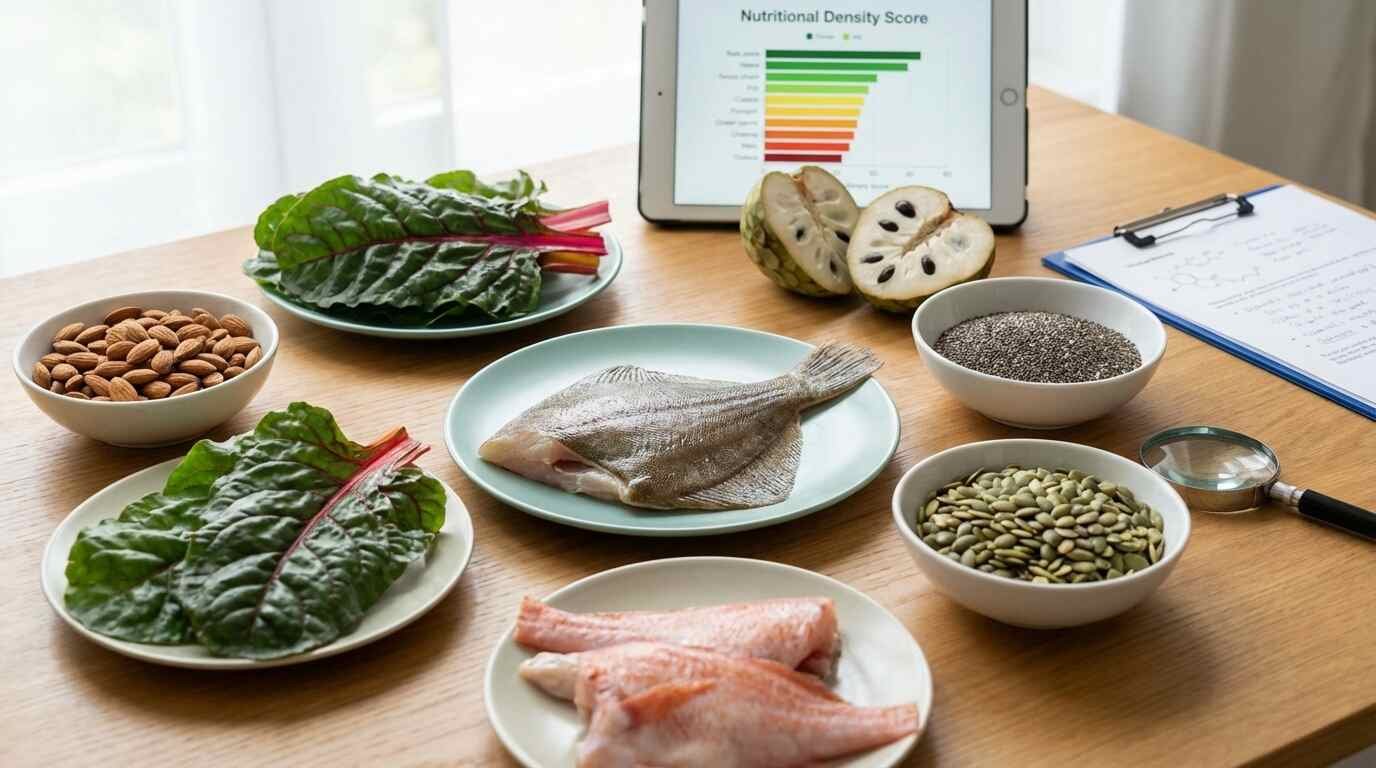
7 Nutrient-Dense Foods: When we talk about “healthy eating,” we usually think of salads or cutting out sugar. However, nutritional science has recently taken a much more precise turn. A landmark study published in the journal PLOS ONE analyzed over 1,000 raw foods, ranking them based on how effectively they help a person meet their daily nutritional requirements.
The researchers discovered that some of the most beneficial foods on the planet are often the most overlooked. By focusing on “Nutrient Density”—the ratio of essential vitamins and minerals to calorie content—scientists have identified a handful of “superfoods” that provide the ultimate bang for your buck.
If you are looking to optimize your longevity and energy levels, these are the seven foods that should be at the top of your grocery list.
Almonds (Nutritional Score: 97) – The Ultimate Heart Guard
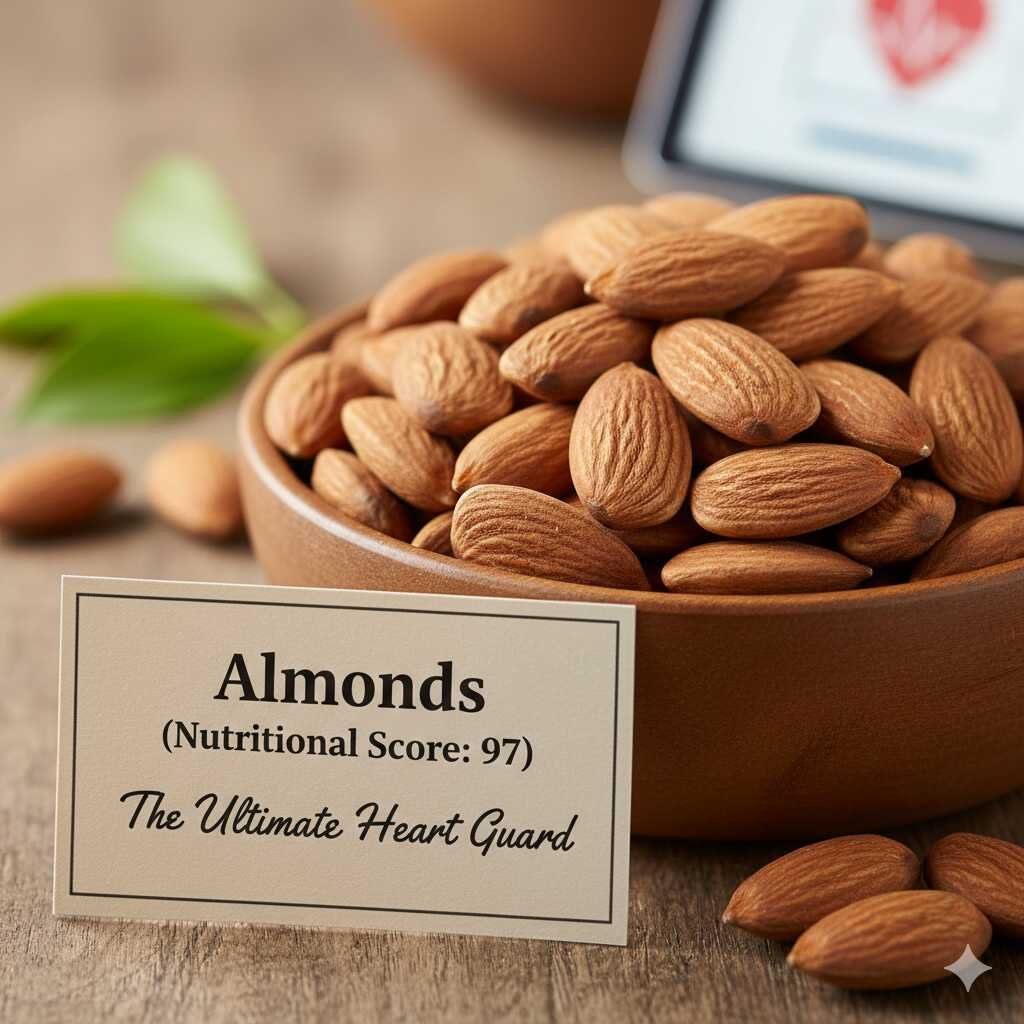
Ranking at near-perfection with a score of 97, almonds are far more than just a convenient snack. While most people know they contain “healthy fats,” the science goes much deeper. Almonds are loaded with mono-unsaturated fatty acids which are proven to lower LDL (bad) cholesterol.
Recent clinical trials have shown that almonds act as a powerful prebiotic. A study involving 77 adults found that those who consumed about 2 ounces of almonds daily for 12 weeks saw a significant increase in beneficial gut bacteria. This doesn’t just help with digestion; it reduces systemic inflammation throughout the entire body.
Human Tip: To get the full benefit, always eat them with the skin on. The skin contains most of the polyphenols that protect your cells from oxidative stress.
Cherimoya (Nutritional Score: 96) – Nature’s Custard Apple
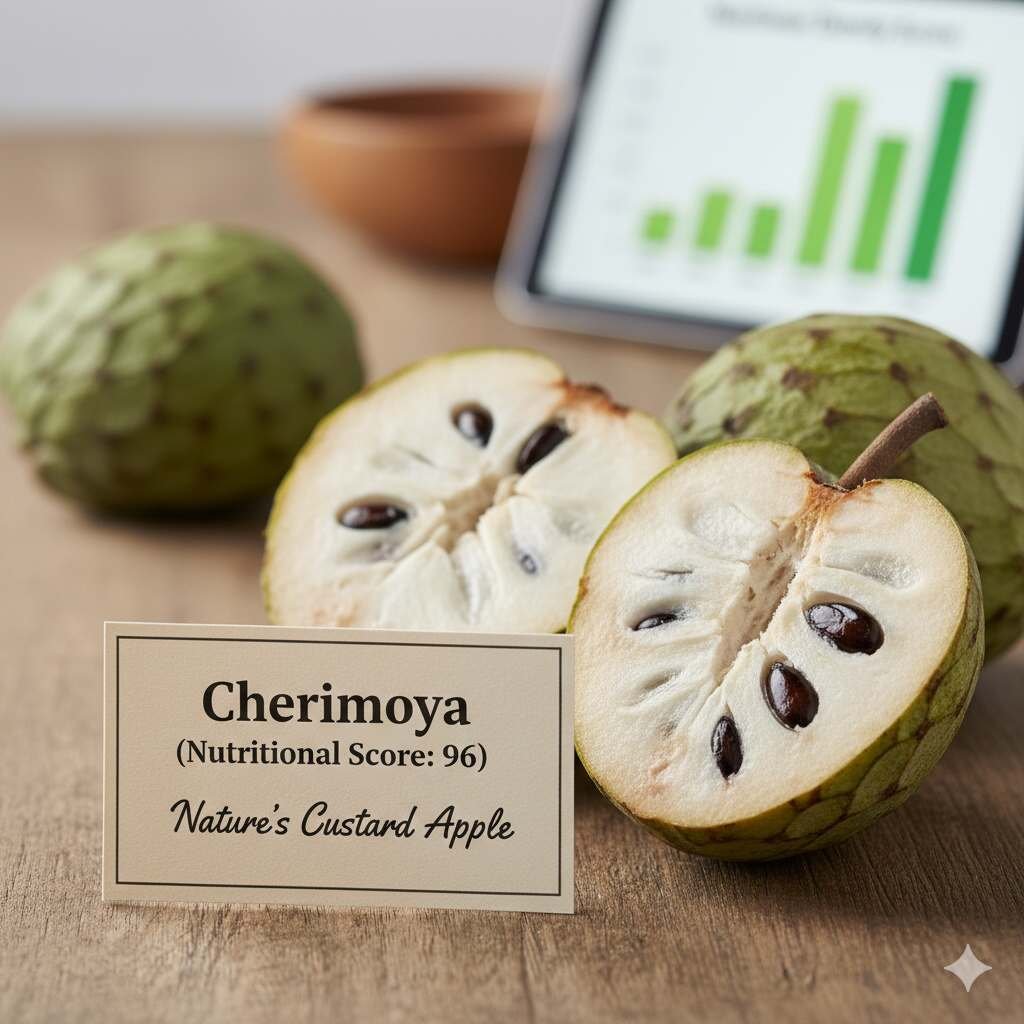
It is rare to find a fruit ranking this high, but the Cherimoya (often called the Custard Apple) is a nutritional anomaly. It is dense, fleshy, and remarkably sweet, yet it manages to pack a massive punch of Potassium, Magnesium, and Vitamin C.
What makes Cherimoya special is its balance of natural sugars with high fiber and minerals. It helps regulate blood pressure and supports heart rhythm stability. While it’s often treated as a dessert fruit, its ability to provide high-voltage energy without the “crash” of processed sweets makes it a favorite for those in the know.
Flatfish (Nutritional Score: 88) – The Lean Protein Goldmine
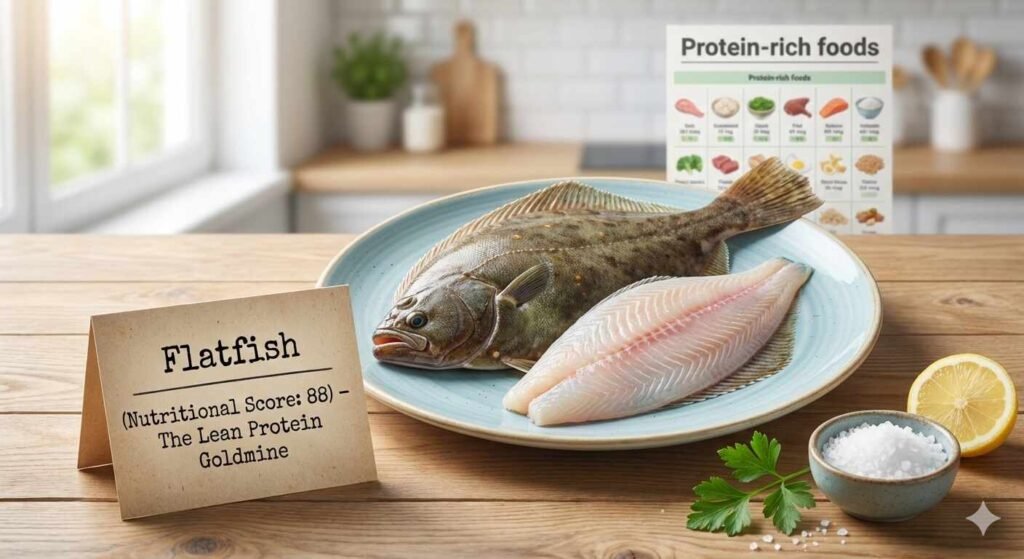
When people think of healthy fish, they usually go straight to Salmon. However, the study highlights Flatfish (such as Sole and Flounder) as a superior choice for nutrient density.
Flatfish are generally very low in mercury compared to larger predatory fish. They are an exceptional source of Vitamin B1 (Thiamin), which is crucial for converting food into energy and maintaining a healthy nervous system. If you want high-quality protein that supports muscle repair without adding unnecessary saturated fats to your diet, flatfish is the answer.
Ocean Perch (Nutritional Score: 89) – The Deep-Sea Energizer

Ocean Perch, also known as Redfish, is a deep-water species that offers a nutritional profile quite different from surface-level fish. It is incredibly high in Vitamin B12 and Selenium.
Selenium is a trace mineral that many people are deficient in, yet it acts as a “master switch” for your immune system and thyroid function. Including Ocean Perch in your diet even once a week can help combat fatigue and improve your body’s ability to fight off seasonal illnesses.
Chia Seeds (Nutritional Score: 85) – The Tiny Giants of Fiber
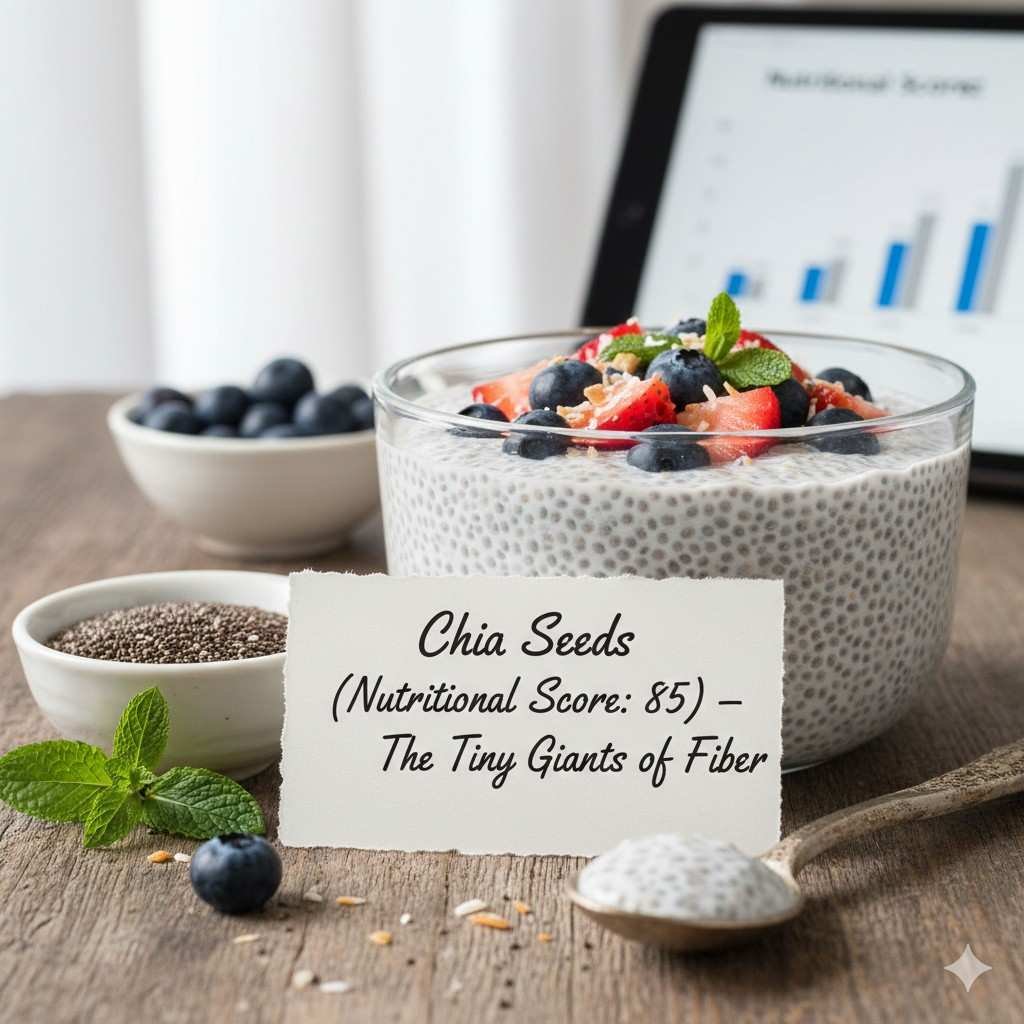
Chia seeds have transitioned from a health-store novelty to a legitimate nutritional powerhouse. These tiny seeds are packed with Alpha-linolenic acid (an Omega-3 fatty acid), fiber, and protein.
The real magic of chia seeds is their ability to absorb up to 12 times their weight in water. This creates a gel-like substance in your stomach that slows down the absorption of sugar into your bloodstream. This makes them a “must-have” for anyone managing diabetes or looking to lose weight, as they keep you feeling full for much longer than traditional grains.
Pumpkin Seeds (Nutritional Score: 84) – The Mineral King
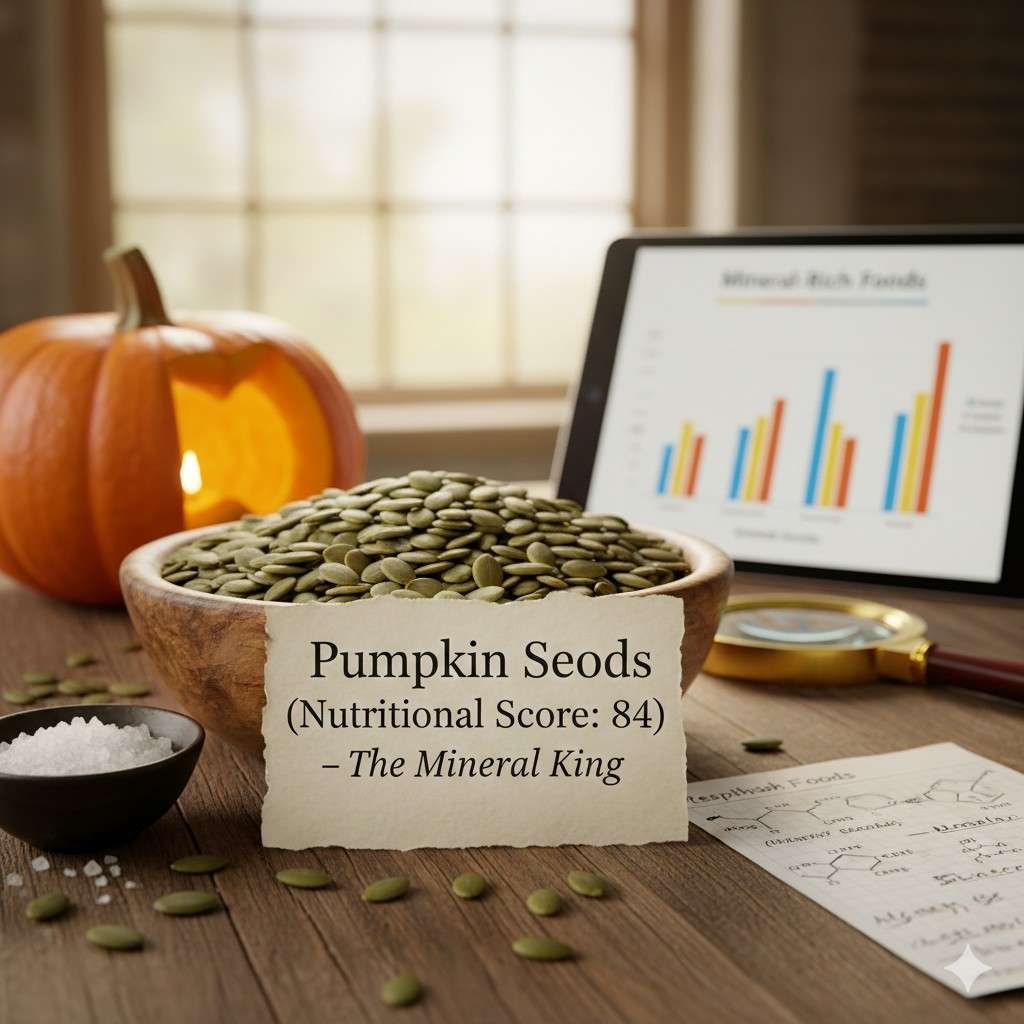
Often thrown away when carving pumpkins, these seeds are actually one of the world’s most concentrated sources of Zinc and Manganese. Zinc is essential for testosterone production in men and skin health in women. Furthermore, pumpkin seeds are rich in Tryptophan, an amino acid that the body converts into Serotonin and Melatonin. If you struggle with sleep or high stress levels, a small handful of pumpkin seeds in the evening can help calm your nervous system and prepare your body for rest.
Swiss Chard & Beet Greens (Nutritional Score: 78) – The Brain Boosters
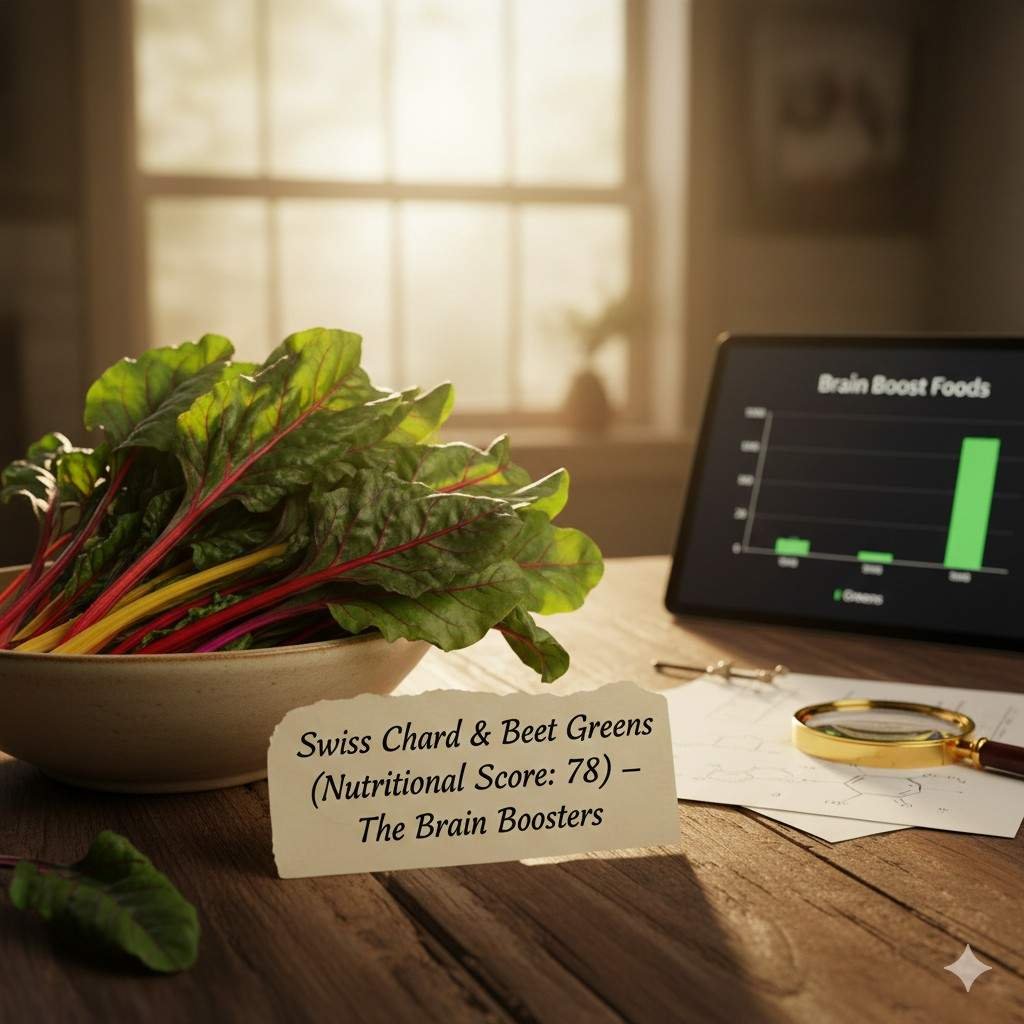
While spinach gets all the fame, Swiss Chard and Beet Greens (the tops of the beetroot) are actually higher on the nutrient density scale. They are rare dietary sources of betalains, which have powerful neuroprotective qualities.
These greens are also rich in dietary nitrates. When you eat them, your body converts these nitrates into nitric oxide, which dilates your blood vessels and improves circulation. A study published in Neurology suggested that eating just one serving of these greens a day could make your brain function like it’s 11 years younger by improving blood flow to the frontal cortex.
How to Get the Most from These Foods
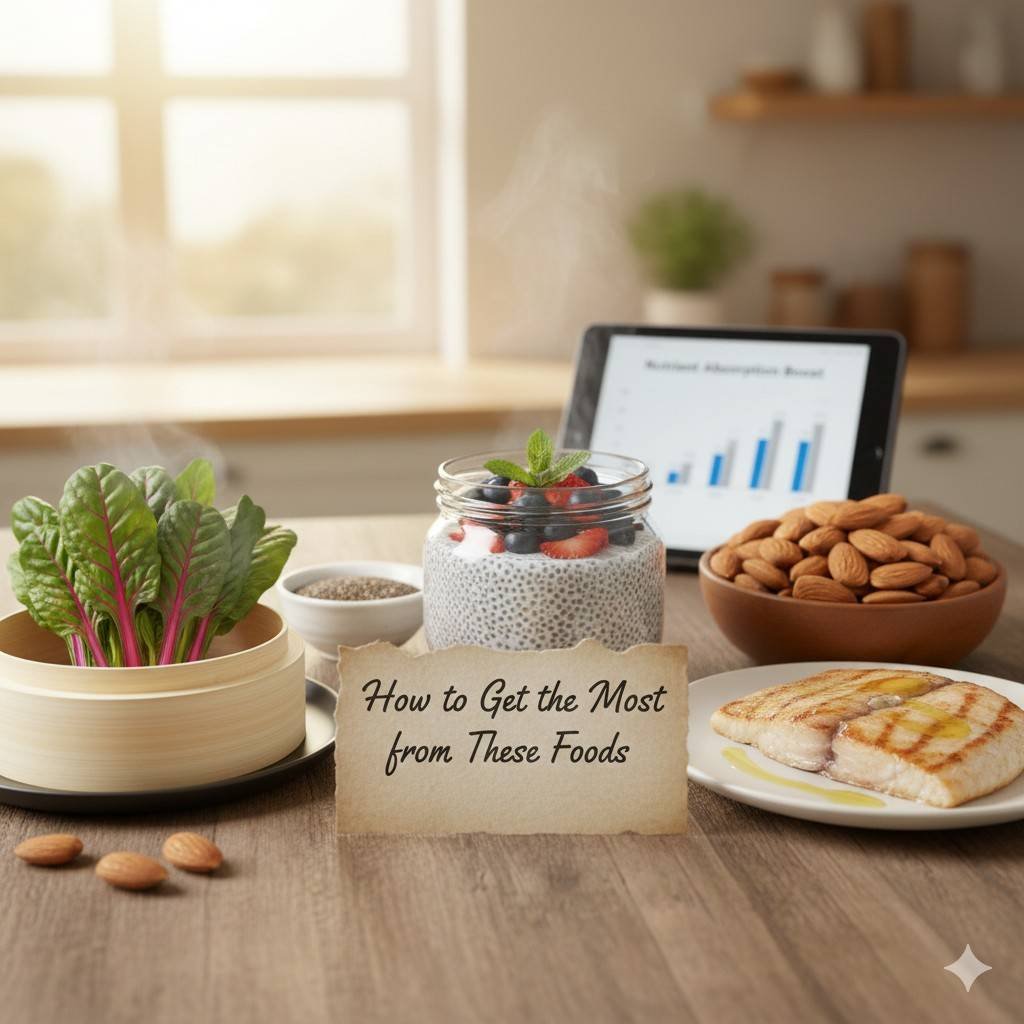
Eating these foods is step one; preparing them correctly is step two. To ensure you aren’t “cooking out” the nutrients:
Steam, don’t boil: Leafy greens like Swiss Chard lose their Vitamin C if boiled for too long. A quick 2-minute sauté or steam is perfect.
Soak your seeds: Soaking Chia seeds overnight (in water or almond milk) makes the nutrients more bioavailable for your body.
Pair with Fats: The Vitamin E in almonds and the Vitamin K in greens are “fat-soluble,” meaning your body absorbs them much better when eaten with a little healthy oil or fat.
Final Thoughts
Achieving optimal health isn’t about eating less; it’s about eating smarter. By incorporating these seven science-backed, nutrient-dense foods into your weekly routine, you aren’t just filling your stomach—you are fueling your cells with the specific building blocks they need for a longer, more vibrant life.
Medical Disclaimer
This article is for informational purposes only. If you have pre-existing health conditions or are on medication (especially blood thinners), please consult your doctor before making significant dietary changes.
Frequently Asked Questions (FAQ)
Do I really need to eat all seven of these foods every single day?
Not necessarily. Think of this list as a “best-in-class” guide rather than a strict prescription. The goal is nutrient density, not a checklist. If you can incorporate three or four of these into your weekly routine—like swapping your usual snack for almonds or adding chia seeds to your morning smoothie—you’re already way ahead of the curve. Variety is still the king of nutrition.
Almonds are high in calories; won’t they make me gain weight?
It sounds counterintuitive, but research actually shows the opposite. While almonds are calorie-dense, they are also incredibly satiating because of the fiber and protein combo. Most people find that eating a handful of almonds stops them from reaching for processed, sugary snacks later. Plus, your body doesn’t even absorb all the fat calories in a raw almond—some of it just passes through your system.
What if I can’t find Cherimoya at my local grocery store?
Cherimoya is a tropical fruit and can be hard to track down depending on where you live. If it’s not available, don’t stress. You can get similar (though not identical) benefits from other high-potassium fruits like bananas or avocados. The “Nutritional Score” is a guide, but accessibility matters more for a sustainable diet.
Is it better to eat these foods raw or cooked?
It depends on the food. Nuts and seeds (almonds, chia, pumpkin seeds) are generally best raw or lightly toasted to keep their healthy fats intact. However, leafy greens like Swiss Chard actually benefit from a very light steam or sauté. This breaks down tough plant fibers and makes certain minerals, like iron, easier for your body to absorb. Just avoid boiling them until they’re mushy—that’s when the vitamins disappear into the water.
Are frozen versions of these fish (Flatfish/Perch) just as good as fresh?
Actually, yes! Often, “fresh” fish at the counter has been sitting there for days. High-quality frozen fish is usually flash-frozen right on the boat, which “locks in” the nutrients like Vitamin B12 and Selenium. Just check the label to make sure there are no added preservatives or heavy sodium coatings.
Can I eat too many pumpkin seeds?
While they are a “mineral king,” pumpkin seeds are very high in fiber. If you aren’t used to much fiber, eating a huge bowl of them might cause some bloating. A small handful (about 30g) is the “sweet spot” for getting your daily dose of Zinc and Magnesium without overdoing it.
Why isn’t Spinach or Kale on this list?
Spinach and kale are fantastic, don’t get us wrong. But when scientists look at the total balance of nutrients relative to calories, Swiss Chard and Beet Greens actually come out slightly on top because of their unique phytonutrient profile (like betalains). Think of it this way: Spinach is an “A” student, but Swiss Chard just happened to get an “A+” on this specific test.
Explore More from Orbit News Hub: Tatooine Planets
